
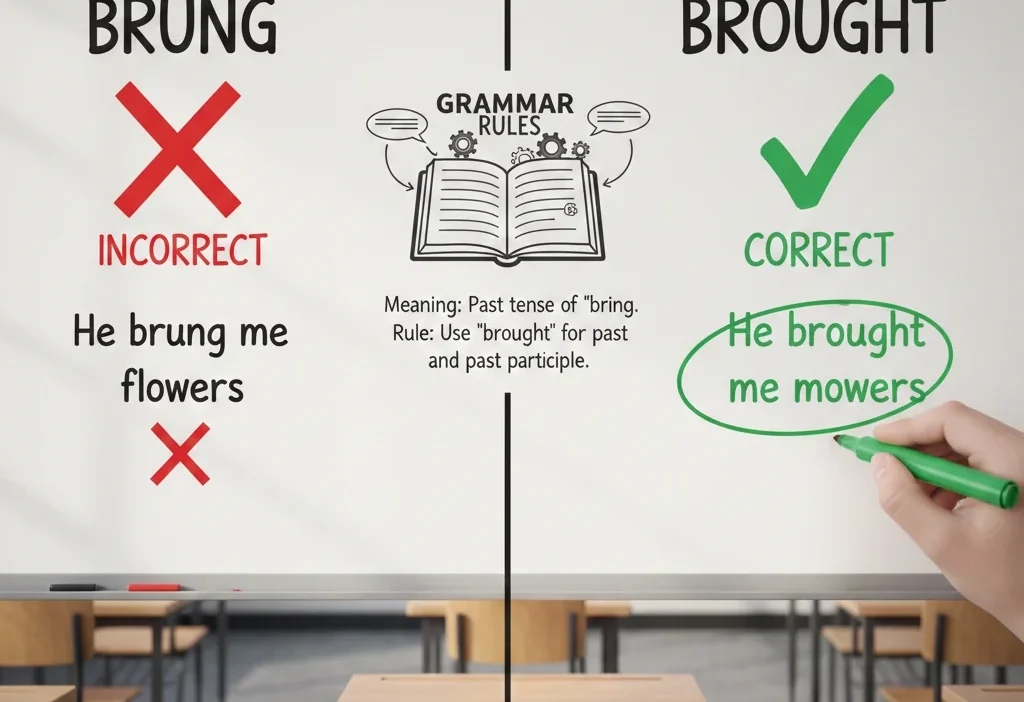
Brought is correct. Brung is not standard English.
Millions of people every year search terms like brung or brought, is brung a word, and brought brung meaning. Why? Because they often hear brung in casual speech, movies, and regional accents, which creates confusion. Learners and even some native speakers are unsure whether brung is acceptable or if brought is the only correct form.
English has many irregular verbs, and some follow similar sound patterns, such as ring → rung and sing → sung. This makes brung sound logical. However, English grammar does not always follow sound patterns, and bring is one of those exceptions.
This guide clears the confusion completely. You will learn:
- Brought brung grammar rules
- Past tense and past participle usage
- Word origin and history
- British vs American spelling differences
- Common mistakes and correct examples
- FAQs and professional guidance
By the end of this article, you will always know which word to use and why, whether for exams, writing, or professional communication.
Brung or Brought means
Brought is the correct past tense and past participle of bring.
Brung is informal and incorrect in standard English.
Examples of correct usage:
- She brought the files yesterday.
- He has brought lunch for everyone.
- They brought their parents to the event.
- I brought my best friend to the meeting.
Examples of incorrect usage (brung):
- ❌ He brung his laptop to work.
- ❌ She brung her bag yesterday.
- ❌ They brung their homework late.
Tip: In formal writing, exams, emails, and professional contexts, always use brought. Brung should only appear in spoken dialogue or informal storytelling.
The Origin of Brought or Brung
The verb bring comes from the Old English word bringan. Over centuries, English formed the past tense brought, following irregular verb patterns like buy → bought and think → thought. This form has been standard for hundreds of years.
The word brung emerged later in spoken English, influenced by verbs like ring → rung and sing → sung. Speakers assumed that bring might follow a similar pattern. Brung was never accepted in formal writing and remains nonstandard, even though it appears in some regional dialects.

Historical note: Brung shows up in English texts occasionally in the 19th century, mostly in fiction or informal dialogue. Brought, however, dominates written English in all professional and academic contexts.
Key takeaway:
The past tense of bring is brought. Brung is only an informal, nonstandard variation.
British English vs American English Spelling
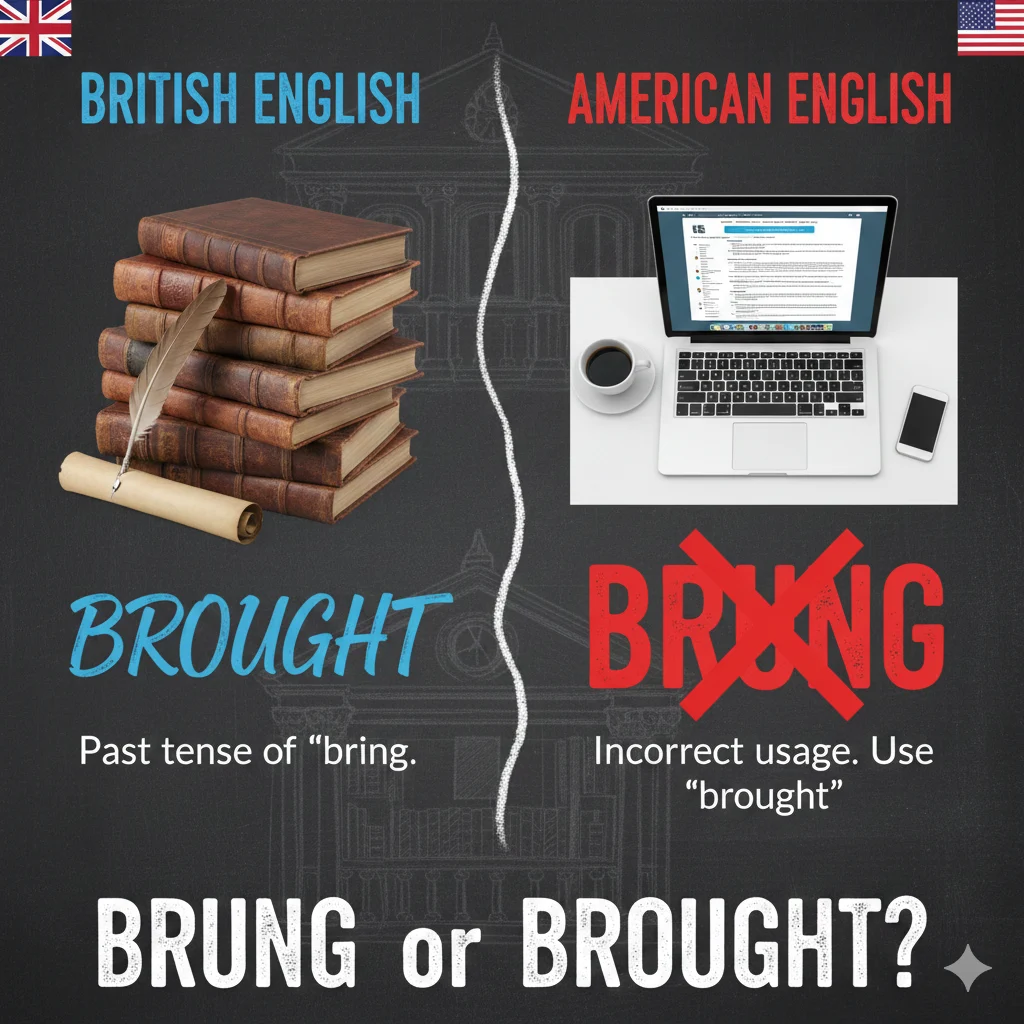
Both British and American English follow the same rules for bring. There is no spelling difference.
| Feature | British English | American English |
|---|---|---|
| Correct past tense | Brought | Brought |
| Formal writing | ✅ Yes | ✅ Yes |
| Exams & academic usage | ✅ Yes | ✅ Yes |
| Brung usage | ❌ Informal only | ❌ Informal only |
Pro tip: Unlike spelling differences such as colour/color, there is no variation for this verb. Always use brought in formal contexts.
Drew or Drawed? The Correct Past Tense of Draw Explained Clearly
Which Spelling Should You Use?
Audience doesn’t change the correct form.
- US audience: Brought
- UK audience: Brought
- International English: Brought
When can you use brung?
- Only in fictional dialogue or informal speech
- Quoting someone’s casual conversation
When must you avoid brung?
- Exams and school assignments
- Work and professional writing
- Online articles and blogs
Safe choice: brought works for all audiences and contexts.
Brought Brung Grammar Rules
Let’s break it down clearly. The verb bring is irregular:
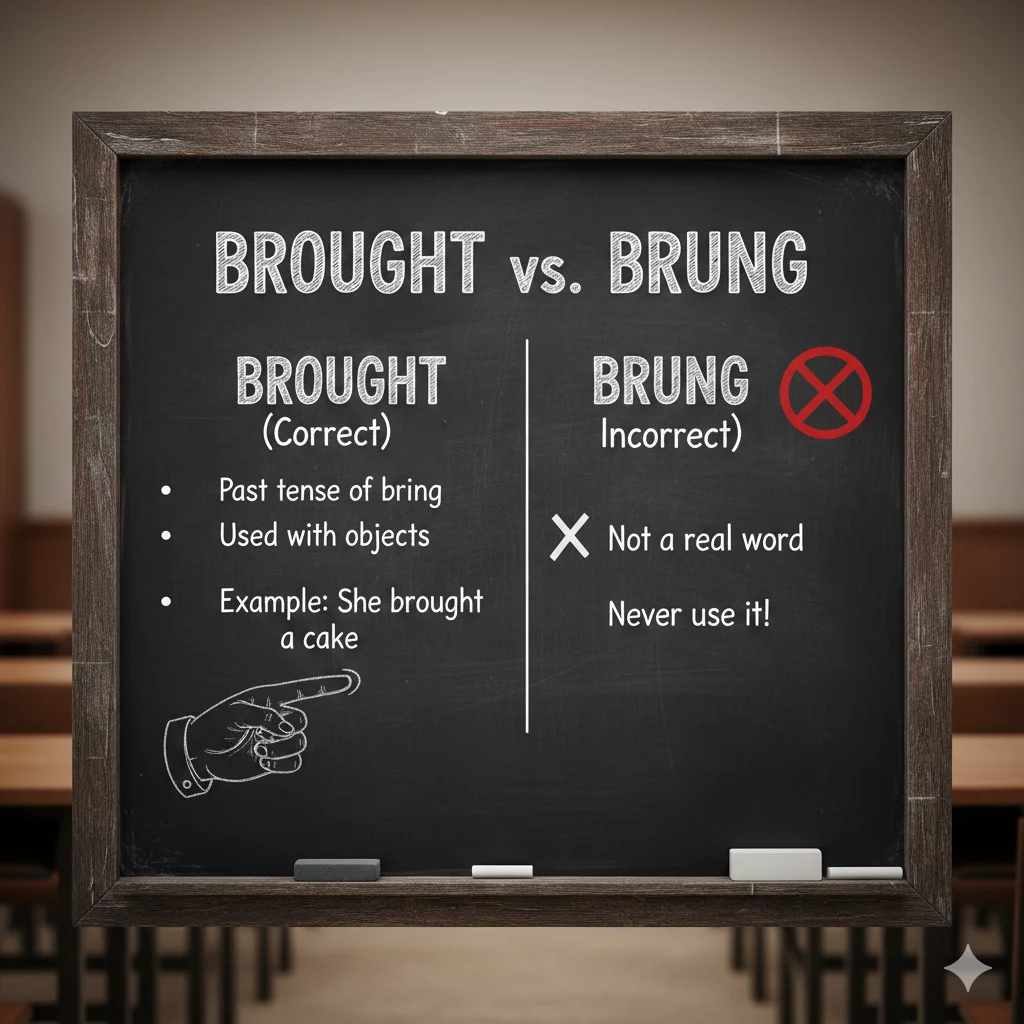
| Verb Form | Example |
|---|---|
| Present | I bring lunch every day. |
| Present third person | She brings snacks. |
| Present participle | Bringing |
| Past tense | Brought |
| Past participle | Brought |
There is no past tense or past participle form “brung” in standard English.
Tip: If your sentence works with “has,” you must use brought.
- ✅ I have brought my homework.
- ❌ I have brung my homework.
Brought or Brung in Everyday Examples
Emails:
- “I have brought the updated file for your review.”
News:
- “The new law brought significant changes to the education system.”
Social media:
- “She brought amazing energy to today’s meeting!”
Formal writing:
- “This research has brought new insights to the field of medicine.”
Student example:
- “I brought my notes to the class to help everyone.”
These examples demonstrate correct brought brung in a sentence usage for every context.
Common Mistakes with Brought or Brung
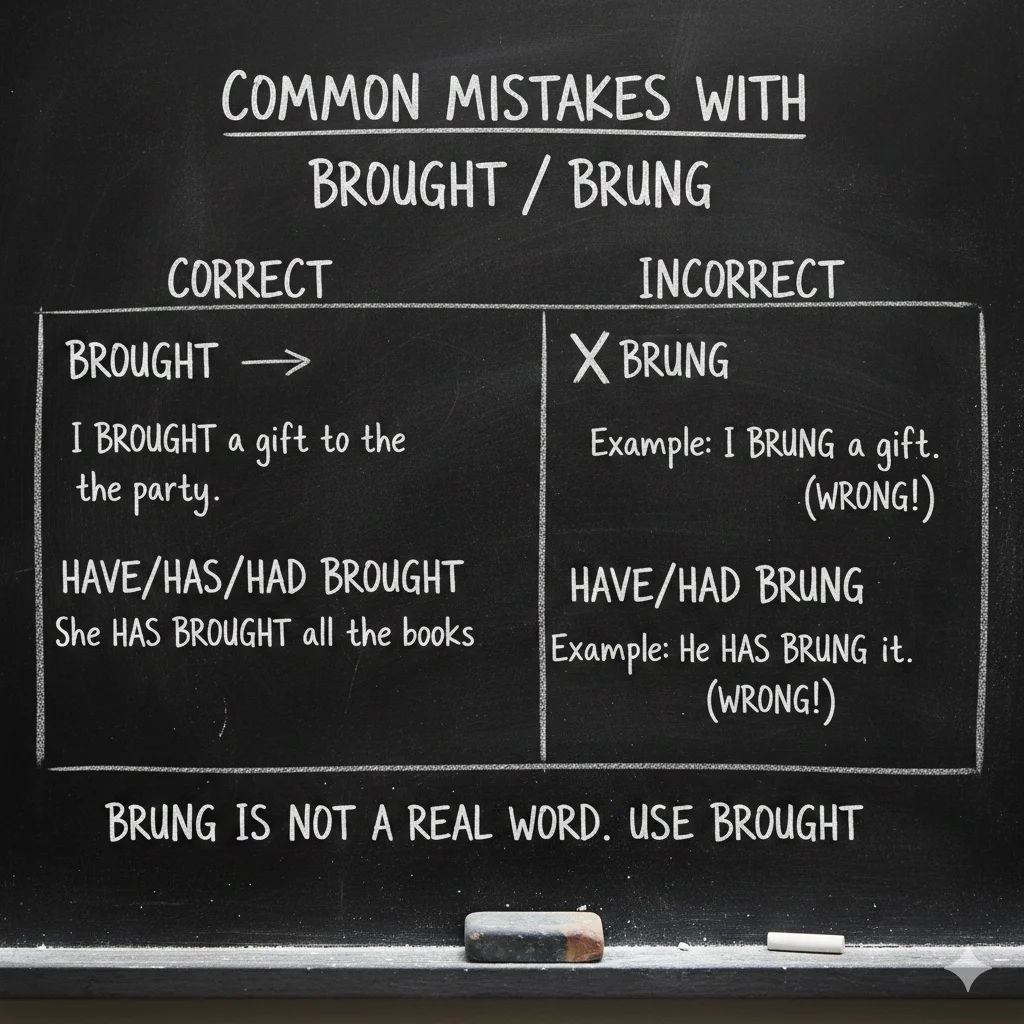
Learners often make these errors:
- ❌ Using brung in exams
- ❌ Writing brung in emails or reports
- ❌ Thinking brung is modern English
Correction:
- ❌ He brung his homework.
- ✅ He brought his homework.
Quick memory trick: Brought rhymes with thought, bought, fought, caught. Think of it as part of that family.
What Are the 4 Past Tense Forms?
For bring, the common past forms are:
- Bring – base form (present)
- Brought – simple past
- Has brought – present perfect
- Had brought – past perfect
Brung does not appear in any official form.
Brought or Brung – Google Trends & Usage Data
Data shows strong interest in searches like:
- “is brung a word”
- “brought or brung correct”
Insights:
- Most queries come from students and English learners.
- Brung appears in casual spoken English but rarely in writing.
- Brought dominates professional, academic, and online written content.
Google’s Helpful Content system and dictionaries classify:
- ✅ Brought → Standard English
- ❌ Brung → Non-standard
This is why all grammar authorities recommend brought for writing.
Brought or Brung Comparison Table

| Form | Status | Usage |
|---|---|---|
| Bring | Base verb | Present tense |
| Brought | ✅ Correct | Past tense & past participle |
| Brung | ❌ Non-standard | Informal speech only |
Always default to brought in writing.
FAQs About Brung vs Brought
1. Is brung a word?
Brung exists in dialect speech but is not standard English.
2. Is brought or brung correct?
Brought is correct.
3. What is the 3 form of bring?
Bring – brought – brought
4. What are the 4 past tense forms?
Bring, brought, has brought, had brought
5. What do you mean by brung?
It is an informal spoken variant of brought.
6. Is brung acceptable in exams?
No, always use brought.
7. Can brung ever be correct?
Only in fictional dialogue, never in standard writing.
8. How do I remember brought vs brung?
Think of other verbs in the same family: thought, bought, fought, caught. Brought follows the same pattern.
Conclusion
The confusion between brung or brought arises from casual speech, not grammar rules. While brung may sound normal in conversation, it is never accepted in standard English.
Brought is the correct past tense and past participle of bring. It works for all professional, academic, and formal writing.
Key takeaways:
- Always use brought for writing
- Use brung only in fictional or quoted speech
- Remember the rhyme trick: brought → thought, bought, caught
- Check your writing: if “has” fits, it should be brought
Following these rules ensures clarity, correctness, and credibility in English.

Helen Oyeyemi is an acclaimed novelist known for her imaginative, lyrical storytelling and modern fairy-tale style that blends mystery with magic.