Millions of people still make the mistake of writing “catched” instead of “caught”. The correct past tense and past participle of catch is always caught — “catched” is never accepted in modern English.
In this guide, you’ll see clear examples, learn why “caught” is correct, and understand its usage in both British and American English. By the end, you’ll confidently use caught every time — no more guessing or mistakes.
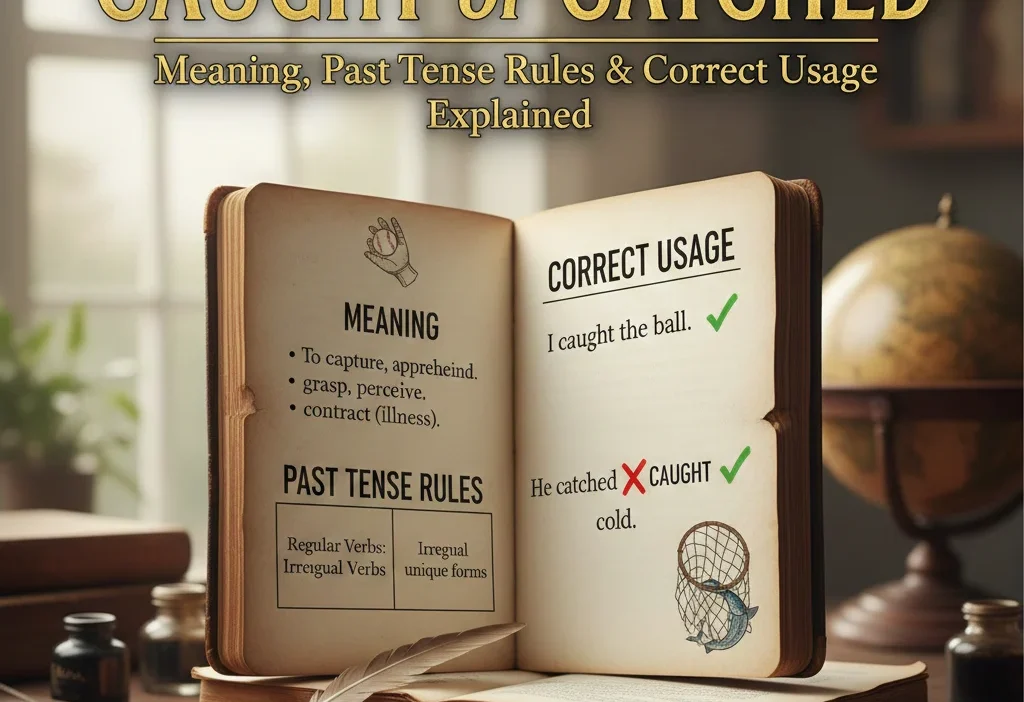
Caught or Catched MEANS
The correct past tense and past participle of catch is caught.
Catched is not accepted in standard modern English.
Examples:
- I caught the ball.
- She caught a cold.
- He has caught the train.
Incorrect examples:
- I catched the ball.
- She catched a cold.
So, if you are asking what is the past tense of catch, the correct answer is caught.
The Origin of Caught or Catched
The verb catch comes from Middle English cacchen, which came from Old French cachier, meaning “to chase” or “to capture.” When the word entered English, it did not follow the regular verb pattern.
Instead of forming catched, English speakers changed the vowel sound and created caught. This change follows a common irregular verb pattern seen in words like:
- teach → taught
- buy → bought
- think → thought
📚 Catch – Catched – Caught: Understanding the Irregular Pattern
Many English learners get confused because they expect catch to follow regular verb rules:
| Rule | Example |
|---|---|
| Regular verb | walk → walked → walked |
| ❌ Wrong assumption | catch → catched → catched |
But catch is an irregular verb. It follows the same pattern as:
| Base Form | Past Tense | Past Participle |
|---|---|---|
| catch | caught | caught |
| teach | taught | taught |
| buy | bought | bought |
| think | thought | thought |
| bring | brought | brought |
✅ Correct: catch → caught → caught
❌ Incorrect: catch → catched → catched
So remember:
- Today I catch the ball.
- Yesterday I caught the ball.
- I have caught the ball many times.
“Catched” does not exist in modern English. Always use caught.
Older English texts sometimes showed catched, but over time, it disappeared. According to standard grammar authorities, only caught survived and became the accepted form. Today, catched is considered incorrect in modern English.
❓ Is “Catched” Correct? Is It Even a Word?
The short and simple answer is: NO.
“Catched” is NOT correct in modern English. It is not a real word accepted by:
- 📚 Dictionaries (Oxford, Cambridge, Merriam-Webster)
- 👩🏫 Teachers and professors
- ✍️ Professional writers and editors
- 🏢 Companies and official documents
If you use “catched” in:
- ✅ School exam → ❌ marks cut
- ✅ Job application → ❌ bad impression
- ✅ Email to boss → ❌ unprofessional
- ✅ IELTS/TOEFL → ❌ grammar mistake
British English vs American English Spelling
Many spelling rules differ between British and American English, but caught is not one of them. Both language systems use the same form.
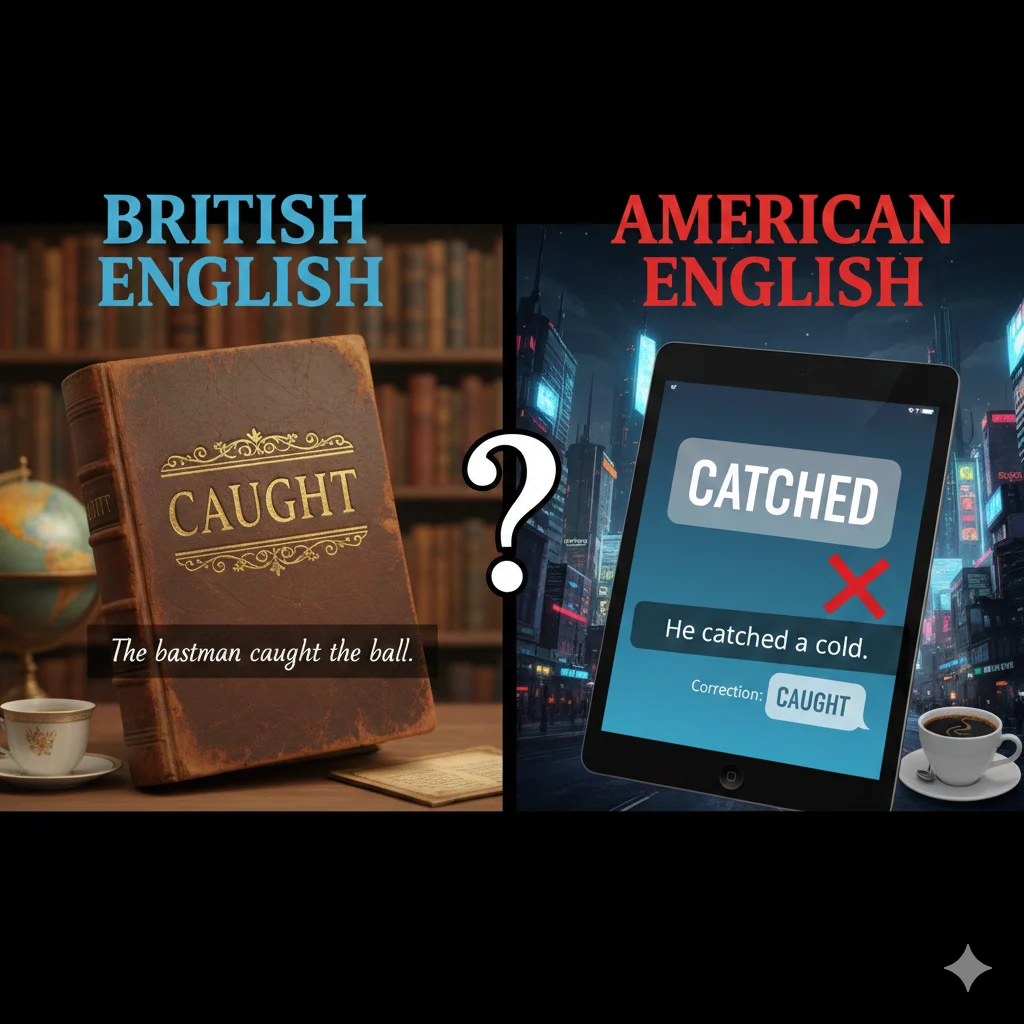
| Form | British English | American English |
|---|---|---|
| Present tense | catch | catch |
| Past tense | caught | caught |
| Past participle | caught | caught |
| Incorrect form | catched ❌ | catched ❌ |
No matter where your audience is, caught is always correct.
Stole / Stold – Correct Past Tense of Steal Explained Clearly
Catched Meaning – Is It Even a Word?
If you search for catched meaning, you might be surprised to learn that “catched” has no meaning in modern English. It is not a word recognized by dictionaries, teachers, or professional writers.
The word you are looking for is caught – the correct past tense and past participle of catch.
❌ Incorrect: I catched the ball.
✅ Correct: I caught the ball.
Some learners assume “catched” follows regular verb rules (like walk → walked), but catch is an irregular verb. Its correct forms are:
- Present: catch
- Past: caught
- Past Participle: caught
So, if you ever wonder about catched meaning, remember: it has none. Always use caught.
Which Spelling Should You Use?
The answer depends on grammar, not geography. You should always use caught.
- For US audiences: use caught
- For UK audiences: use caught
- For global or ESL audiences: use caught
Professional editors, teachers, and major dictionaries recognize caught as the only correct form. Using catched may signal weak grammar knowledge, especially in formal writing.
⚡ Catch vs Caught: What’s the Difference?
The difference between catch and caught is very simple. It’s all about time:
| Word | Tense | When to Use | Example |
|---|---|---|---|
| Catch | Present Tense | Happening NOW | I catch the ball every day. |
| Caught | Past Tense | Happened BEFORE | Yesterday I caught the ball. |
| Caught | Past Participle | 已完成 action | I have caught the ball many times. |
🕐 Think of It Like This:
| Time | Correct Form |
|---|---|
| Today / Now / Always | catch |
| Yesterday / Last week / Already finished | caught |
| Have / Has / Had | caught |
📝 Examples in Sentences:
| Time | Sentence |
|---|---|
| Present | I always catch the bus at 8 AM. |
| Past | Yesterday I caught the bus at 8 AM. |
| Present | She catches a cold every winter. |
| Past | Last year she caught a cold. |
| Present | They catch fish in this river. |
| Past | They caught five fish yesterday. |
| Present Perfect | I have caught the train already. |
| Past Perfect | He had caught the flu before. |
⚠️ Common Confusion Solved:
Many learners get confused because caught is used for BOTH:
- Simple past tense
- Past participle
✅ Example:
- I caught the ball. (simple past)
- I have caught the ball. (past participle)
❌ “I Catched” – Why It’s Always Wrong
Many learners write “I catched” because they think catch follows regular rules like walk → walked. But this is incorrect.
| ❌ Wrong | ✅ Correct |
|---|---|
| I catched the ball | I caught the ball |
| I catched the bus | I caught the bus |
| I catched a cold | I caught a cold |
| I catched up late | I caught up late |
| I catched him stealing | I caught him stealing |
📝 More Examples of “I Catched” (Wrong) vs “I Caught” (Right)
| Situation | ❌ Wrong Sentence | ✅ Correct Sentence |
|---|---|---|
| Sports | I catched the ball easily. | I caught the ball easily. |
| Transportation | I catched the train just in time. | I caught the train just in time. |
| Health | I catched a cold last week. | I caught a cold last week. |
| Progress | I catched up with my homework. | I caught up with my homework. |
| Discovery | I catched him lying. | I caught him lying. |
| Fishing | I catched three fish. | I caught three fish. |
| Understanding | I catched the meaning quickly. | I caught the meaning quickly. |
💡 Why Do People Say “I Catched”?
- Regular Verb Rule Confusion
Most English verbs add *-ed* for past tense:
walk → walked, talk → talked, play → played
Learners think catch → catched. - Children’s Common Mistake
Young children often say “I catched” before learning irregular verbs. - ESL Learners
Students learning English naturally assume catch is regular.
✅ The Correct Rule
“I catched” is NEVER correct in modern English.
Always use “I caught” for past tense.
| Tense | Correct Form |
|---|---|
| Present | I catch |
| Past | I caught |
| Past Participle | I have caught |
🎯 Simple Memory Trick
Think of these rhyming irregular verbs:
- Teach → taught (not teached)
- Buy → bought (not buyed)
- Catch → caught (not catched)
✅ I caught rhymes with I taught and I bought – all correct!💡 Easy Rule to Remember:
Present = catch
Past = caught
Never use catched
If you remember one sentence, remember this:
✅ Today I catch, yesterday I caught, and I have caught many times.
Common Mistakes with Caught or Catched
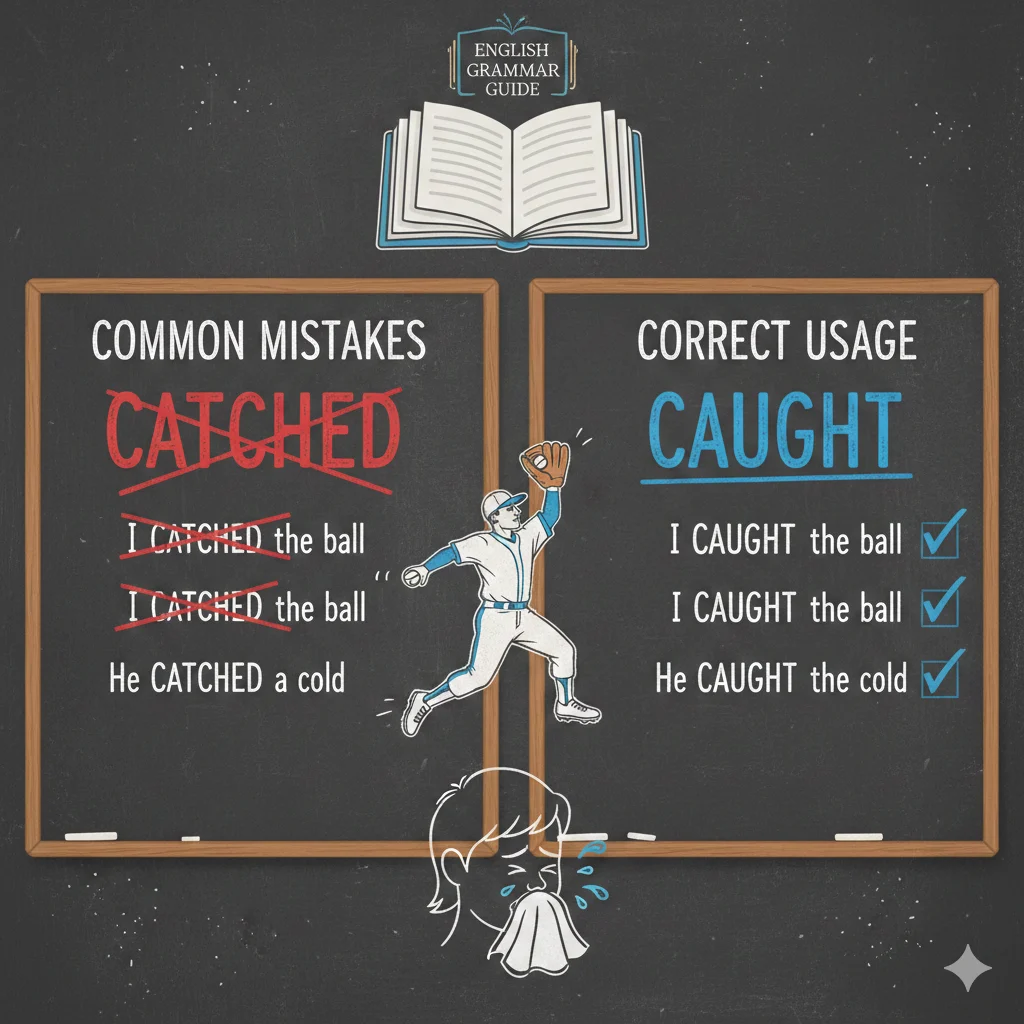
Here are common errors people make and how to correct them:
- ❌ I catched up with my work.
✅ I caught up with my work. - ❌ He has catched a cold.
✅ He has caught a cold. - ❌ She catched the idea quickly.
✅ She caught the idea quickly.
❌ “Have Catched” – Why It’s Always Wrong
Many learners write “have catched” because they think catch follows regular rules like walk → have walked. But this is incorrect.
| ❌ Wrong | ✅ Correct |
|---|---|
| I have catched the ball | I have caught the ball |
| She has catched a cold | She has caught a cold |
| He has catched the train | He has caught the train |
| They have catched up | They have caught up |
| We have catched him | We have caught him |
📝 More Examples of “Have Catched” (Wrong) vs “Have Caught” (Right)
| Situation | ❌ Wrong Sentence | ✅ Correct Sentence |
|---|---|---|
| Sports | I have catched the ball many times. | I have caught the ball many times. |
| Transportation | She has catched the early bus. | She has caught the early bus. |
| Health | He has catched the flu. | He has caught the flu. |
| Progress | They have catched up with work. | They have caught up with work. |
| Discovery | I have catched him lying before. | I have caught him lying before. |
| Fishing | We have catched five fish. | We have caught five fish. |
| Understanding | She has catched the idea now. | She has caught the idea now. |
📚 Grammar Rule: Present Perfect Tense
Present Perfect = have / has + past participle
| Verb | Past Participle |
|---|---|
| Regular verbs | walk → have walked |
| talk → have talked | |
| Irregular verbs | eat → have eaten |
| see → have seen | |
| catch → have caught ❌ NOT have catched |
⚠️ Important Rule:
✅ Caught is the only correct past participle of catch.
| Tense | Correct Form |
|---|---|
| Present Perfect | I have caught |
| She has caught | |
| They have caught | |
| Past Perfect | I had caught |
| She had caught | |
| Future Perfect | I will have caught |
❌ Have catched / Has catched / Had catched are ALL wrong.
💡 Simple Memory Trick
Think of these rhyming irregular verbs:
| Base Form | Past Participle |
|---|---|
| teach | have taught (not teached) |
| buy | have bought (not buyed) |
| catch | have caught (not catched) |
✅ Have caught rhymes with have taught and have bought – all correct!
✅ Correct Sentences with “Have Caught”
| Sentence | Correct? |
|---|---|
| I have caught the ball. | ✅ Correct |
| She has caught a cold. | ✅ Correct |
| He has caught the train. | ✅ Correct |
| They have caught up. | ✅ Correct |
| We have caught the thief. | ✅ Correct |
| I have caught the meaning. | ✅ Correct |
❌ Never use “have catched” or “has catched”
Remember: catch past tense and past participle are both caught.
Caught or Catched in Everyday Examples
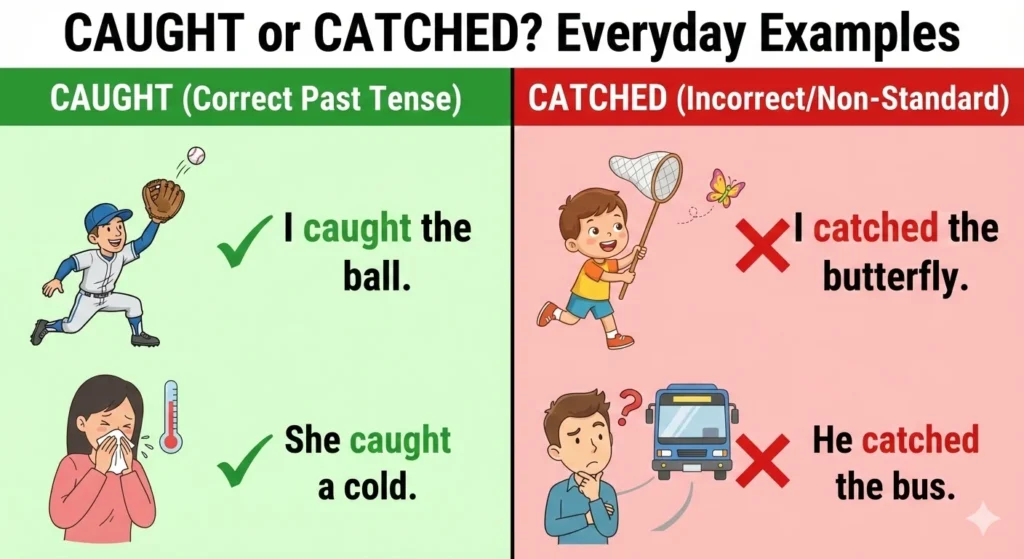
Emails
- Sorry, I caught your message late.
News
- The criminal was caught after a long chase.
Social Media
- Finally caught up with my favorite series.
Formal Writing
- The researcher caught an error in the report.
These examples show correct usage in real communication.
Caught or Catched – Google Trends & Usage Data
Search trends show high interest in questions like:
- Is catched a word
- Caught catched past tense
- Catched up or caught up
These searches are common in ESL regions and among students. Published content, academic writing, and professional media overwhelmingly use caught. Catched appears mainly in search queries, not in correct usage.
Comparison Table: Caught vs Catched
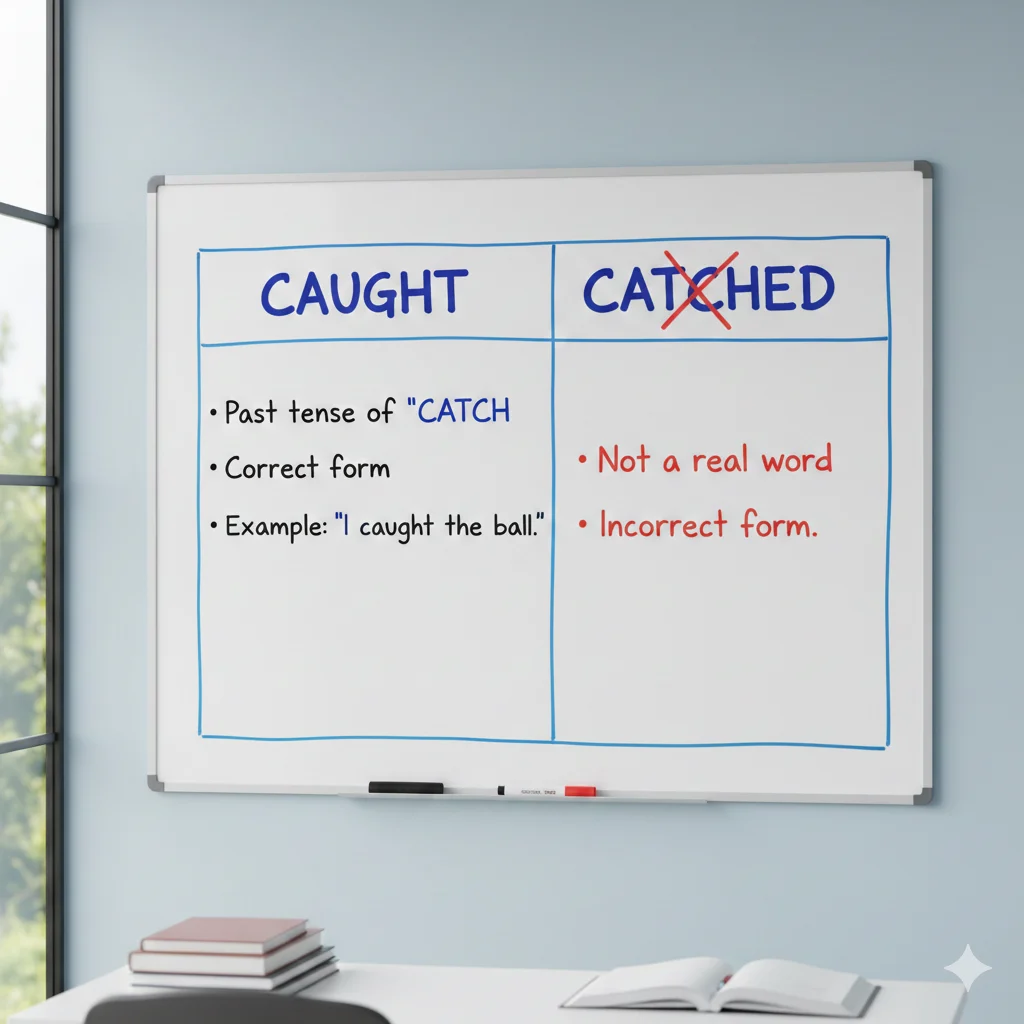
| Feature | Caught | Catched |
|---|---|---|
| Correct English | Yes | No |
| Past tense of catch | Yes | No |
| Past participle | Yes | No |
| Used in exams | Yes | No |
| Used by professionals | Yes | No |
✍️ How to Spell “Catch” – Correct Spelling Guide
Many people search for “catch spelling” because they want to confirm how to write this word correctly. Here’s your complete guide:
📝 Correct Spelling of “Catch” (Present Tense)
| Form | Spelling | Example |
|---|---|---|
| Base form | C-A-T-C-H | I can catch the ball. |
| Third person singular | C-A-T-C-H-E-S | She catches the bus every day. |
| Present participle | C-A-T-C-H-I-N-G | He is catching a cold. |
✅ Catch is spelled C-A-T-C-H – 5 letters, starting with C, ending with H.
🔍 Common Misspellings of “Catch” (Avoid These!)
| ❌ Wrong Spelling | ✅ Correct Spelling |
|---|---|
| cach | catch |
| cetch | catch |
| katch | catch |
| catsh | catch |
| cathc | catch |
📚 Spelling of “Caught” (Past Tense)
The past tense “caught” is spelled C-A-U-G-H-T – 6 letters.
| ❌ Wrong Spelling | ✅ Correct Spelling |
|---|---|
| catched | caught |
| caut | caught |
| caugt | caught |
| cought | caught |
| cahgt | caught |
🎯 Quick Spelling Rules
| Word | Letters | Spelling Pattern |
|---|---|---|
| Catch | 5 | C + A + T + C + H |
| Catches | 7 | C + A + T + C + H + E + S |
| Catching | 8 | C + A + T + C + H + I + N + G |
| Caught | 6 | C + A + U + G + H + T |
💡 Memory Trick for “Caught” Spelling
Think of these rhyming words – they all end with -AUGHT:
| Word | Spelling |
|---|---|
| Caught | C + AUGHT |
| Taught | T + AUGHT |
| Bought | B + OUGHT (similar sound) |
| Thought | TH + OUGHT |
✅ Caught = C + AUGHT
📝 Example Sentences with Correct Spelling
| Word | Example Sentence |
|---|---|
| Catch | Please catch the ball. |
| Catches | She always catches the early train. |
| Catching | He is catching fish in the river. |
| Caught | Yesterday I caught a cold. |
| Caught | They have caught the thief. |
FAQs
1. Is catched a word?
No. Catched is not accepted in standard modern English.
2. What is the past tense of catch?
The past tense of catch is caught.
3. What is the past tense of catch a cold?
You say: I caught a cold.
4. Catched up or caught up?
Caught up is correct.
5. What is the past tense of catch 🫴 a caught b catched c caughted?
Correct answer: a) caught.
6. When to use catched and caught?
You should only use caught.
7. Caught catched examples—are any correct with catched?
No. All correct examples use caught.
What is the past tense of caught?
This is a very common question, and the answer is simple:
“Caught” is ALREADY the past tense.
You cannot change “caught” into another past tense because it is already in past form.
🔍 Understanding This Confusion
Some learners get confused and think:
“If catch becomes caught in past tense, then what does caught become?”
The answer: NOTHING. “Caught” is the final past form.
| Base Form | Past Tense | Past Participle |
|---|---|---|
| catch | caught | caught |
| teach | taught | taught |
| buy | bought | bought |
📝 Examples to Clear Confusion
| ❌ Wrong Question | ✅ Correct Understanding |
|---|---|
| What is the past of caught? | Caught is the past |
| I caughted the ball? | ❌ Wrong – I caught the ball |
| She has caughted a cold? | ❌ Wrong – She has caught a cold |
| They catched it yesterday? | ❌ Wrong – They caught it yesterday |
⚠️ Common Mistakes People Make
Some learners try to add another past ending to “caught”:
| ❌ Incorrect | ✅ Correct |
|---|---|
| caughted | caught |
| have caughted | have caught |
| had caughted | had caught |
| was caughted | was caught |
💡 Simple Rule to Remember
“Caught” is the destination – not the journey.
| Tense | Correct Form |
|---|---|
| Present | catch |
| Past | caught (already past – no further change) |
| Past Participle | caught (already past – no further change) |
🎯 Think of It Like This:
| Word | Past Tense | Can it change further? |
|---|---|---|
| walk | walked | ❌ No (already past) |
| teach | taught | ❌ No (already past) |
| catch | caught | ❌ No (already past) |
| buy | bought | ❌ No (already past) |
✅ Correct Sentences
| Sentence | Correct? |
|---|---|
| I caught the ball. | ✅ Correct |
| I have caught the ball. | ✅ Correct |
| I had caught the ball. | ✅ Correct |
| ❌ I caughted the ball. | ❌ Wrong |
| ❌ I have caughted the ball. | ❌ Wrong |
Conclusion
The confusion between caught or catched is common, but the rule is clear and simple. Caught is the correct past tense and past participle of catch, and catched is not accepted in modern English. This rule applies across British English, American English, and global usage.
Understanding irregular verbs improves writing accuracy and confidence. Whether you are writing an exam, sending a professional email, posting on social media, or publishing content, using caught shows strong grammar knowledge. English may seem inconsistent, but patterns exist, and catch → caught follows the same pattern as teach → taught and buy → bought.
If you remember one sentence, remember this: You catch something today, and you caught it yesterday. With that clarity, you will never hesitate again when choosing between caught and catched, and your English will sound natural, polished, and correct every time.

Helen Oyeyemi is an acclaimed novelist known for her imaginative, lyrical storytelling and modern fairy-tale style that blends mystery with magic.