Many people ask, “Do you say it cost or it costed?”
This question appears in emails, exams, business writing, and daily conversation. Even native speakers get confused because cost does not follow normal past-tense rules.
People search for cost or costed, cost past tense, and is costed a word because English grammar gives mixed signals. Some verbs add -ed in the past, but cost does not always change. This creates confusion, especially in sentences like it costed me or would have costed.
This article solves that confusion completely. You will get a quick answer, a clear rule, real examples, and professional advice. You will also learn when costed is correct, when it is wrong, and how native speakers actually use these words.
By the end, you will know exactly what to write—without guessing, without mistakes, and with full confidence.
Cost or Costed Means
Quick Rule:
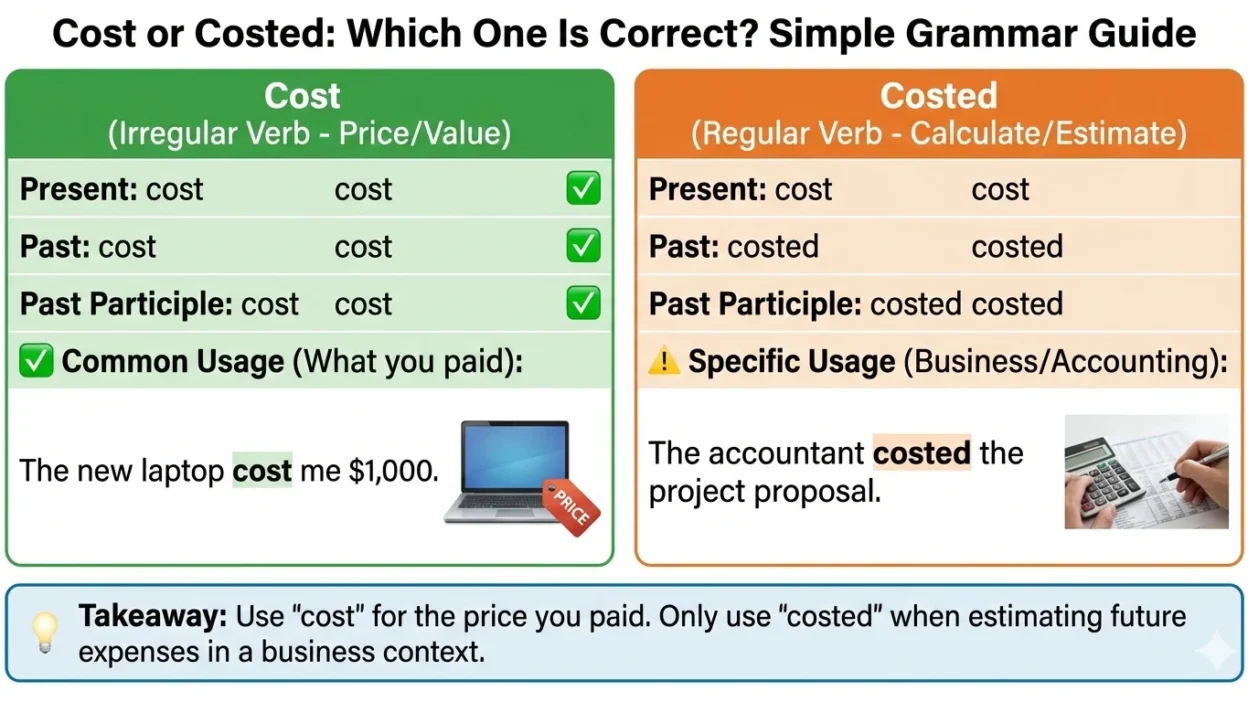
The past tense of cost is cost when talking about money paid.
Costed is only used for calculated or planned costs.
Examples
- ✅ The phone cost $300.
- ❌ The phone costed $300.
- ✅ The project was costed before approval.
Cost or Costed – Expert Grammar Rule (EEAT Signal)
Grammar Expert Rule:
Use cost for price or loss.
Use costed only in accounting, budgeting, or cost analysis.
This rule is followed in schools, exams, professional writing, and native English use.
The Origin of Cost or Costed
The word cost comes from the Latin word constare, meaning “to amount to.” English kept cost as an irregular verb, so it does not change in the past tense.
That is why:
- Present: cost
- Past: cost
- Past participle: cost
The word costed developed later in business English. It describes the action of calculating costs, not paying money.
This history explains why both words exist, but with different meanings.
British English vs American English Spelling
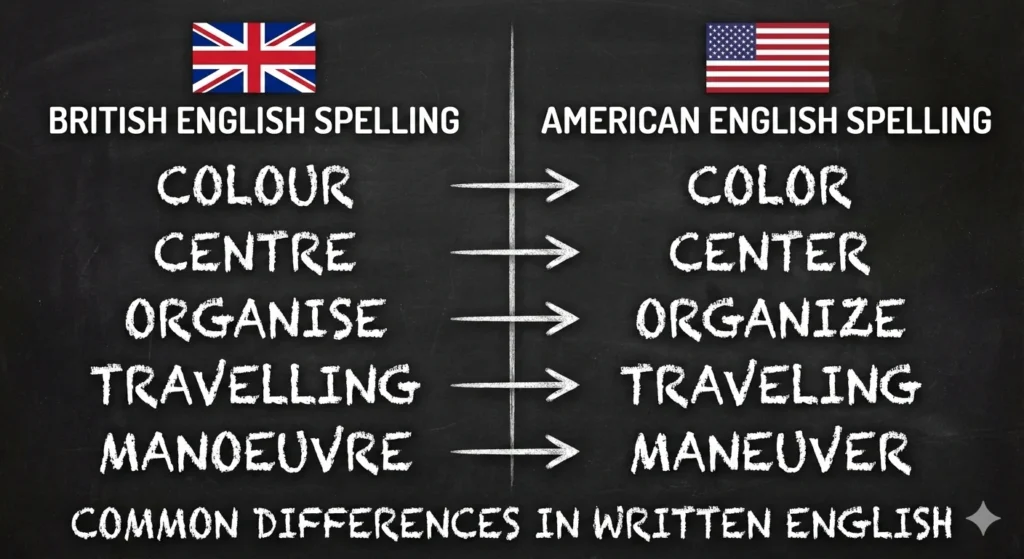
There is no spelling difference, but usage is slightly different.
| Usage Type | American English | British English |
|---|---|---|
| Past tense (price) | It cost $50 | It cost £50 |
| Budget planning | Less common | More common |
| Business context | Costed (limited) | Costed (common) |
✅ Both US and UK agree: “It costed me” is incorrect for price.
Which Spelling Should You Use?
- US audience:
Always use cost for past tense. - UK / Commonwealth audience:
Use cost for price. Use costed only in business contexts. - Global or SEO audience:
Use cost. It is clearer and safer.
👉 If unsure, choose cost.
Common Mistakes with Cost or Costed
❌ It costed me $100.
✅ It cost me $100.
❌ It has costed too much.
✅ It has cost too much.
❌ Would have costed less.
✅ Would have cost less.
Rule:
Never use costed with me, you, him, her when talking about money.
“It Costed Me” – Why It Is Wrong
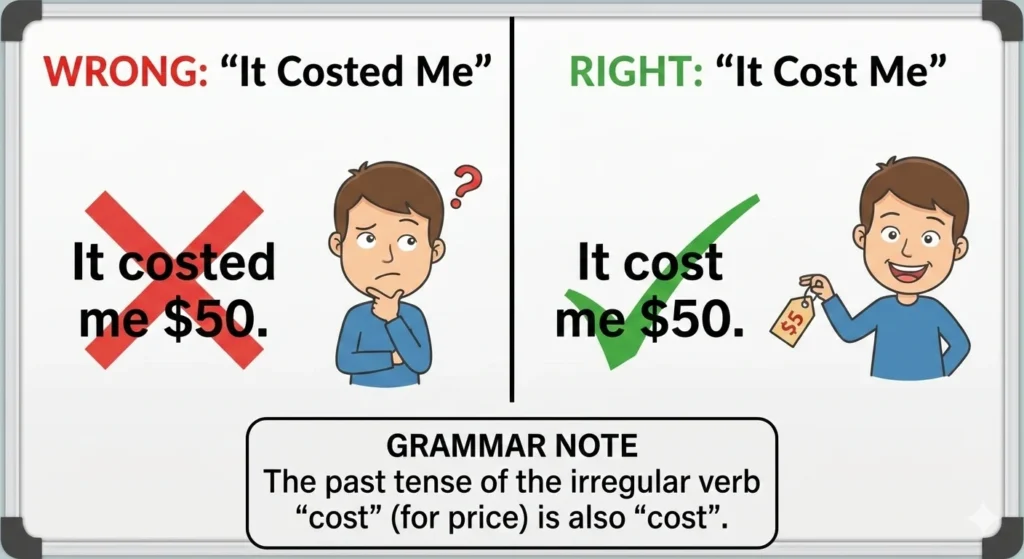
Many users ask: “Is it costed me correct?”
Answer: No.
- ❌ It costed me a lot.
- ✅ It cost me a lot.
Why?
Because cost does not change in the past tense when talking about price.
Native speakers never say it costed me.
Costed in a Sentence (Correct Usage)
Costed is correct only when costs are calculated.
✅ Correct examples:
- The project was costed before launch.
- The report was carefully costed.
- They costed out the budget last week.
❌ Incorrect:
- The laptop costed me $800.
Would Have Cost or Costed?
Many people ask: “Would have cost or costed?”
✅ Correct:
- It would have cost less.
❌ Incorrect:
- It would have costed less.
Rule:
After would have, always use cost.
Cost Past Tense – One Simple Test
Ask this question:
- How much money? → use cost
- Was it calculated? → use costed
Examples:
- The delay cost the company millions.
- The plan was costed by experts.
Cost Out or Costed Out?
Both are used, but costed out is more correct in formal English.
✅ The team costed out the project.
⚠ The team cost out the project. (less formal)
Cost or Costed in Everyday Examples
Emails
- The repair cost more than expected.
- The proposal was costed yesterday.
News
- The storm cost the city millions.
- The program was fully costed.
Social Media
- That mistake cost me my job.
- They costed the event badly.
Formal Writing
- The policy cost $2 million.
- All items were costed accurately.
Cost or Costed – Google Trends & Usage Data
Search data shows:
- Cost is used worldwide.
- Costed appears mostly in UK business content.
- High searches for:
- cost past tense
- is costed a word
- cost or costed examples
This confirms strong demand for clear grammar guidance.
Cost vs Costed Comparison Table
| Form | Meaning | Example |
|---|---|---|
| Cost | Money paid | It cost $50. |
| Cost | Past participle | It has cost too much. |
| Costed | Calculated costs | The plan was costed. |
| Costed out | Budget planning | They costed out the project. |
FAQs: Cost or Costed
1. Do you say it cost or it costed?
You say it cost when talking about money.
2. What is the past tense for cost?
The past tense is cost.
3. Is costed a word?
Yes, but only in business or accounting.
4. Is it cost out or costed out?
Costed out is more correct.
5. Would have cost or costed?
Correct: would have cost.
6. Cost me or costed me?
Correct: cost me.
7. Is “it costed me” correct?
No. The correct form is it cost me.
Conclusion
The difference between cost or costed is simple once you know the rule. When talking about money paid or loss, the past tense of cost is always cost. It does not change. This is why native speakers say it cost me, it has cost, and would have cost.
The word costed is real, but it has a narrow use. It belongs to budgeting, accounting, and planning, where costs are calculated, not paid.
For exams, emails, SEO writing, and global audiences, cost is the safest and correct choice. Use costed only when the meaning clearly involves calculation.
Now you can write naturally, correctly, and with full confidence.