Confused between “gloomy” and “sullen”? Both words describe negative moods, but their usage and nuance differ. Using the wrong word can make your writing less precise or clear.
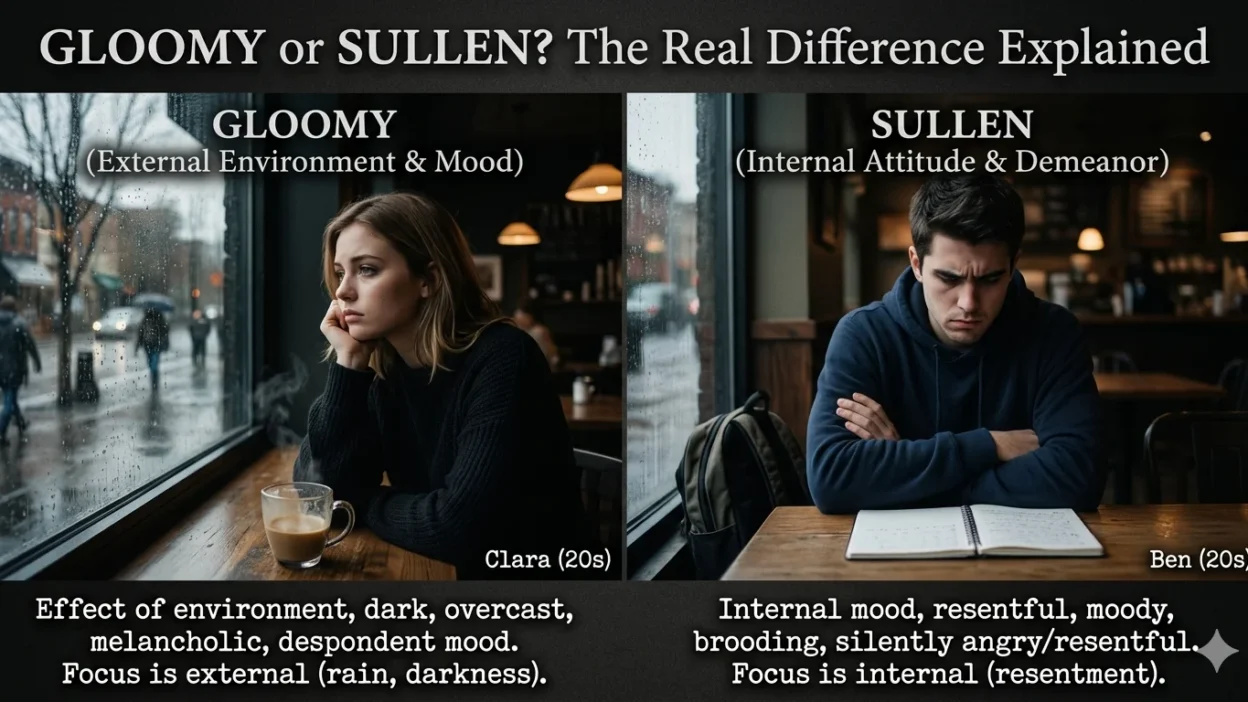
- “Gloomy” describes a general sense of darkness, sadness, or low spirits. Example: “The weather was gloomy, making everyone feel tired and quiet.”
- “Sullen” refers to a moody, silent, or sulky attitude, often showing resentment or irritation. Example: “He was sullen after the argument and didn’t speak all evening.”
This guide explains the difference between gloomy and sullen, provides clear examples in sentences, and offers tips to remember which word to use. Mastering this distinction helps you write vividly, accurately, and professionally.
Gloomy or Sullen Means
Featured Snippet Definition
| Word | Simple Meaning |
|---|---|
| Gloomy | sad, dark, or depressing mood |
| Sullen | silent anger or moody attitude |
Examples
- The sky looked gloomy before the storm.
- The child sat quietly with a sullen expression.
Both words relate to negative emotions, but their usage is different.
The Origin of Gloomy or Sullen
Origin of Gloomy
The word gloomy comes from the Old English word glom, which means darkness or shadow. Over time, the meaning expanded to describe sadness, dark weather, or depressing situations.
Examples:
- gloomy sky
- gloomy mood
- gloomy forecast
This word is often used when talking about dark mood or negative outlook.
Origin of Sullen
The word sullen comes from the Old French word solain, which originally meant alone or withdrawn. Later, it evolved to describe someone who is quietly angry or resentful.
Examples:
- sullen silence
- sullen teenager
- sullen expression
Because both words describe negative emotions, people sometimes treat them as synonyms.
British English vs American English Spelling
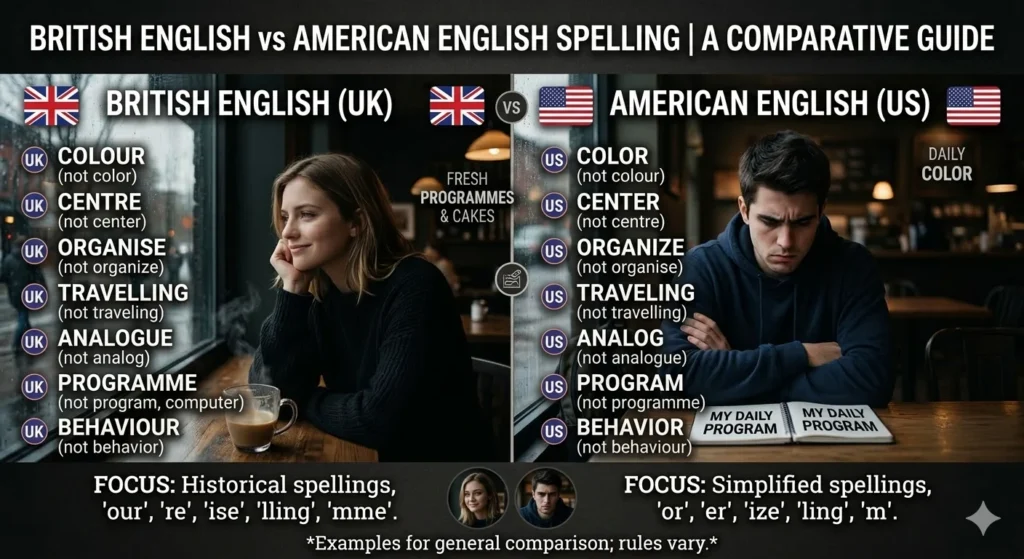
Unlike some English words, gloomy and sullen have the same spelling in British and American English.
Comparison Table
| Feature | British English | American English |
|---|---|---|
| Word | gloomy | gloomy |
| Word | sullen | sullen |
| Usage | Common in literature | Common in everyday speech |
Example sentences:
UK style
- The weather looks gloomy today.
US style
- He gave a sullen response during the interview.
Which Word Should You Use?
Use “Gloomy” When Talking About
- weather
- atmosphere
- sad mood
- negative predictions
Examples
- gloomy weather
- gloomy outlook
- gloomy atmosphere
Use “Sullen” When Talking About
- a person’s attitude
- silent anger
- moody personality
Examples
- sullen teenager
- sullen silence
- sullen look
Common Mistakes with Gloomy or Sullen
Mistake 1
Incorrect
The sky is sullen today.
Correct
The sky is gloomy today.
Mistake 2
Incorrect
He gave a gloomy look after the argument.
Correct
He gave a sullen look after the argument.
Mistake 3
Thinking they mean exactly the same thing.
In reality, gloomy describes sadness, while sullen describes silent anger.
Gloomy or Sullen in Everyday Examples
Email Example
The report gives a gloomy outlook for the market.
News Example
The coach answered questions with a sullen expression.
Social Media Example
Feeling gloomy because of the rainy weather.
Formal Writing Example
The character remained sullen and silent during the meeting.
Example phrase often used in literature:
having a gloomy or sullen manner
Gloomy or Sullen – Google Trends & Usage Data
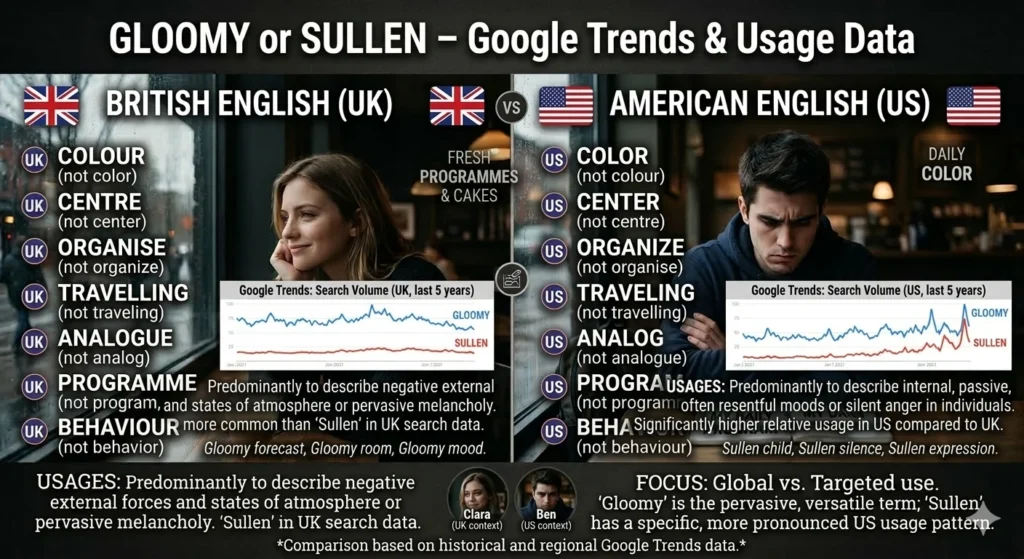
Search data shows that people search gloomy or sullen mostly for vocabulary learning and crossword puzzles.
Popular Searches
- gloomy or sullen meaning
- gloomy or sullen synonym
- gloomy synonym
- sullen synonym
- gloomy or sullen crossword clue
- gloomy or sullen crossword clue 4 letters
Countries With Highest Interest
- United States
- United Kingdom
- Canada
- Australia
- India
Crossword Clue Answers for Gloomy or Sullen
Many crossword puzzles include clues such as gloomy or sullen crossword clue.
Crossword Table
| Crossword Clue | Answer |
|---|---|
| gloomy or sullen 4 letters | dour |
| gloomy or sullen 5 letters | glum |
| gloomy or sullen as with a look | dour |
| gloomy or sullen crossword | dour |
The word dour means stern, gloomy, or unfriendly.
Synonyms of Gloomy and Sullen
Gloomy Synonym
Common synonyms:
- bleak
- dark
- dreary
- depressing
- somber
Example sentence
The forecast looks bleak and gloomy.
Sullen Synonym
Common synonyms:
- sulky
- moody
- dour
- resentful
- unfriendly
Example sentence
The boy sat with a sulky and sullen expression.
Antonyms (Opposite Words)
| Word | Opposite |
|---|---|
| Gloomy | cheerful |
| Gloomy | bright |
| Sullen | friendly |
| Sullen | happy |
Comparison Table: Gloomy vs Sullen
| Feature | Gloomy | Sullen |
|---|---|---|
| Meaning | Sad or depressing mood | Silent anger |
| Context | Weather, mood | Personality |
| Tone | Dark or hopeless | Moody |
| Example | gloomy sky | sullen face |
Related Expressions
These expressions are often used with these words:
- gloomy mood
- gloomy outlook
- sullen silence
- sullen personality
- dour expression
- glum attitude
FAQs
What does sullen and gloomy mean?
Gloomy means sad or dark. Sullen means silently angry or unfriendly.
What is another word for gloomy?
Common gloomy synonyms include bleak, dreary, dark, and depressing.
What is the synonym of sullen?
Common sullen synonyms include sulky, moody, dour, and resentful.
What is the difference between gloomy and sullen?
Gloomy describes sadness or dark mood, while sullen describes silent anger.
What is gloomy or sullen crossword clue 4 letters?
The most common crossword answer is DOUR.
What does gloomy or sullen as with a look mean?
It describes a dark or unfriendly facial expression.
What does having a gloomy or sullen manner mean?
It means someone behaves in a sad, quiet, or unfriendly way.
Conclusion
Understanding the difference between gloomy and sullen helps improve both vocabulary and communication. Although these words seem similar, they describe different emotional situations.
Gloomy refers to sadness, darkness, or a depressing atmosphere. It is commonly used for weather, mood, and outlook. Phrases like gloomy weather or gloomy forecast describe situations that feel negative or hopeless.
Sullen, however, describes a person’s behavior. It refers to someone who is quietly angry, resentful, or unfriendly. A person who refuses to speak after an argument may show a sullen expression.
This distinction is also useful when solving puzzles like gloomy or sullen crossword clues, where the answer is often DOUR.
Using the correct word will make your writing clearer, more accurate, and more professional.

Daisy Johnson is a creative writer who crafts vivid similes and poetic expressions to help readers enrich their language and imagination.