
Confused between “inclusive” and “exclusive”? Many students and writers mix these words up, but their meanings are very different, and using the wrong one can completely change the meaning of a sentence. Understanding the distinction is key for clear and professional writing.
In simple terms, “inclusive” refers to including everyone or everything, embracing all parts or members, while “exclusive” refers to excluding others or being limited to a particular group.
This guide explains the difference between inclusive and exclusive, shows clear examples in sentences, and provides tips to remember which word to use. By mastering these words, you can write confidently, avoid misunderstandings, and communicate your ideas accurately. everything clearly with examples, tables, comparisons, and everyday usage so you can fully understand when to use inclusive or exclusive.
Inclusive or Exclusive Means
Inclusive = Boundary values are included.
Exclusive = Boundary values are not included.
Example Table
| Range | Type | Meaning |
|---|---|---|
| [1,10] | Inclusive | Includes 1 and 10 |
| (1,10) | Exclusive | Excludes 1 and 10 |
Inclusive OR vs Exclusive OR
| Logic Type | Meaning |
|---|---|
| Inclusive OR | True if one or both conditions are true |
| Exclusive OR | True if only one condition is true |
The Origin of Inclusive and Exclusive
Inclusive comes from Latin includere (to include).
Exclusive comes from Latin excludere (to shut out).
Originally used in law and philosophy, now common in math, statistics, programming, data science, and business. These terms define limits, ranges, and groups.
British vs American English Spelling
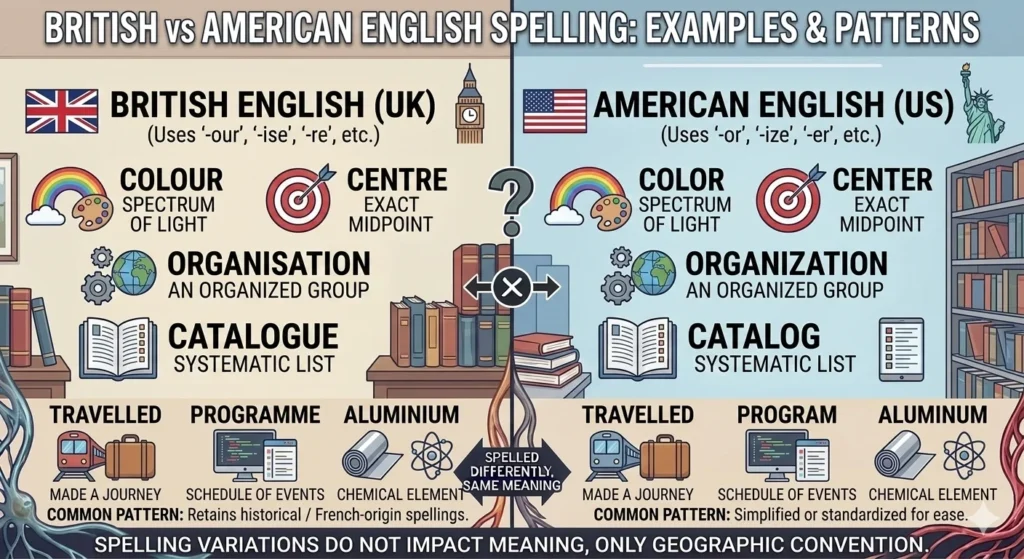
No difference in spelling or meaning.
| Feature | American English | British English |
|---|---|---|
| Spelling | Inclusive / Exclusive | Inclusive / Exclusive |
| Meaning | Same | Same |
| Usage | Same | Same |
Which Word Should You Use?
Use Inclusive when:
- Boundaries are included
- All items belong to a group
- Data ranges include endpoints
Example: “The package is inclusive of taxes and breakfast.”
Use Exclusive when:
- Limits are removed
- Access is restricted
- Some items are excluded
Example: “This VIP lounge is exclusive to members.”
Inclusive vs Exclusive in Math
Mathematical ranges can be inclusive or exclusive.
- Inclusive: 5 ≤ x ≤ 15 → 5 and 15 included
- Exclusive: 5 < x < 15 → 5 and 15 excluded
| Symbol | Meaning |
|---|---|
| [ ] | Inclusive |
| ( ) | Exclusive |
✅ Tip: Always check brackets to avoid mistakes.
Inclusive vs Exclusive in Programming
Programming uses inclusive and exclusive loops or conditions.
- Inclusive loop: Includes boundary value (e.g., 1–10 includes 10)
- Exclusive loop: Stops before boundary (e.g., 1–10 stops at 9)
This answers: “What is the difference between inclusive and exclusive in programming?”
Inclusive and Exclusive Meaning in Statistics
Statistics uses inclusive and exclusive intervals:
- Inclusive Data: 10 ≤ X ≤ 20 → includes both ends
- Exclusive Data: 10 < X < 20 → excludes boundaries
This affects:
- Frequency tables
- Grouped data
- Dataset analysis
Common searches:
- Is inclusive or exclusive math
- Inclusive vs exclusive data
- Inclusive and exclusive meaning in statistics
Common Mistakes
- Confusing brackets: [ ] = Inclusive, ( ) = Exclusive
- Confusing logical OR: Inclusive OR allows one/both true, Exclusive OR allows only one
- Misunderstanding lists: Inclusive list includes all items, Exclusive removes some
- Data ranges: Check if endpoints are included or excluded
Inclusive or Exclusive in Everyday Life
- Email: “The subscription is inclusive of fees.”
- Business: “This plan gives exclusive benefits.”
- Social Media: “Get exclusive early access to features.”
Example sentences:
- “The hotel price is inclusive of breakfast.”
- “This club is exclusive for VIP members.”
Inclusive vs Exclusive – Comparison Table
| Feature | Inclusive | Exclusive |
|---|---|---|
| Boundary values | Included | Excluded |
| Math notation | [ ] | ( ) |
| Logical operator | Inclusive OR | Exclusive OR |
| Lists | All items included | Some items excluded |
| Data ranges | Endpoints included | Endpoints excluded |
| Programming loops | Includes limit | Stops before limit |
FAQs
1. Difference between inclusive and exclusive OR?
Inclusive OR: one or both true. Exclusive OR: only one true.
2. Difference between inclusive and exclusive list?
Inclusive list includes all items. Exclusive list removes some items.
3. Inclusive vs exclusive in programming?
Inclusive includes boundaries. Exclusive stops before boundary.
4. Difference in data?
Inclusive data ranges include start/end. Exclusive excludes one or both.
5. Is [] inclusive or exclusive?
Square brackets [ ] are inclusive.
6. Synonyms?
Inclusive → comprehensive, all-inclusive
Exclusive → restricted, limited, private
Conclusion
The difference between inclusive and exclusive is whether boundaries or items are included.
- Inclusive: endpoints included, all items counted
- Exclusive: endpoints excluded, limits removed
Important in math, programming, statistics, data analysis, and daily communication. Using the wrong type can cause calculation or logic errors.
Businesses also use these terms:
- Inclusive pricing: everything included
- Exclusive offers: limited access
Understanding inclusive or exclusive ensures accuracy, clarity, and professional communication.

Daisy Johnson is a creative writer who crafts vivid similes and poetic expressions to help readers enrich their language and imagination.