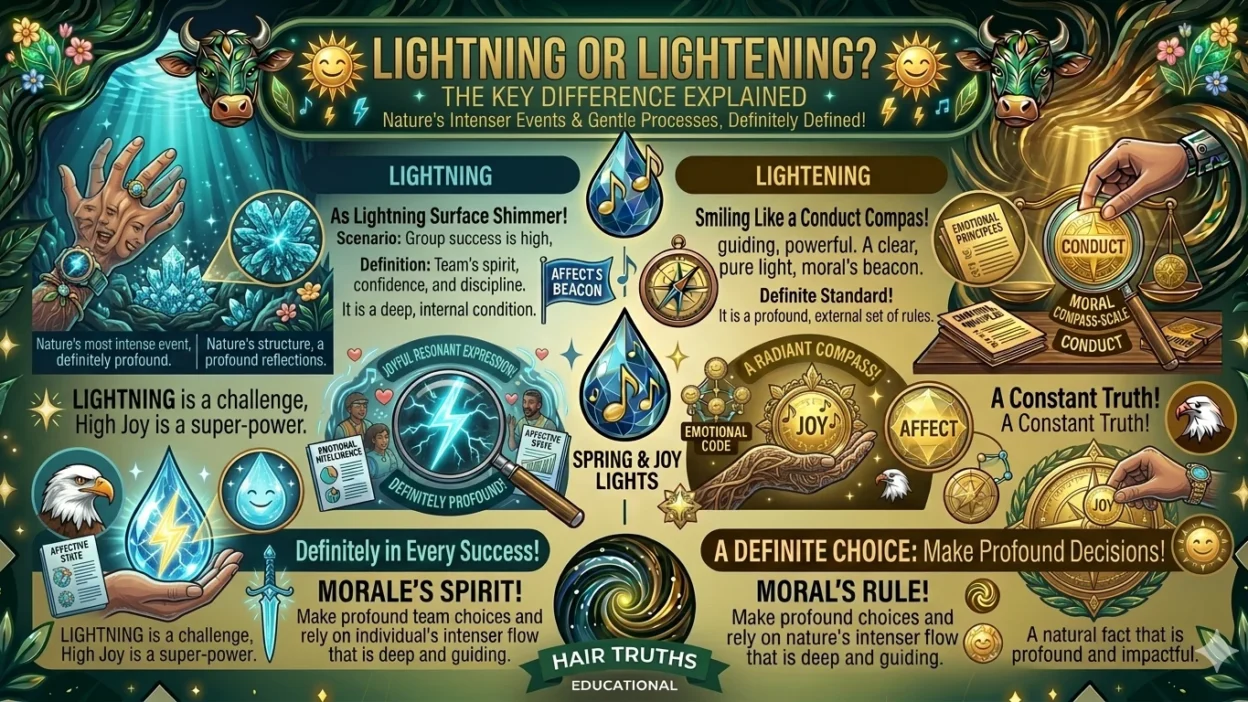
Confused between lightning and lightening? These two words look similar, but they have completely different meanings. Using the wrong one can easily confuse readers and change the meaning of your sentence.
Lightning refers to the bright flash of electricity in the sky during a storm. For example: “The lightning lit up the entire sky.”
On the other hand, lightening is the present participle of lighten, which means to make something lighter in weight, color, or mood. For example: “She is lightening her hair for summer.”
Understanding the difference between lightning and lightening helps you write more clearly and accurately. In this guide, you’ll learn the correct meanings, examples, and simple tips to avoid this common mistake. ✨
Lightning or Lightening Means
Lightning = the bright flash in the sky during a storm.
👉 Example: The lightning lit up the night sky.
Lightening = making something lighter (in weight, color, or mood).
👉 Example: She is lightening her hair.
✔️ Simple rule:
- If it’s about weather → lightning
- If it means “making lighter” → lightening
The Origin of Lightning or Lightening
The confusion comes from their shared root word: “light.”
- Lightning comes from Old English “lihting”, meaning a flash of light in the sky. Over time, the spelling dropped the extra “e.”
- Lightening comes from the verb “lighten”, which means to make something less heavy or less dark.
Why is lightning spelled like that?
Because it evolved differently from “lighten.” The word lightning is not directly tied to the verb form anymore, so it lost the extra “e.”
Why is it called lightening?
Because it literally means to lighten something—reduce weight, brightness, or seriousness.
British English vs American English Spelling
Good news: there is no difference between British and American English for these words.
| Context | British English | American English |
|---|---|---|
| Weather flash | Lightning | Lightning |
| Making lighter | Lightening | Lightening |
✔️ Both forms are correct globally—but only in the right context.
Which Spelling Should You Use?
Choosing the correct word depends on meaning, not location:
- 🇺🇸 US audience → Use lightning for storms
- 🇬🇧 UK audience → Same rule applies
- 🌍 Global audience → Follow meaning, not spelling variatio
Common Mistakes with Lightning or Lightening
Here are frequent errors:
❌ The lightening struck the tree.
✔️ The lightning struck the tree.
❌ She bought lightning cream for her skin.
✔️ She bought lightening cream for her skin.
❌ Mixing both in one context
✔️ Always match meaning with the correct word
Lightning or lightening grammar tip
- Lightning = noun
- Lightening = verb (present participle)
Lightning or Lightening in Everyday Examples
Emails
- The storm caused heavy lightning last night.
- We are lightening the workload this week.
News
- Lightning damages homes across the city.
- The company is lightening its environmental impact.
Social Media
- That lightning was impulsive ⚡
- Thinking about lightening my hair this summer
Formal Writing
- Lightning is a natural electrical discharge.
- The policy aims at lightening financial pressure.
Lightning or Lightening – Google Trends & Usage Data
- Lightning is searched far more often globally 🌍
- High usage in countries with frequent storms (US, India, Australia)
- Lightening appears more in:
- Beauty (hair lightening)
- Writing (lightening mood, tone)
SEO Insight (2026)
- “Lightning or lightening meaning” → high search intent
- “Lightning or thunder” → informational keyword
- “Lightening vs lightning pronunciation” → educational content
👉 Use both words naturally to improve topical authority (EEAT).
Lightning or Lightening Meaning (Comparison Table)
| Word | Meaning | Example | Usage Type |
|---|---|---|---|
| Lightning | Flash in the sky | Lightning struck the tree | Noun |
| Lightening | Making lighter | She is lightening her hair | Verb |
Lightning or Lightening Pronunciation
- Lightning → /ˈlaɪt.nɪŋ/ (no extra syllable)
- Lightening → /ˈlaɪt.ən.ɪŋ/ (extra “uh” sound)
👉 This helps you hear the difference clearly.
FAQs
1. What does lightening mean?
Lightening means making something lighter in color, weight, or mood.
2. Why is lightning spelled like that?
Because it evolved from Old English and dropped the extra “e” over time.
3. How do you spell lighting?
“Lighting” (without extra letters) refers to illumination, not storms.
4. Lightning or thunder – what’s the difference?
Lightning is the flash of light; thunder is the sound that follows.
5. Is lightning or lightening used in the UK?
Both are used, but meanings stay the same as in American English.
6. Which is correct: lightning or lightening?
Both are correct—but only in the right context.
7. Lightning or lightening in a sentence?
- Lightning: The lightning was bright.
- Lightening: She is lightening the paint color.
Conclusion
Understanding the difference between lightning and lightening is simple once you focus on meaning. Lightning refers to the powerful flash in the sky during a storm, while lightening means making something lighter in color, weight, or tone. Even though they look similar, using the wrong one can confuse readers and reduce the clarity of your writing.
For SEO, academic writing, and professional communication in 2026, accuracy matters more than ever. Search engines reward clear, helpful content that matches user intent. That’s why using the correct word not only improves grammar but also boosts your credibility and rankings.
If you remember one rule, let it be this:
👉 Storm = lightning
👉 Making lighter = lightening
By applying this simple tip, you’ll avoid common mistakes and write with confidence every time.

Jon McGregor is an award-winning British novelist known for his poetic prose, vivid imagery, and deeply human storytelling.