Confused between morale and moral? These two words look and sound similar, but they have very different meanings. Using the wrong one can easily change the meaning of your sentence and make your writing confusing.
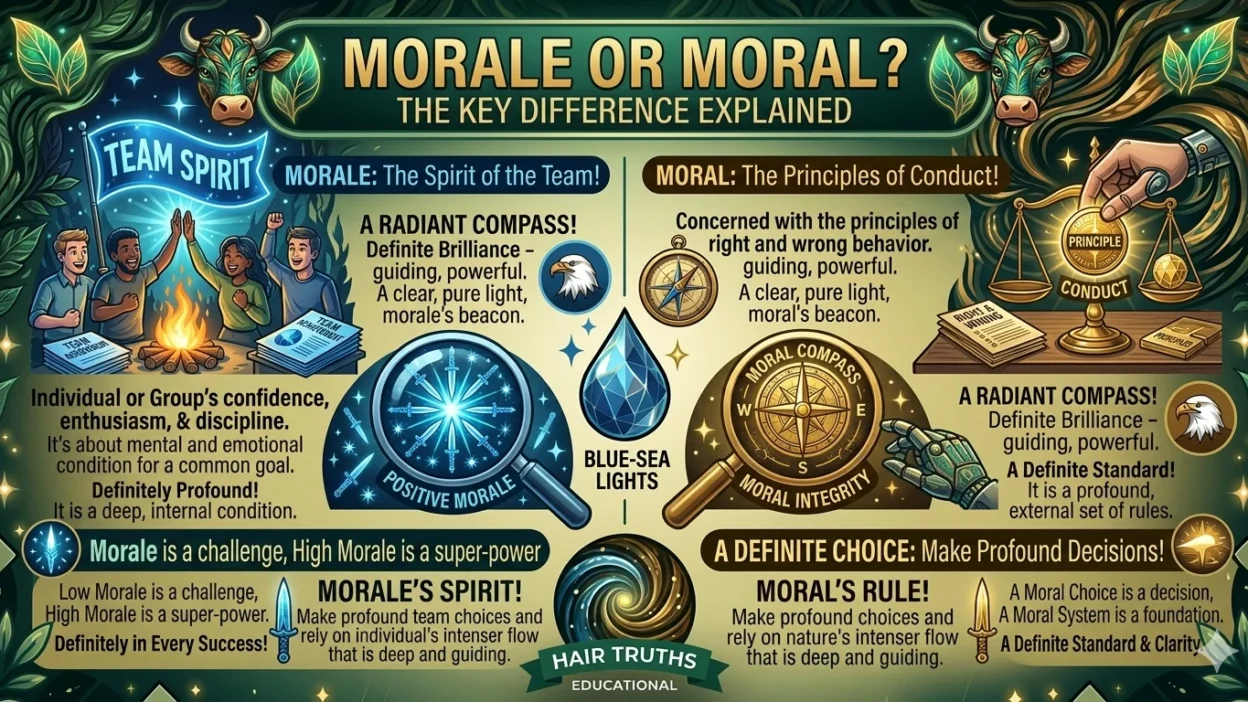
Morale refers to the confidence, enthusiasm, or spirit of a person or group. For example: “Team morale improved after the big win.” In contrast, moral relates to principles of right and wrong or ethical behavior. For example: “Honesty is an important moral value.”
Understanding the difference between morale and moral helps you write more clearly and professionally. In this guide, you’ll learn the correct meanings, simple examples, and easy tips to remember which word to use in everyday writing. ✨
Morale or Moral Means
- Moral = right or wrong behavior (values, ethics)
- Morale = feelings or confidence (spirit, mood)
Examples:
- Moral: “The moral of the story is to be honest.”
- Morale: “Team morale is very high today.”
👉 Quick tip:
- If it’s about rules or values → use moral
- If it’s about feelings or motivation → use morale
The Origin of Morale or Moral
Both words come from Latin but evolved differently:
- Moral comes from “moralis” meaning customs or behavior.
- Morale comes from French “moral” but later changed spelling to show emotional meaning.
Why spelling differences exist:
English borrowed both words but gave them different uses:
- Moral stayed simple (ethics)
- Morale added “e” to show group spirit or emotion
British English vs American English Spelling
Good news: There is no spelling difference between British and American English for these words.
| Word | British English | American English | Meaning |
|---|---|---|---|
| Moral | Moral | Moral | Ethics, right/wrong |
| Morale | Morale | Morale | Confidence, spirit |
Example:
- UK & US: “Employee morale is low.” ✔
- UK & US: “The moral lesson is clear.” ✔
Which Spelling Should You Use?
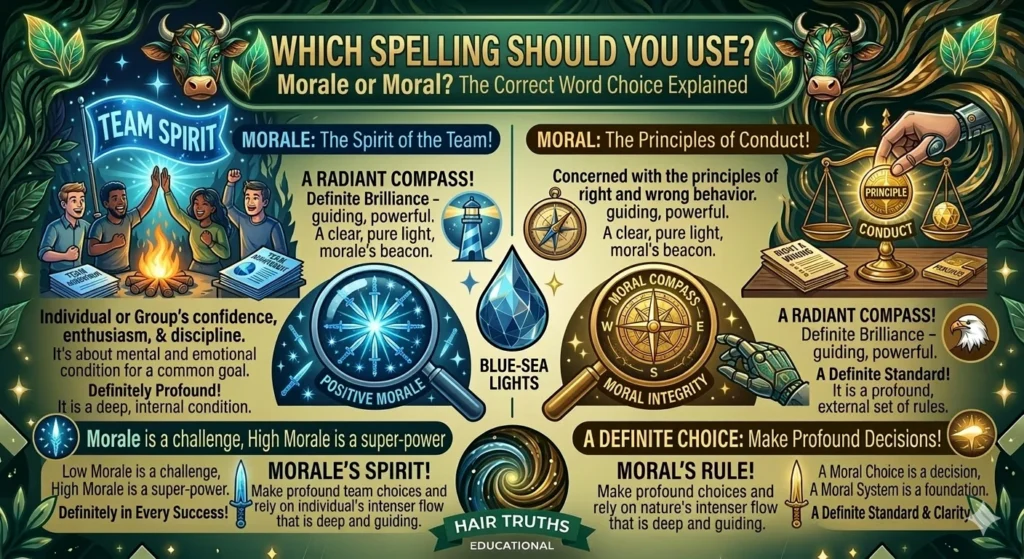
Choosing between morale or moral depends on meaning, not location.
Use Moral if:
- You talk about right or wrong
- You write stories or lessons
- Example: “moral of the story”
Use Morale if:
- You talk about feelings or motivation
- You describe teams or groups
- Example: “team morale is high”
👉 Global tip (SEO & professional writing):
Always check context. This improves clarity and credibility (important for EEAT and Google ranking in 2026).
Common Mistakes with Morale or Moral
Here are frequent errors:
❌ “Employee moral is low”
✔ “Employee morale is low”
❌ “The morale of the story”
✔ “The moral of the story”
❌ “She gave me moral support”
✔ “She gave me moral support” (correct because it means ethical support)
❌ “He needs morale support”
✔ “He needs moral support”
👉 Important keyword confusion:
- morale or moral support → correct is moral support
- morale or moral of the story → correct is moral
Morale or Moral in Everyday Examples
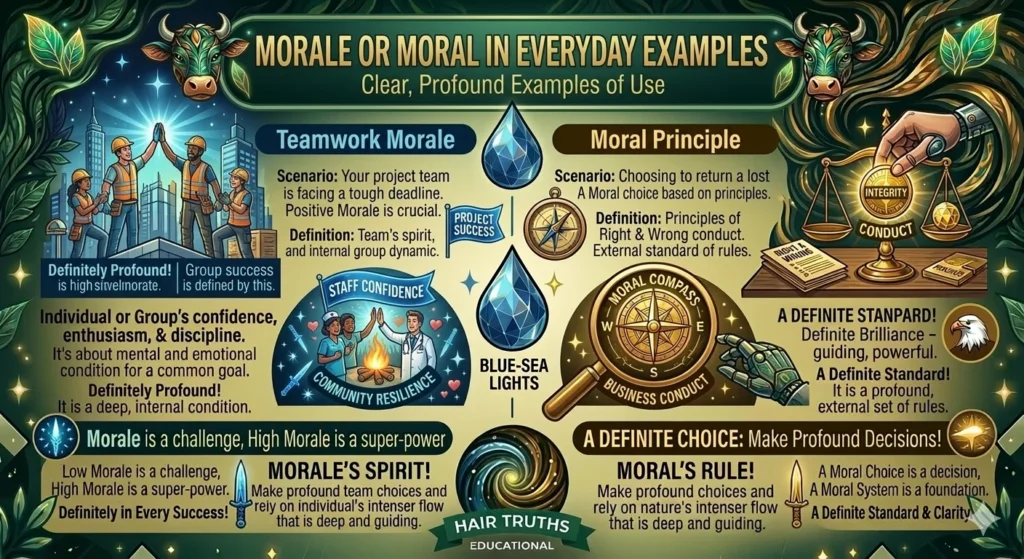
1. Emails:
- “We need to improve team morale.”
- “It was the moral thing to do.”
2. News:
- “Worker morale is falling.”
- “The leader made a moral decision.”
3. Social Media:
- “Keep your morale high 💪”
- “Lesson learned—the moral matters.”
4. Formal Writing:
- “The company focuses on employee morale.”
- “Ethics play a key moral role.”
Morale or Moral – Google Trends & Usage Data
Search trends show:
- “moral” is more common in education and storytelling
- “morale” is popular in business and workplace topics
Popular searches:
- Morale or moral meaning
- Morale examples
- Difference between moral and morale in insurance
- Moral vs morale pronunciation
Country usage:
- USA: More searches for morale (workplace)
- UK: Balanced use
- Global: moral used more in education
Comparison Table: Morale vs Moral
| Feature | Moral | Morale |
|---|---|---|
| Meaning | Right or wrong behavior | Feelings, confidence |
| Usage | Ethics, lessons | Teams, groups |
| Example | Moral of the story | Team morale is high |
| Context | Personal values | Emotional state |
| Keywords | moral meaning | morale meaning |
FAQs
1. How do you use moral and morale in a sentence?
- Moral: “Honesty is a moral value.”
- Morale: “Team morale improved after success.”
2. How’s your morale meaning?
It means: How are you feeling? Are you motivated or happy?
3. What did morale mean?
Morale means confidence, spirit, or emotional strength, often in a group.
4. What does moral mean?
Moral means right or wrong behavior or a lesson from a story.
5. Is it morale or moral support?
Correct: moral support (emotional/ethical help)
6. What is moral vs morale pronunciation?
- Moral = /ˈmɒrəl/
- Morale = /məˈrɑːl/
7. What is the difference between moral and morale in insurance?
- Moral hazard = behavior-related risk
- Morale hazard = careless attitude risk
Conclusion
Understanding the difference between morale or moral is simple once you focus on meaning. Moral is about right and wrong, values, and lessons. Morale is about feelings, energy, and group spirit.
This small spelling difference matters a lot in writing. Using the wrong word can confuse readers and reduce your credibility—especially in professional or SEO content. That’s why mastering this topic helps improve both your communication and your search rankings.
Always remember:
- Moral = ethics
- Morale = emotions

Jon McGregor is an award-winning British novelist known for his poetic prose, vivid imagery, and deeply human storytelling.