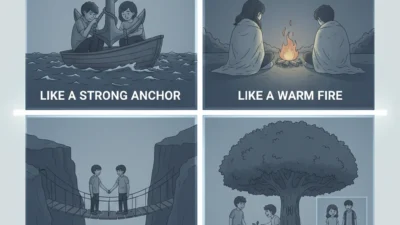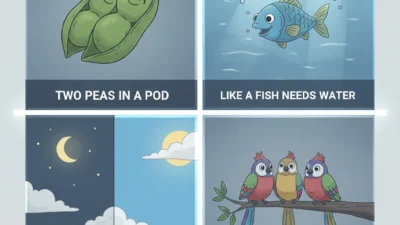
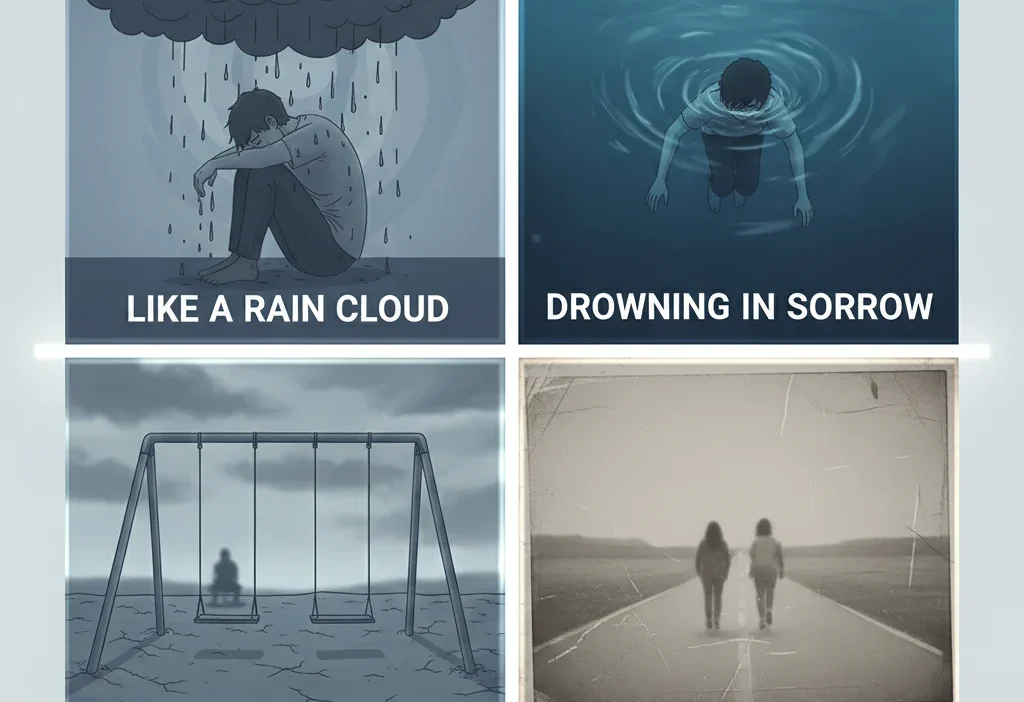
In the world of language, similes serve as bridges between the tangible and the emotional, using “like” or “as” to draw vivid comparisons that make abstract feelings more relatable. These figurative comparisons transform ordinary descriptions into evocative imagery, allowing readers to visualize and empathize with emotions. For instance, saying someone is “as blue as the sky” instantly paints a picture of melancholy. Similes enhance creative writing by adding layers of depth, making stories, poems, or even everyday conversations more expressive and memorable.
This article dives into similes for being sad, offering 33 unique examples to inspire your writing. You’ll discover their meanings, a creative quote incorporating each one, and 2-3 practical usage tips. Whether you’re a student crafting essays, a writer building characters, or a creative learner exploring language, these similes will help you articulate sorrow with grace and precision. Let’s explore how these linguistic tools can turn heartache into art.
As Blue as the Ocean Depths
Meaning: This simile evokes a deep, overwhelming sadness, much like the vast, unending blue of the sea that swallows light and hope.
Quote: “Her heart felt as blue as the ocean depths, drowning in memories of lost love.”
Examples:
- In poetry: “Eyes as blue as the ocean depths, reflecting unspoken grief.”
- In storytelling: “He wandered the streets, feeling as blue as the ocean depths after the farewell.”
- In daily talk: “I’m as blue as the ocean depths today—nothing seems right.”
This classic simile adds emotional weight to descriptions, perfect for conveying profound sorrow in creative writing examples.
Like a Wilted Flower in the Sun
Meaning: It represents sadness as a loss of vitality, where once-vibrant life droops under harsh circumstances, symbolizing faded joy.
Quote: “She stood there like a wilted flower in the sun, her smile fading with each passing hour.”
Examples:
- In novels: “His dreams lay like a wilted flower in the sun, crushed by reality.”
- In journals: “Feeling like a wilted flower in the sun after the argument.”
- In songs: “Love left me like a wilted flower in the sun, parched and alone.”
Use this for gentle, visual depictions of emotional exhaustion in figurative comparisons.
As Heavy as a Lead Heart
Meaning: This captures sadness as an unbearable weight, pressing down like dense metal, making every step feel laborious.
Quote: “Carrying secrets as heavy as a lead heart, he trudged through the day.”
Examples:
- In memoirs: “Grief sat as heavy as a lead heart upon her chest.”
- In dialogues: “Why so quiet? You look as heavy as a lead heart.”
- In essays: “Betrayal feels as heavy as a lead heart, slowing the soul.”
Ideal for emphasizing the physical toll of sorrow in writing.
Like Tears Falling in Rain
Meaning: It illustrates hidden or futile sadness, blending personal sorrow with the world’s indifference, like cries lost in a storm.
Quote: “His pain was like tears falling in rain, unnoticed amid the downpour of life.”
Examples:
- In films: “She wept like tears falling in rain, her anguish invisible.”
- In letters: “My worries are like tears falling in rain—endless and unseen.”
- In prose: “Loneliness hits like tears falling in rain during quiet nights.”
This simile adds poetic subtlety to themes of isolation.
As Gloomy as a Stormy Sky
Meaning: Reflects a pervasive, darkening sadness that looms like clouds ready to burst, overshadowing all brightness.
Quote: “The news left him as gloomy as a stormy sky, thunder rumbling in his thoughts.”
Examples:
- In descriptions: “Her mood turned as gloomy as a stormy sky after the call.”
- In stories: “The room felt as gloomy as a stormy sky without her laughter.”
- In reflections: “Winter days are as gloomy as a stormy sky inside me.”
Enhances atmospheric depictions in creative writing.
Like a Lost Puppy in the Streets
Meaning: Conveys vulnerable, directionless sadness, akin to an animal wandering aimlessly, seeking comfort that’s nowhere found.
Quote: “Alone in the crowd, she felt like a lost puppy in the streets, eyes pleading for home.”
Examples:
- In children’s tales: “He roamed like a lost puppy in the streets after moving.”
- In blogs: “Job loss left me like a lost puppy in the streets.”
- In conversations: “Don’t look like a lost puppy in the streets—cheer up!”
Sparks empathy through relatable imagery.
As Downcast as a Fallen Leaf
Meaning: Symbolizes quiet resignation in sadness, drifting downward like autumn foliage detached from its source of life.
Quote: “His spirits were as downcast as a fallen leaf, swirling in the autumn wind.”
Examples:
- In poetry: “Eyes as downcast as a fallen leaf during farewells.”
- In narratives: “She sat as downcast as a fallen leaf by the window.”
- In metaphors: “Hopes as downcast as a fallen leaf in defeat.”
Perfect for seasonal or nature-inspired sorrow.
Like a Broken Melody on Repeat
Meaning: Represents persistent, unresolved sadness that loops endlessly, much like a damaged tune unable to resolve.
Quote: “Memories played like a broken melody on repeat, echoing her sorrow.”
Examples:
- In music lyrics: “Heartache like a broken melody on repeat all night.”
- In diaries: “Thoughts like a broken melody on repeat after the breakup.”
- In scripts: “He hummed like a broken melody on repeat, lost in grief.”
Adds rhythmic depth to emotional expressions.
As Melancholic as a Fading Sunset
Meaning: Evokes a bittersweet sadness at beauty’s end, like the sun dipping below the horizon, leaving twilight hues.
Quote: “The evening felt as melancholic as a fading sunset, colors bleeding into night.”
Examples:
- In travel writing: “Views as melancholic as a fading sunset over the hills.”
- In reflections: “Aging feels as melancholic as a fading sunset.”
- In stories: “Her goodbye was as melancholic as a fading sunset.”
Captures transient emotional beauty.
Like a Ship Adrift Without Anchor
Meaning: Illustrates aimless sadness, tossed by waves without stability, representing lost purpose or direction.
Quote: “In despair, he wandered like a ship adrift without anchor, currents pulling him under.”
Examples:
- In adventures: “Mind like a ship adrift without anchor in storms of doubt.”
- In self-help: “Depression hits like a ship adrift without anchor.”
- In poems: “Soul like a ship adrift without anchor, seeking shore.”
Ideal for nautical-themed figurative comparisons.
As Sorrowful as a Mourning Dove’s Call
Meaning: Conveys deep, haunting sadness through the bird’s plaintive coo, echoing loss and solitude.
Quote: “Her voice trembled as sorrowful as a mourning dove’s call in the quiet dawn.”
Examples:
- In nature essays: “Woods as sorrowful as a mourning dove’s call at dusk.”
- In elegies: “Grief as sorrowful as a mourning dove’s call.”
- In dialogues: “You sound as sorrowful as a mourning dove’s call today.”
Enhances auditory imagery in writing.
Like a Cloud Obscuring the Sun
Meaning: Represents temporary yet enveloping sadness that blocks joy, much like overcast skies dimming light.
Quote: “Happiness hid like a cloud obscuring the sun, casting long shadows.”
Examples:
- In weather analogies: “Mood like a cloud obscuring the sun after bad news.”
- In motivations: “Push through like a cloud obscuring the sun—it’s passing.”
- In tales: “Eyes like a cloud obscuring the sun, veiled in tears.”
Useful for hopeful yet sad descriptions.
As Empty as a Vacant Room
Meaning: Symbolizes hollow sadness, devoid of warmth or presence, like an echoing space stripped bare.
Quote: “His heart echoed as empty as a vacant room, furniture of memories gone.”
Examples:
- In horror stories: “House as empty as a vacant room without family.”
- In introspections: “Feeling as empty as a vacant room inside.”
- In letters: “Life seems as empty as a vacant room now.”
Evokes isolation effectively.
Like a Deflated Balloon After the Party
Meaning: Captures post-joy sadness, sagging and lifeless once the excitement fades.
Quote: “She slumped like a deflated balloon after the party, cheer escaped.”
Examples:
- In celebrations: “Spirit like a deflated balloon after the party ends.”
- In reviews: “Event left me like a deflated balloon after the party.”
- In humor: “Monday feels like a deflated balloon after the party.”
Adds relatable whimsy to sorrow.
As Weary as an Ancient Oak
Meaning: Reflects enduring, tired sadness worn by time, like a tree bent by years of storms.
Quote: “Eyes as weary as an ancient oak, branches heavy with unspoken burdens.”
Examples:
- In epics: “Warrior as weary as an ancient oak from battles.”
- In aging tales: “Soul as weary as an ancient oak in twilight years.”
- In poems: “Heart as weary as an ancient oak under weight.”
Conveys timeless grief.
Like a Forgotten Melody in the Wind
Meaning: Illustrates elusive sadness, fading away like notes carried off, leaving echoes of what was.
Quote: “Dreams whispered like a forgotten melody in the wind, barely heard.”
Examples:
- In music stories: “Tune like a forgotten melody in the wind of time.”
- In reminiscences: “Love like a forgotten melody in the wind.”
- In writings: “Thoughts like a forgotten melody in the wind, drifting.”
Poetic for nostalgic sadness.
As Dismal as a Fog-Shrouded Moor
Meaning: Evokes oppressive, unclear sadness like mist blanketing landscapes, blurring paths ahead.
Quote: “The future loomed as dismal as a fog-shrouded moor, visibility zero.”
Examples:
- In gothic novels: “Setting as dismal as a fog-shrouded moor.”
- In moods: “Day as dismal as a fog-shrouded moor.”
- In descriptions: “Mind as dismal as a fog-shrouded moor in confusion.”
Builds atmospheric tension.
Like a Cracked Porcelain Doll
Meaning: Represents fragile, irreparable sadness, surface beauty marred by hidden fractures.
Quote: “She smiled like a cracked porcelain doll, pieces threatening to shatter.”
Examples:
- In character arcs: “Facade like a cracked porcelain doll under pressure.”
- In art: “Beauty like a cracked porcelain doll, flawed yet poignant.”
- In therapy talks: “Emotions like a cracked porcelain doll, needing mend.”
Highlights vulnerability.
As Forlorn as an Abandoned Lighthouse
Meaning: Symbolizes isolated sadness, standing alone against relentless waves, light dimmed.
Quote: “He waited as forlorn as an abandoned lighthouse, beams flickering in vain.”
Examples:
- In seaside stories: “Tower as forlorn as an abandoned lighthouse at night.”
- In loneliness: “Feeling as forlorn as an abandoned lighthouse.”
- In metaphors: “Hope as forlorn as an abandoned lighthouse.”
Evokes solitude powerfully.
Like a Wilted Rose in a Vase
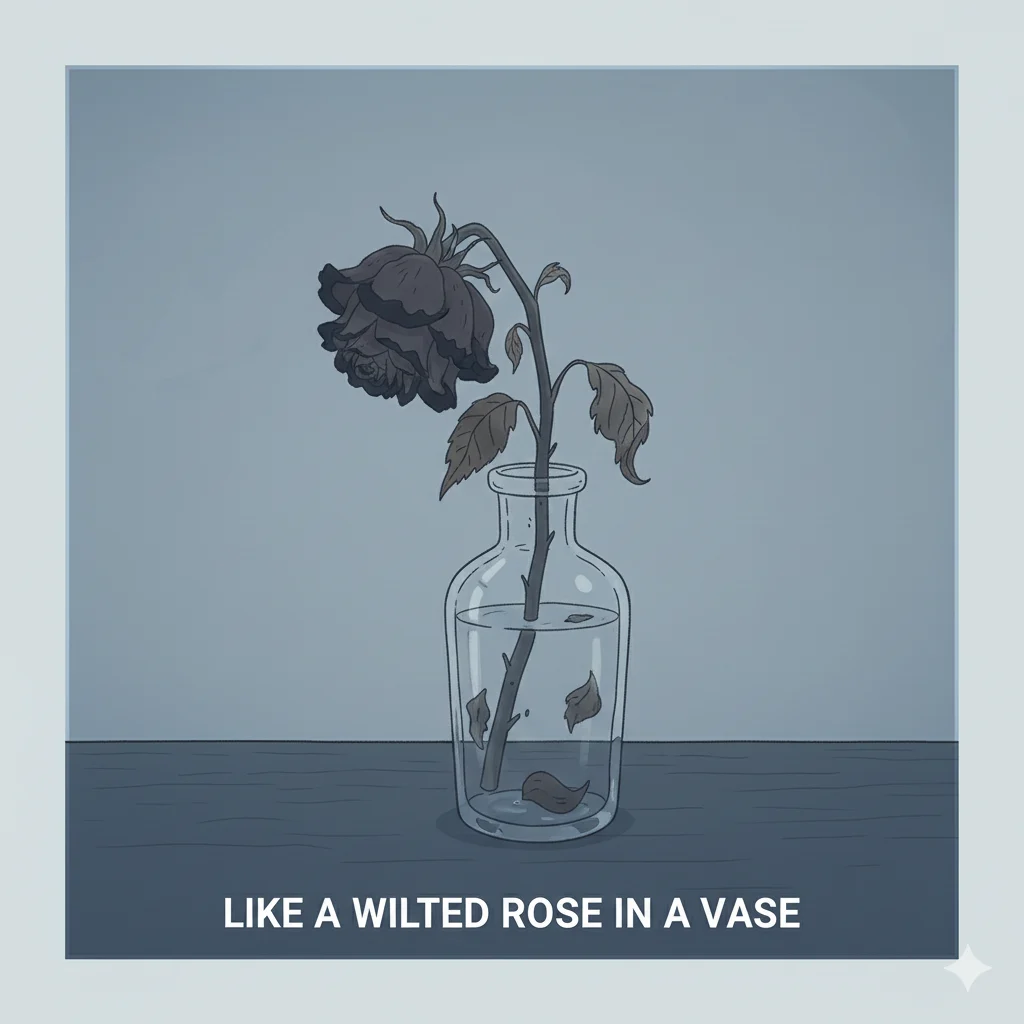
Meaning: Conveys decaying sadness, petals dropping from once-beautiful blooms, signifying lost allure.
Quote: “Romance faded like a wilted rose in a vase, thorns remaining sharp.”
Examples:
- In romances: “Love like a wilted rose in a vase after time.”
- In gifts: “Flower like a wilted rose in a vase, reminder of sorrow.”
- In poems: “Heart like a wilted rose in a vase, drooping.”
Timeless floral imagery.
As Bleak as a Barren Winter Field
Meaning: Illustrates stark, lifeless sadness like snow-covered earth, devoid of growth or color.
Quote: “Prospects appeared as bleak as a barren winter field, frozen in despair.”
Examples:
- In dystopias: “World as bleak as a barren winter field.”
- In seasons: “Mood as bleak as a barren winter field.”
- In outlooks: “Future as bleak as a barren winter field.”
Suits cold, harsh emotions.
Like a Sigh Escaping in the Breeze
Meaning: Represents subtle, released sadness that dissipates quietly, carrying unspoken weight.
Quote: “Her words trailed like a sigh escaping in the breeze, heavy yet fleeting.”
Examples:
- In quiet moments: “Breath like a sigh escaping in the breeze of night.”
- In conversations: “Response like a sigh escaping in the breeze.”
- In writings: “Emotion like a sigh escaping in the breeze, gone.”
Gentle for understated grief.
As Dejected as a Castaway on Shore
Meaning: Captures rejected, stranded sadness like someone washed up, hopes dashed by tides.
Quote: “He sat as dejected as a castaway on shore, waves mocking his plight.”
Examples:
- In survival tales: “Survivor as dejected as a castaway on shore.”
- In failures: “Feeling as dejected as a castaway on shore.”
- In analogies: “Dreams as dejected as a castaway on shore.”
Adventurous yet sorrowful.
Like a Shadow Lengthening at Dusk
Meaning: Symbolizes growing, inevitable sadness that stretches as light fades, consuming more space.
Quote: “Doubt grew like a shadow lengthening at dusk, darkening his path.”
Examples:
- In evenings: “Fear like a shadow lengthening at dusk.”
- In progress: “Sadness like a shadow lengthening at dusk over time.”
- In stories: “Presence like a shadow lengthening at dusk, ominous.”
Builds tension gradually.
As Mournful as a Funeral Bell’s Toll
Meaning: Evokes solemn, resonant sadness like peals announcing loss, echoing finality.
Quote: “The silence rang as mournful as a funeral bell’s toll, marking endings.”
Examples:
- In ceremonies: “Sound as mournful as a funeral bell’s toll.”
- In remembrances: “Memory as mournful as a funeral bell’s toll.”
- In atmospheres: “Room as mournful as a funeral bell’s toll.”
Auditory depth for grief.
Like a Rain-Drenched Sparrow
Meaning: Conveys pitiful, soaked sadness like a bird huddled in wet feathers, shivering alone.
Quote: “She huddled like a rain-drenched sparrow, wings too heavy to fly.”
Examples:
- In nature: “Bird like a rain-drenched sparrow in storm.”
- In pity: “Child like a rain-drenched sparrow, lost.”
- In descriptions: “Spirit like a rain-drenched sparrow after defeat.”
Endearing yet sad.
As Desolate as a Moonlit Desert
Meaning: Represents vast, empty sadness under stark light, endless sands mirroring inner void.
Quote: “Nights felt as desolate as a moonlit desert, silence amplifying loneliness.”
Examples:
- In travels: “Landscape as desolate as a moonlit desert.”
- In souls: “Heart as desolate as a moonlit desert.”
- In dreams: “Vision as desolate as a moonlit desert.”
Mystical isolation.
Like a Faded Old Photograph
Meaning: Illustrates nostalgic sadness, colors washed out by time, preserving blurred memories.
Quote: “Recollections appeared like a faded old photograph, details lost to years.”
Examples:
- In albums: “Image like a faded old photograph of youth.”
- In histories: “Story like a faded old photograph, incomplete.”
- In minds: “Thought like a faded old photograph, hazy.”
Timeless reminiscence.
As Heartbroken as Shattered Glass
Meaning: Symbolizes sharp, fragmented sadness from breakage, pieces impossible to fully mend.
Quote: “Love lay as heartbroken as shattered glass, edges cutting deep.”
Examples:
- In breakups: “Feeling as heartbroken as shattered glass.”
- In accidents: “Vase as heartbroken as shattered glass, ruined.”
- In metaphors: “Trust as heartbroken as shattered glass.”
Intense and visceral.
Like a Lone Wolf’s Distant Howl
Meaning: Conveys primal, isolated sadness echoing through wilderness, calling unanswered.
Quote: “His cry was like a lone wolf’s distant howl, piercing the night air.”
Examples:
- In wilds: “Sound like a lone wolf’s distant howl of sorrow.”
- In independence: “Soul like a lone wolf’s distant howl, alone.”
- In calls: “Voice like a lone wolf’s distant howl, yearning.”
Animalistic emotion.
As Somber as Midnight Shadows
Meaning: Reflects deep, enveloping sadness in darkness, where forms blur into gloom.
Quote: “The gathering was as somber as midnight shadows, whispers hushed.”
Examples:
- In nights: “Mood as somber as midnight shadows.”
- In events: “Funeral as somber as midnight shadows.”
- In feelings: “Heart as somber as midnight shadows.”
Nocturnal depth.
Like a Drooping Flag at Half-Mast
Meaning: Represents respectful yet defeated sadness, lowered in honor of loss.
Quote: “Pride hung like a drooping flag at half-mast, winds of change still.”
Examples:
- In tributes: “Symbol like a drooping flag at half-mast for heroes.”
- In defeats: “Team like a drooping flag at half-mast after loss.”
- In nations: “Spirit like a drooping flag at half-mast in crisis.”
Patriotic sorrow.
As Plaintive as a Violin’s Lament
Meaning: Evokes soul-stirring sadness through strings’ cry, drawing out raw emotion.
Quote: “Music swelled as plaintive as a violin’s lament, tears following notes.”
Examples:
- In concerts: “Tune as plaintive as a violin’s lament.”
- In expressions: “Voice as plaintive as a violin’s lament.”
- In arts: “Feeling as plaintive as a violin’s lament.”
conclusion
Through these 33 similes for being sad, you’ve uncovered a treasure trove of figurative comparisons that breathe life into expressions of sorrow. From oceanic blues to violin laments, each one offers a unique lens to view and articulate emotion, enriching your creative writing examples. Embrace these tools in your stories, poems, or chats—they transform raw feelings into shared human experiences, fostering connection.
Let similes be your gentle guides in navigating heartache, turning whispers of pain into symphonies of understanding. Explore more similes about nature, life, and emotions on our site to keep your words flowing with depth and beauty.
FAQ
What are the best similes for being sad? Some top similes for being sad include “as blue as the ocean depths” for deep melancholy, “like a wilted flower in the sun” for lost vitality, and “as heavy as a lead heart” for burdensome grief. These vivid comparisons help convey emotion effectively in writing or speech.
How do you write a simile? To write a simile, compare two unlike things using “like” or “as” to create imagery. For example, “Her eyes sparkled like stars” links eyes to celestial brightness. Keep it simple, relevant, and original for impact in creative writing.
What’s the difference between a simile and a metaphor? A simile uses “like” or “as” for direct comparison (e.g., “as brave as a lion”), while a metaphor states one thing is another without those words (e.g., “He is a lion”). Similes are more explicit, metaphors more implicit.
How can similes improve creative writing? Similes enhance creative writing by adding vividness, emotional depth, and relatability. They paint pictures with words, engage readers’ senses, and make abstract ideas concrete, turning flat narratives into immersive experiences.
Why use similes for expressing sadness? Similes for being sad help process and share complex emotions poetically, making them accessible. They build empathy in readers, enrich descriptions, and prevent repetitive language in stories or personal reflections.
Discover 33 evocative similes for being sad, with meanings, quotes, and examples to inspire your writing. Dive into heartfelt figurative comparisons for deeper emotional expression.

Daisy Johnson is a creative writer who crafts vivid similes and poetic expressions to help readers enrich their language and imagination.