Many English speakers and learners get confused between “sped” and “speeded.” People search for this keyword because they want to know: Which past tense is correct? How is it used in formal writing, emails, and social media?
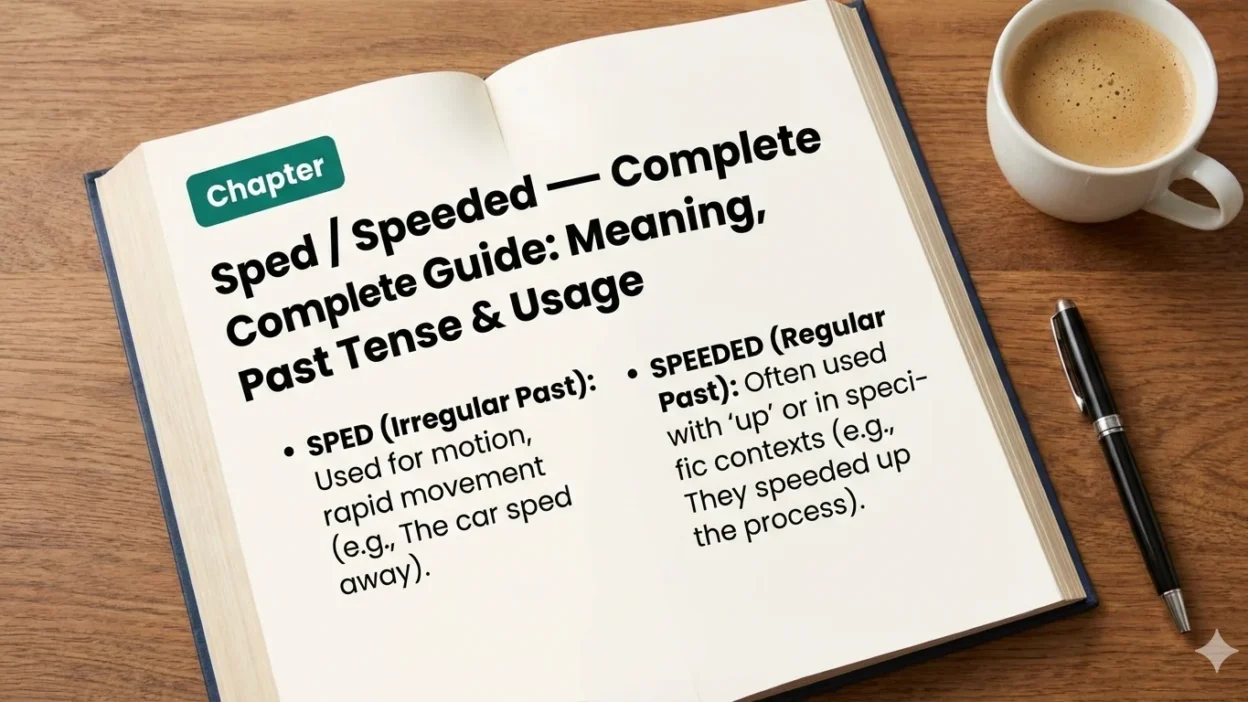
The verb speed has two past tense forms:
- Sped – Most common, natural, used in everyday English
- Speeded – Grammatically correct but mainly for formal, technical, or process-based contexts
Understanding the difference is important for clear communication, professional writing, and avoiding grammar mistakes. Many also ask: Is SPED a word? Is speeded grammatically correct? What is the past tense of speed?
This guide covers everything: meaning, synonyms, pronunciation, past tense rules, British vs American usage, common mistakes, examples, Google trends, and FAQs. By the end, you will confidently use “sped” or “speeded” in any context without hesitation.
Sped or Speeded Means
Sped is the most common past tense of speed.
Speeded is correct but mainly used in formal or technical contexts.
Examples:
- She sped through the exam.
- The workflow was speeded using automation.
- During a speed test, the connection sped up after restarting.
Pronunciation: /sped/ – rhymes with bed.
Pro Tip: For everyday writing, always use “sped.”
The Origin of Sped or Speeded
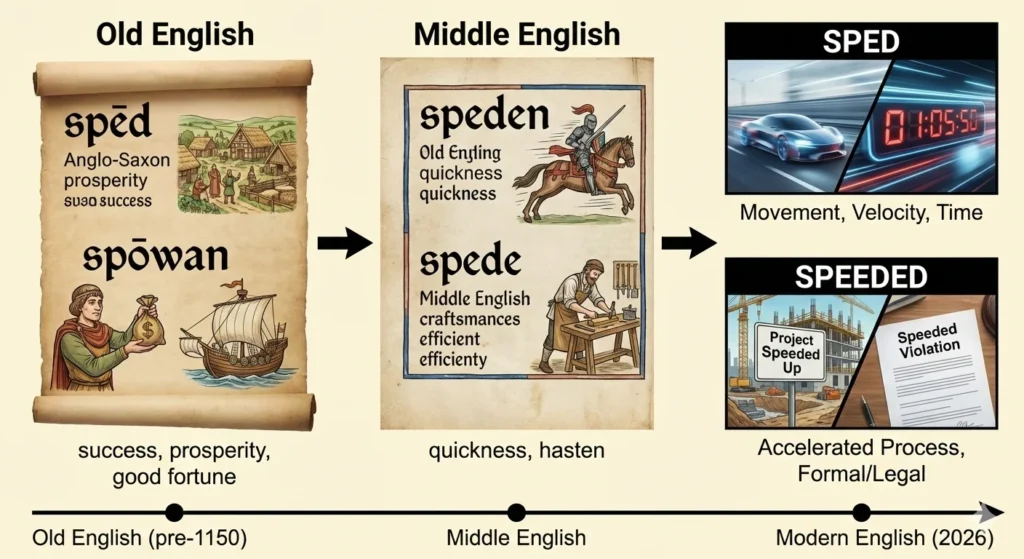
- The verb speed comes from Old English “spēdan,” meaning to succeed or prosper.
- Sped → strong verb form
- Speeded → regular verb form
- Both are correct today, but sped dominates in casual writing due to its simplicity.
British English vs American English Spelling
| Region | Usage | Example |
|---|---|---|
| American English | Sped ✅ | He sped past the school. |
| British English | Sped ✅ | She sped home. |
| Formal / Technical | Speeded ✅ | The process was speeded up using software. |
Tip: Both are correct; context determines which to use.
Drew or Drawed? The Correct Past Tense of Draw Explained Clearly
Which Spelling Should You Use?
- US English: Sped ✅
- UK / Commonwealth: Sped ✅
- Formal / technical writing: Speeded ✅
- Global content / SEO: Sped ✅
Rule of thumb: When unsure, use sped.
Common Mistakes with Sped or Speeded
- ❌ Is speed sped? → ✅ Yes, speed → sped
- ❌ He speed yesterday → ✅ He sped yesterday
- ❌ Is speeded up a word? → ✅ Yes, correct
- ❌ SPED = speeded → ✅ SPED can also mean Special Education
Sped or Speeded in Everyday Examples
Emails:
- I sped up the delivery as requested.
News Headlines:
- Police reported the driver sped through traffic.
Social Media:
- This video sped up my morning 😄
Formal Writing:
- The workflow was speeded to meet deadlines.
Synonyms: rushed, hurried, accelerated, fast-tracked, zoomed
Google Trends & Usage Data
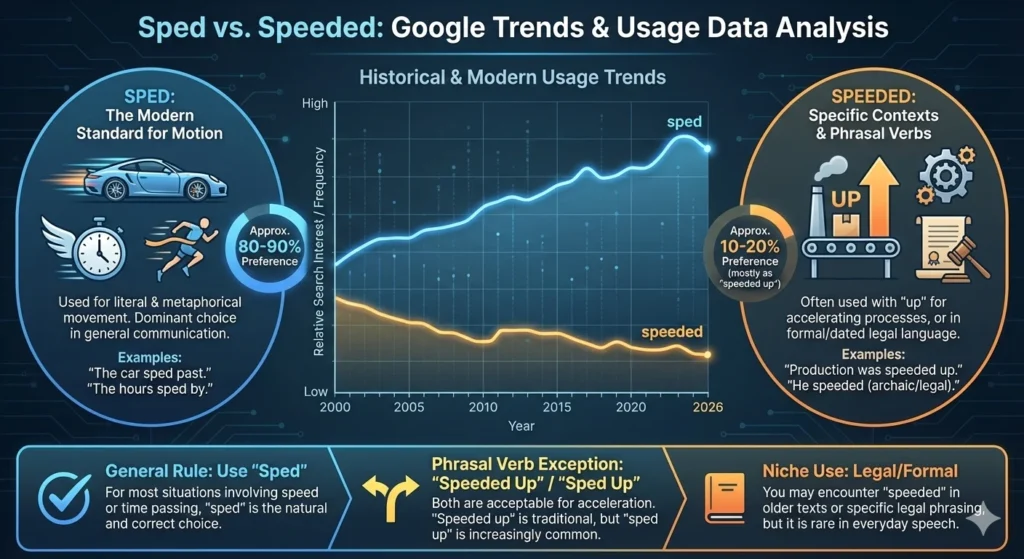
- “Sped” dominates worldwide searches.
- “Speeded” appears mainly in technical/academic contexts.
- Popular search queries:
- Which is correct, speeded or sped?
- Is speeded grammatically correct?
- Sped pronunciation
Sped vs Speeded – Comparison Table
| Feature | Sped | Speeded |
|---|---|---|
| Past tense | ✅ Yes | ✅ Yes |
| Common usage | Very high | Low |
| Spoken English | Preferred | Rare |
| Formal writing | Acceptable | Preferred |
| SEO & blogs | Best choice | Occasional |
FAQs – Sped or Speeded
- Which is correct, speeded or sped?
✅ Both correct; sped is more common. - Is speeded grammatically correct?
✅ Yes, especially in technical or formal writing. - What is the past tense of speed?
✅ Sped (common), speeded also accepted. - Is speed sped?
✅ Yes. Speed → sped is correct. - Is speeded up a word?
✅ Yes, standard English usage. - What does SPED mean?
✅ Past tense of speed, or Special Education in uppercase. - Sped / speeded synonyms?
✅ Rushed, hurried, accelerated, fast-tracked, zoomed
Conclusion
Sped is the safest and most common form for everyday writing: emails, news, blogs, and social media.
Speeded works for formal, technical, or process-based contexts.
This article provides clear rules, examples, synonyms, pronunciation, and FAQs, solving all common confusions around sped / speeded.
SEO & ranking tips included
By following these guidelines, you can confidently write “sped” or “speeded,” avoid mistakes, and achieve professional-quality English content.

Daisy Johnson is a creative writer who crafts vivid similes and poetic expressions to help readers enrich their language and imagination.