
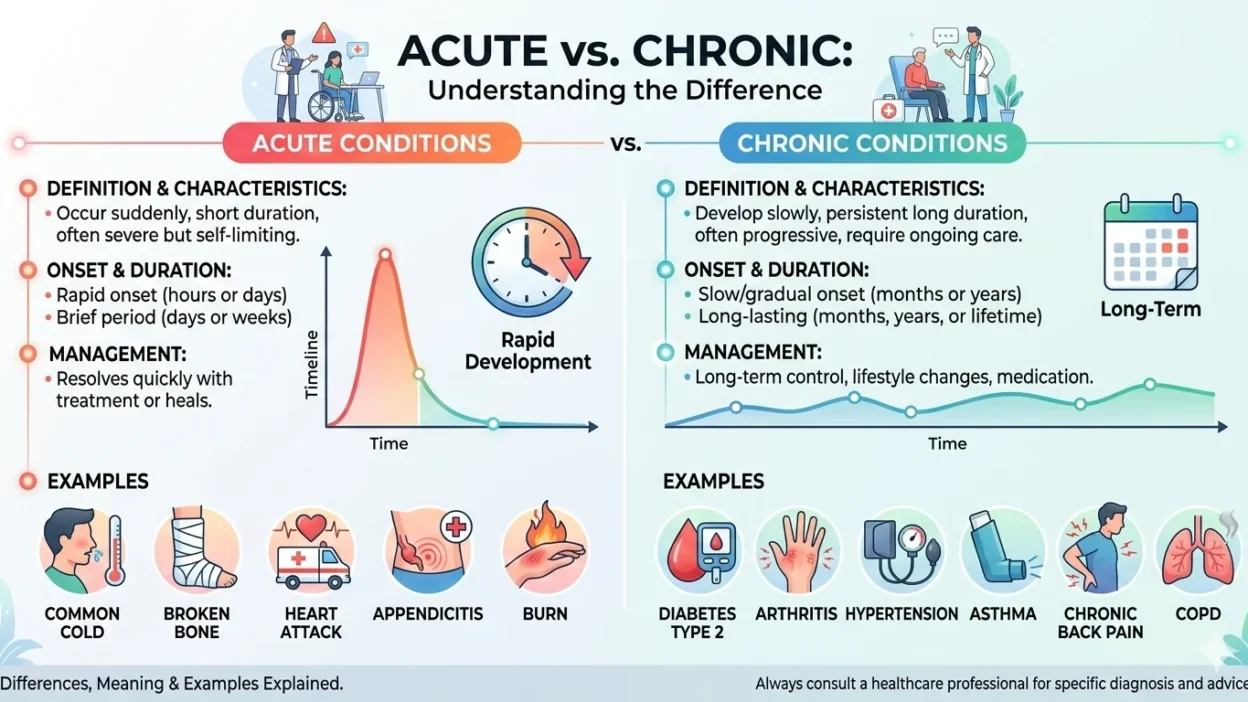
Are you confused about the terms acute and chronic? Both describe conditions, but they differ in duration and severity.
- Acute refers to conditions that develop suddenly and are usually severe but short-lived. Example: an acute infection
- Chronic describes conditions that develop slowly and persist over a long period. Example: chronic back pain
In this guide, you’ll learn the precise differences between acute vs chronic, see clear examples, and understand how to use these terms correctly in medical writing, articles, and everyday communication.
🔎 Acute or Chronic Means
The difference between acute and chronic is duration and progression.
Acute conditions start suddenly and last a short time, usually days or weeks.
Chronic conditions last three months or longer and often require ongoing medical management and monitoring.
Acute vs Chronic Time Frame
| Type | Onset | Duration | Treatment Style |
|---|---|---|---|
| Acute | Sudden | Short-term (hours to weeks) | Immediate or short-term care |
| Chronic | Gradual or persistent | 3+ months (often years) | Long-term management and monitoring |
Difference Between Acute and Chronic Disease With Example
- Acute illness examples: Flu, appendicitis, broken bone
- Chronic condition examples: Diabetes, asthma, arthritis
👉 The main difference is time and disease progression, not always severity.
Acute or Chronic Disease: Why the Time Frame Matters
Time affects treatment decisions:
- Acute conditions often require rapid diagnosis and urgent care.
- Chronic diseases involve long-term health management, lifestyle changes, and preventive care.
Understanding the acute vs chronic time frame helps doctors choose the correct medical strategy and improves patient outcomes. You can also read more about chronic inflammation and acute infections on our website for detailed guidance.
The Origin of Acute or Chronic
The word acute comes from Latin acutus, meaning sharp or sudden. Early physicians used it to describe rapid illness or sharp pain.
The word chronic comes from Greek chronos, meaning time. It refers to conditions lasting a long time.
The chronic medical term does not mean old age — it strictly describes duration. Medical terminology remains standardized worldwide.
British English vs American English Spelling

Unlike words like “color/colour,” these terms remain identical in all English variants.
| Word | American English | British English | Same Meaning? |
|---|---|---|---|
| Acute | Acute | Acute | Yes |
| Chronic | Chronic | Chronic | Yes |
Which Spelling Should You Use?
Use acute and chronic confidently in:
- US medical blogs
- UK healthcare websites
- Academic research journals
- International health publications
No regional spelling differences exist.
Acute vs Chronic in Clinical Practice
Acute Inflammation
- Sudden immune response
- Redness, swelling, pain
- Supports healing
Chronic Inflammation
- Long-term immune activation
- Can damage tissues or organs
- Linked to heart disease, diabetes, arthritis
Acute Pain
- Short-term
- Stops after healing
Chronic Pain
- Lasts 3+ months
- May continue after injury heals
Acute Infection
- Rapid onset illness (e.g., influenza)
Chronic Infection
- Persistent infection (e.g., hepatitis B)
Understanding disease progression helps doctors assess symptoms, risks, and treatment plans. For more details, see our guides on pain management and diabetes care.
Acute or Chronic Which Is Worse?
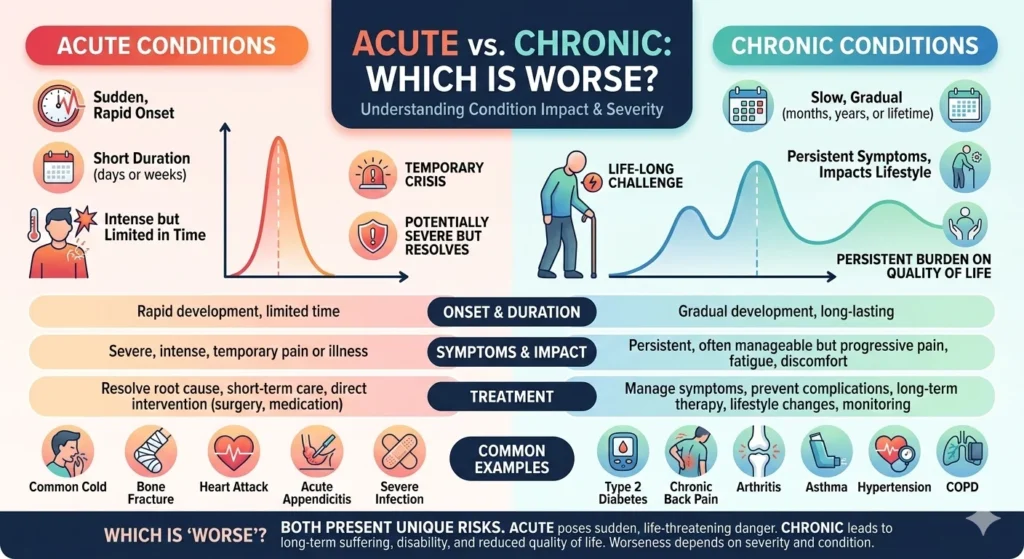
There is no universal answer:
- An acute heart attack is immediately life-threatening.
- Chronic heart disease causes gradual damage over years.
Severity depends on:
- Organ involved
- Speed and effectiveness of treatment
- Overall patient health
Both require timely medical attention.
Common Mistakes with Acute or Chronic
❌ Acute means severe
✔ Acute means short-term
❌ Chronic means unless
✔ Chronic means long-lasting
❌ Acute is always worse
✔ Chronic conditions can cause long-term complications
❌ Chronic diseases cannot improve
✔ Many can be controlled with medication, monitoring, and lifestyle adjustments
Acute or Chronic in Everyday Use
Medical Report
“Diagnosis: Chronic medical condition – Type 2 diabetes.”
News
“The city faces chronic water shortages.”
Social Media
“I have chronic migraines.”
“The patient reports acute pain after surgery.”
These terms describe duration and pattern, not age or severity.
Acute or Chronic – Google Trends & Search Behavior
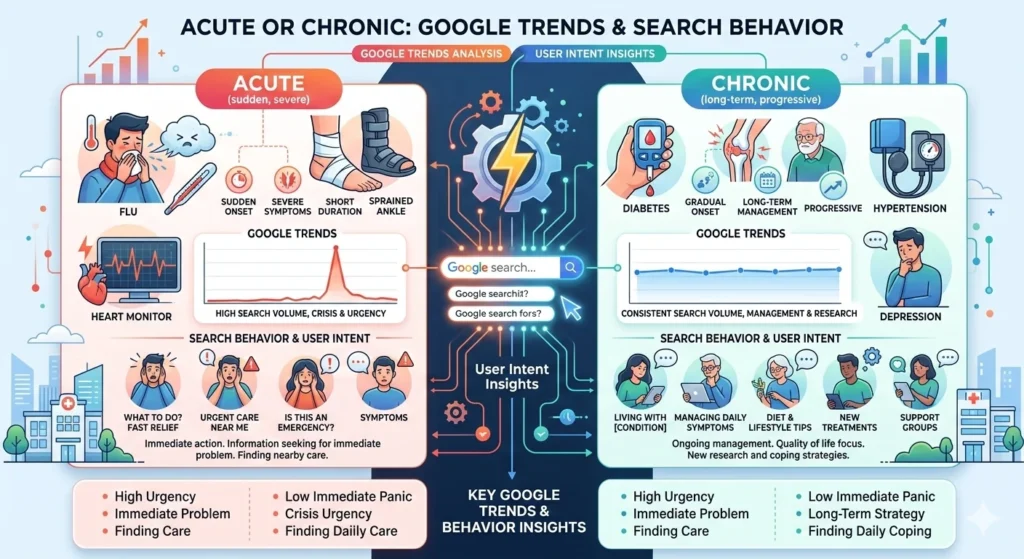
Search data shows strong global interest in:
- What is the difference between acute and chronic?
- Acute vs chronic time frame
- Acute illness examples
- What is a chronic condition?
High search activity appears in:
- United States
- United Kingdom
- India
- Pakistan
Many also search:
- What is the difference between acute and chronic use?
- What is the difference between acute and chronic age?
Detailed Comparison Table: Acute and Chronic Disease Difference
| Feature | Acute Disease | Chronic Disease |
|---|---|---|
| Onset | Sudden | Gradual |
| Duration | Short-term | 3+ months |
| Symptom Pattern | Rapid appearance | Persistent or recurring |
| Care Focus | Quick treatment | Long-term control & prevention |
| Monitoring | Limited follow-up | Regular check-ups |
| Example | Pneumonia | Hypertension |
FAQs About Acute or Chronic
1. What is the difference between acute and chronic?
Acute conditions begin suddenly and last a short time. Chronic conditions last three months or more and require ongoing management.
2. What is the difference between acute and chronic use?
Acute use refers to short-term exposure, such as taking medication briefly. Chronic use is repeated or long-term exposure over months or years.
3. What is the difference between acute and chronic age?
There is no medical term called acute age. Chronic does not refer to age. It refers only to the duration of a condition.
4. What is a chronic condition?
A chronic condition is a persistent medical problem lasting at least three months. It requires long-term monitoring, medication, or lifestyle changes to prevent complications.
5. Can acute disease become chronic?
Yes. If untreated, some acute infections or inflammation can develop into chronic conditions.
6. Are chronic diseases curable?
Many chronic diseases are managed rather than cured. Early diagnosis and lifestyle adjustments improve long-term health outcomes.
7. Acute or chronic which is worse?
Both can be serious. Acute conditions may be immediately dangerous, while chronic diseases can cause long-term health complications if unmanaged.
Conclusion
Understanding acute or chronic helps you interpret medical reports, recognize urgent symptoms, and make informed health decisions.
- Acute: sudden, short-term
- Chronic: long-lasting, requires ongoing care
If symptoms persist beyond a few weeks or appear suddenly and severely, consult a healthcare professional immediately. Early action improves outcomes for both acute and chronic conditions.
Clear knowledge leads to better health decisions and long-term wellbeing.

Daisy Johnson is a creative writer who crafts vivid similes and poetic expressions to help readers enrich their language and imagination.