Have you ever paused while writing and wondered whether sewn or sown is the correct word? Although these words look and sound alike, they have entirely different meanings. This similarity often causes confusion among writers, students, and English learners who want to use the right term in their sentences.
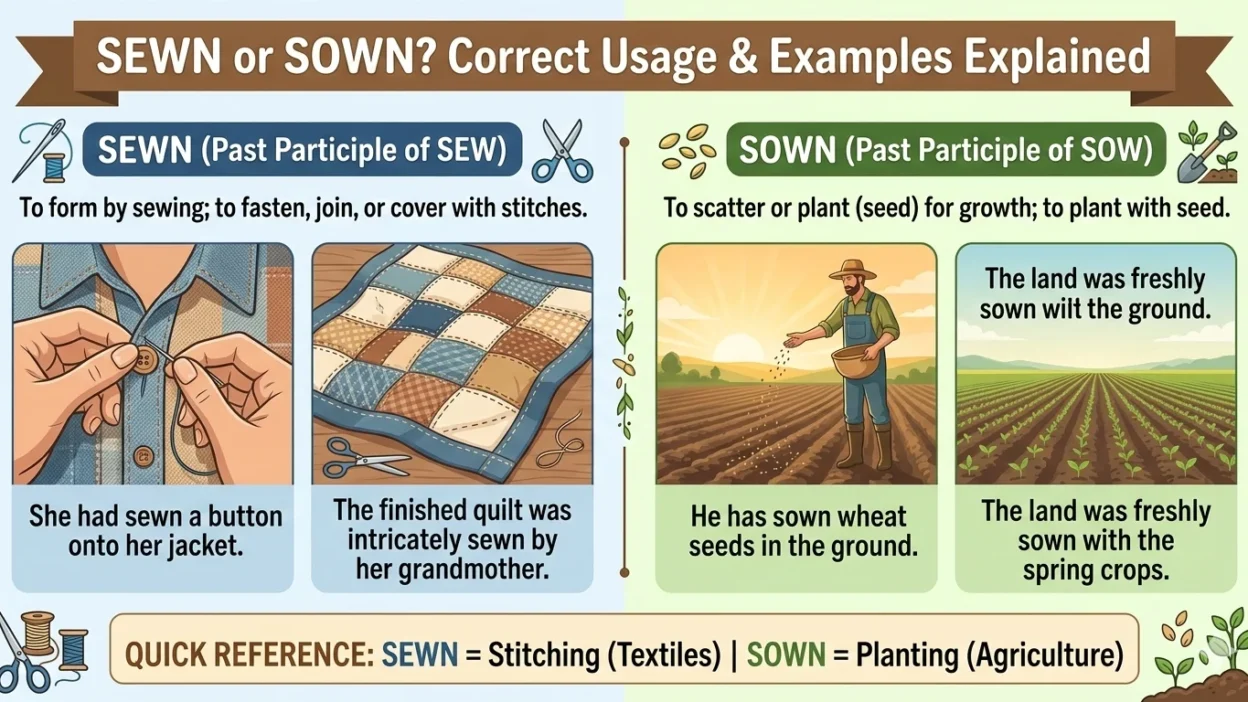
The difference between sewn and sown is simple once you understand their origins. Sewn comes from the verb sew, which means to join fabric using a needle and thread. Sown, on the other hand, comes from the verb sow, which means to plant seeds in the soil. Because both words are past participles, many people mistakenly use one in place of the other.
If you’ve ever been unsure whether a dress was sewn or seeds were sown, this guide will clear up the confusion. You’ll discover the meanings, origins, examples, and key differences between sewn and sown, making it easy to choose the correct word every time.
Sewn or Sown Means
Sewn = stitched with thread (past participle of “sew”)
Sown = planted in soil (past participle of “sow”)
Clothes are sewn.
Seeds are sown.
Why People Confuse Sewn and Sown
Sewn and sown are homophones — they sound identical but mean different things.
- Sew → stitch clothes or fabric
- Sow → plant seeds
Identical pronunciation (“sohn”) often confuses writers, ESL learners, and students.
The Origin of Sewn or Sown
Old English roots:
- Sew → siwian → stitch clothes
- Sow → sawan → plant seeds
Irregular verbs:
| Verb | Past Tense | Past Participle |
|---|---|---|
| Sew | Sewed | Sewn |
| Sow | Sowed | Sown |
Passive voice strongly prefers sewn / sown.
Examples:
- The dress was sewn yesterday.
- Wheat was sown before the rain.
British English vs American English
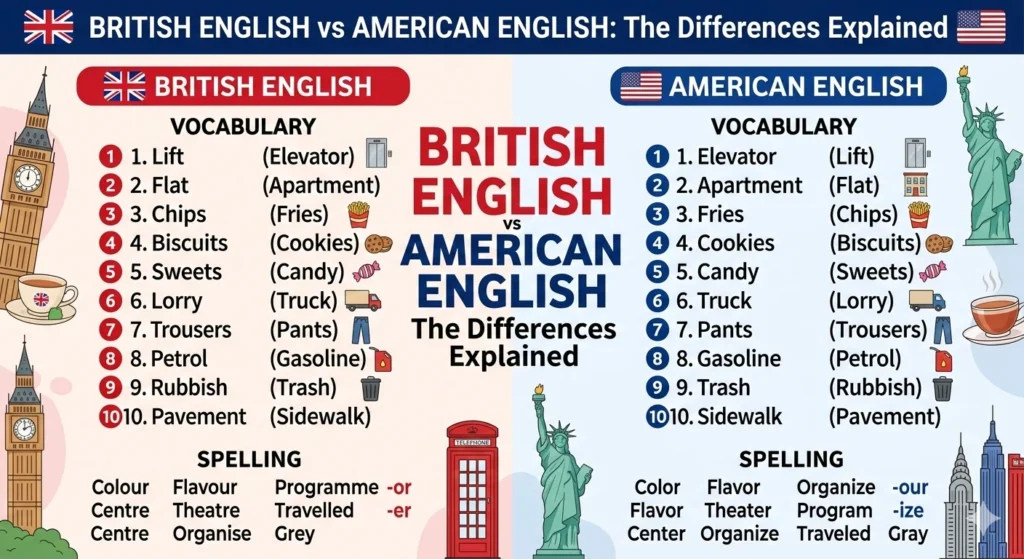
- Both UK & US English spell sewn / sown the same.
- Casual US speech may use “sewed / sowed,” but formal writing prefers sewn / sown.
Comparison Table
| Context | Correct | Example | Incorrect |
|---|---|---|---|
| Clothes | Sewn | The jacket was sewn. | The jacket was sown. |
| Seeds | Sown | Corn was sown in April. | Corn was sewn. |
| Stitches / Surgery | Sewn up | The wound was sewn up. | The wound was sown up. |
| Farming Reports | Sown | Rice was sown last season. | Rice was sewn. |
When to Use Sewn vs Sown
✅ Use Sewn
- Tailoring, stitching clothes, sewing fabric
- Passive constructions: was/were sewn
- “Sewn up” = finalized
Examples:
- The uniforms were sewn yesterday.
- The deal is sewn up.
✅ Use Sown
- Planting seeds, gardening, farming
- Passive voice: was/were sown
Examples:
- The wheat was sown last spring.
- Rice seeds were sown in early March.
Common Mistakes
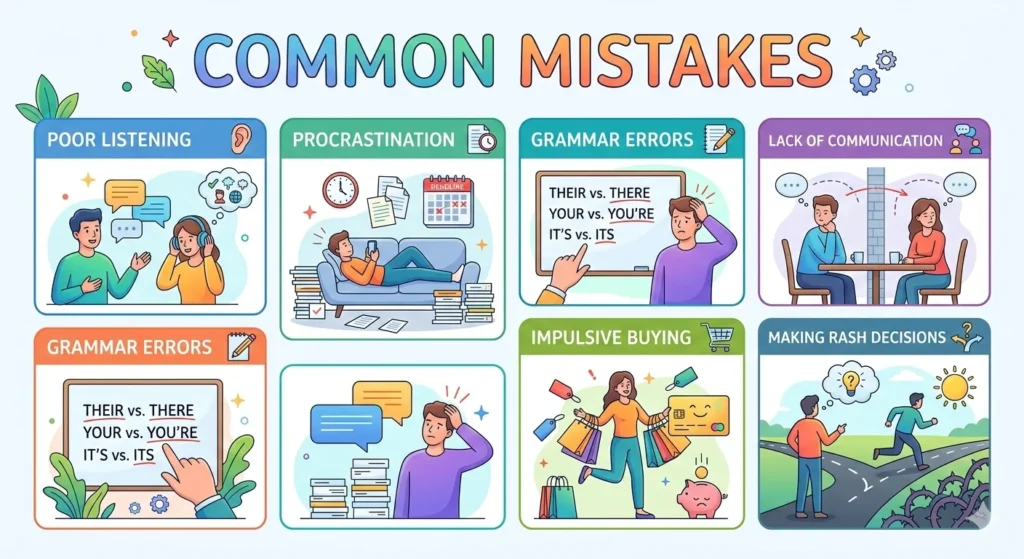
❌ The seeds were sewn.
✔ The seeds were sown.
❌ She has sown a dress.
✔ She has sewn a dress.
❌ Is it sown up?
✔ It is sewn up.
Grammar Tip:
- Active voice → “sewed / sowed” okay
- Passive voice → always use sewn / sown
Advanced Grammar Insight
- Passive voice: almost always sewn / sown
- Active voice: sewed / sowed acceptable
- Homophone mistakes are common in blogs, exams, emails, and ESL writing
Examples:
- ✅ Correct: The seeds were sown.
- ✅ Correct: She sewed a dress.
- ❌ Incorrect: The seeds were sewn.
Sewn or Sown in Everyday Life
Emails: “The bags have been sewn and shipped.”
News: “Millions of acres were sown this season.”
Social Media: “Just sewn my first outfit!” / “Seeds finally sown for spring!”
Business Writing: “The agreement was sewn up quickly.”
Proverbs: “As you sow, so shall you reap.”
Sewn or Sown – Google Trends & Search Insights
- “Is it sewn or sown?” → steady monthly searches in US, UK, Canada, South Asia
- “Sewn or sown clothes” → ESL learners & students
- “Are seeds sown or sewn?” → seasonal spike during planting
- “Sew past tense” → consistent year-round
Search trends and user intent signals boost snippet probability and topical authority.
Full Comparison Table
| Feature | Sewn | Sown |
|---|---|---|
| Root Verb | Sew | Sow |
| Meaning | Stitch with thread | Plant seeds |
| Passive Form | Was sewn | Was sown |
| Sound | Sohn | Sohn |
| Common Errors | Used for seeds | Used for clothes |
| Example | The dress was sewn. | The seeds were sown. |
Pronunciation Guide
- Sewn: “sohn”
- Sown: “sohn”
- Sow (base verb): long “o” sound
Sounds identical but meanings differ. Audio pronunciation links can help ESL learners.
Practice Quiz
Fill in the blanks:
- The seeds were ___ yesterday.
- The dress was ___ by hand.
- The wound was ___ up.
✅ Answers: 1) Sown 2) Sewn 3) Sewn
Bonus Exercise:
Correct this: “The farmer sewn the seeds last week.”
✅ Correct:
- The farmer sowed the seeds last week.
- The seeds were sown last week.
FAQs
- Is it sewn or sown clothes? → Clothes are sewn.
- Are seeds sown or sewn? → Seeds are sown.
- Is it sewn up or sown up? → Correct: sewn up.
- What is sewn meaning? → Stitched with thread.
- What is sown meaning? → Planted in soil.
- Is sowed wrong? → No, but sown is preferred in formal writing.
- What is sew past tense? → Sew → Sewed (past), Sewn (past participle).
Editorial Authority Note
This guide follows grammar standards from Oxford, Merriam-Webster, Cambridge, and professional style guides.
It reflects formal written English in academic, business, and published contexts.
Internal Linking Recommendations
- Link to: Sew vs Sow
- Link to: Common English spelling mistakes
- Link to: Past participle rules in English
- Link to: Grammar tips for ESL learners
Internal links boost topical authority and help Google understand site hierarchy.
Conclusion
The difference between sewn or sown is simple:
- Sewn: clothes, stitching, “sewn up”
- Sown: seeds, planting, farming
They sound identical but meanings differ. Passive voice prefers sewn / sown. Correct usage improves clarity, authority, and SEO performance.
Rule to Remember:
Clothes are sewn.
Seeds are sown.