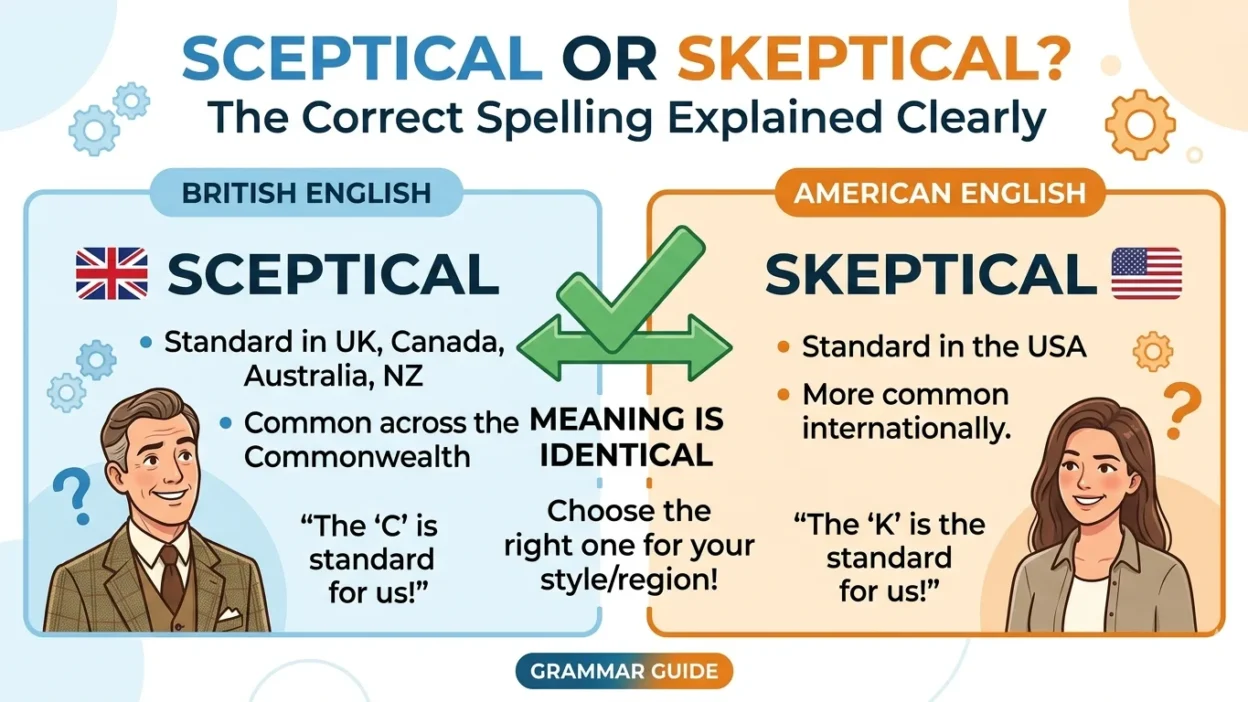
Both sceptical and skeptical are correct spellings, but the difference depends on the type of English you use. Skeptical is the preferred spelling in American English, while sceptical is commonly used in British English and other regions like the UK and Australia.
For example: “She is skeptical about the results” (American English) and “She is sceptical about the results” (British English). Both words mean having doubts or not easily convinced.
Understanding the difference between sceptical and skeptical helps you write accurately for your audience and maintain consistency. In this guide, you’ll learn the correct usage, examples, spelling rules, and easy tips to choose the right form every time. ✨
Sceptical or Skeptical Means
Both sceptical and skeptical mean the same thing:
👉 Doubting something or not easily convinced.
- Sceptical → British English
- Skeptical → American English
Examples:
- She was sceptical about the new plan. (UK)
- He felt skeptical of the results. (US)
So, the meaning is identical. Only the spelling changes based on location.
The Origin of Sceptical or Skeptical
The word comes from the Greek “skeptikos”, meaning to think or question. Over time, it entered Latin and then English.
Originally, English used the “sk” spelling. But British English later changed many Greek-origin words to use “sc”, creating forms like sceptical. American English, however, kept the original Greek-style spelling (skeptical).
That’s why today we have two versions of the same word:
- British style → sceptical
- American style → skeptical
This difference is part of a larger pattern in English spelling evolution.
British English vs American English Spelling
Key Difference
British English often uses “sc”, while American English prefers “sk.”
Comparison Table
| British English | American English | Meaning |
|---|---|---|
| sceptical | skeptical | Doubtful |
| sceptic | skeptic | A person who doubts |
| scepticism | skepticism | The attitude of doubt |
Examples:
- UK: She is sceptical about the news.
- US: She is skeptical about the news.
👉 Both are correct—just match your audience.
Counsellor or Counselor? The Correct Spelling Explained Clearly
Which Spelling Should You Use?
Choosing the right spelling depends on your readers:
- Use “skeptical” → If your audience is in the United States
- Use “sceptical” → If your audience is in the UK or Commonwealth (Pakistan, India, Australia)
- Global audience? → Pick one style and stay consistent
Pro Tip (SEO 2026):
If you write online content, include both variations naturally (like this article does). This helps rank for searches like:
- sceptical or skeptical UK
- skeptical meaning
Common Mistakes with Sceptical or Skeptical
Here are frequent errors:
❌ Mixing both spellings in one article
✔️ Stay consistent
❌ Writing “skepticle” or “scepticle”
✔️ Correct: skeptical / sceptical
❌ Confusing noun and adjective
✔️ Skeptic (noun) vs skeptical (adjective)
❌ Using wrong version for audience
✔️ Match region (US vs UK)
Sceptical or Skeptical in Everyday Examples
Emails
- I am skeptical about this proposal. (US)
- I am sceptical about this proposal. (UK)
News
- Experts remain skeptical of the claim.
Social Media
- Honestly, I’m skeptical about this trend.
Formal Writing
- The researcher was sceptical of the findings.
Nonetheless or Nevertheless? The Difference Explained Clearly
Sceptical or Skeptical – Google Trends & Usage Data
Search data shows clear patterns:
- “Skeptical” is more popular in the US
- “Sceptical” is widely used in the UK and Commonwealth countries
- Global searches often include both forms
Context-Based Usage:
- Academic writing → both used depending on region
- SEO/blogs → both versions improve visibility
- Social media → “skeptical” slightly dominates
👉 Including both spellings boosts reach and matches user intent.
Keyword Comparison Table
| Keyword Phrase | Usage |
|---|---|
| Sceptical or skeptical meaning | General search |
| Skeptical meaning | US users |
| Sceptical or skeptical UK | UK audience |
| Sceptical or skeptical synonym | Vocabulary search |
| Sceptical or skeptical examples | Learning usage |
| What does sceptical mean? | Beginner query |
| What is being skeptical? | Concept understanding |
FAQs
1. What does sceptical mean?
It means doubting or not easily believing something.
2. Is it sceptical or skeptical in British English?
In British English, sceptical is correct.
3. What is being skeptical?
Being skeptical means questioning ideas instead of accepting them quickly.
4. Is it sceptic or skeptic in the US?
In the US, the correct form is skeptic.
5. Are sceptical and skeptical the same?
Yes, they have the same meaning. Only spelling differs.
6. Which spelling is more common worldwide?
Skeptical is slightly more common due to US influence.
7. Can I use both in one article?
It’s better to stay consistent, unless for SEO purposes.
Conclusion
The difference between sceptical or skeptical is simple once you understand it. Both words mean the same thing—having doubt or questioning something. The only real difference is spelling based on region.
If you write for a US audience, use skeptical. If your readers are in the UK or Commonwealth countries, use sceptical. For global content, consistency matters more than choice.
In modern writing (especially in 2026 SEO), it’s smart to include both variations naturally. This helps your content rank higher and reach a wider audience. Still, avoid mixing them randomly—use them with purpose.
Clear, consistent spelling builds trust. When your writing looks polished, readers take your message more seriously. Now that you know the rules, you can write with confidence and clarity every time.