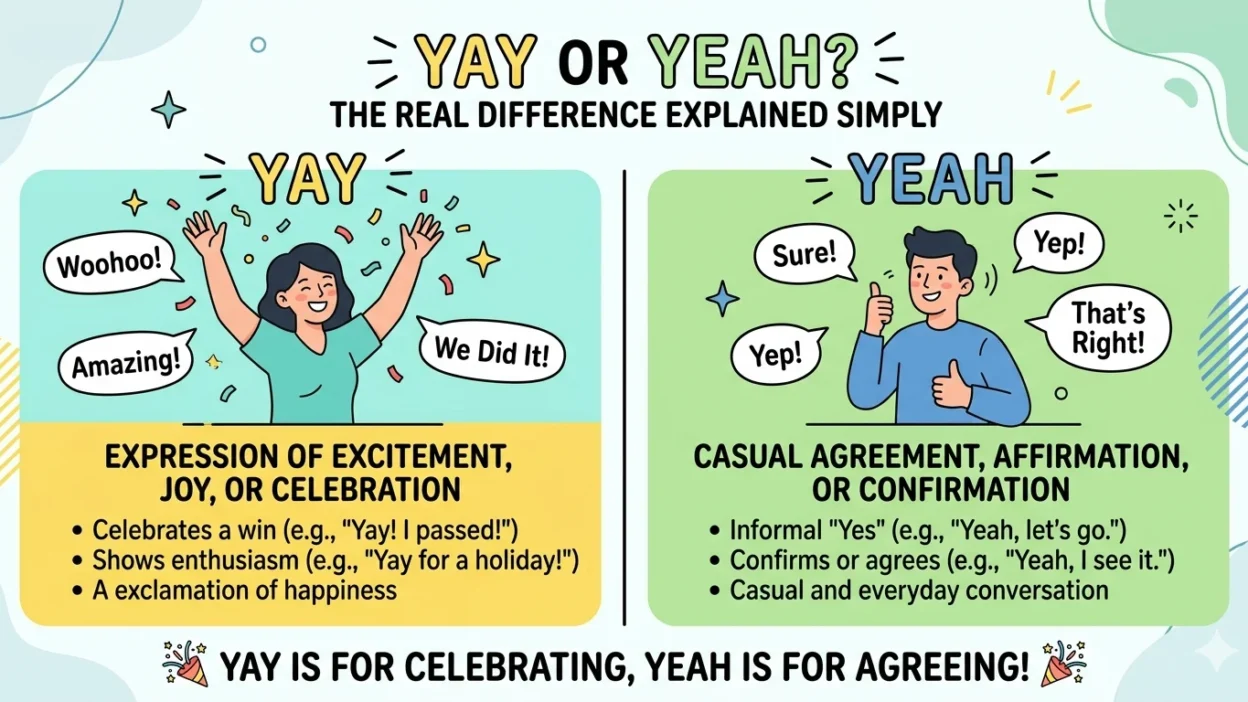
Yay and yeah may look similar, but they have very different meanings. Yay is an expression of excitement, happiness, or celebration, while yeah is an informal way of saying “yes” or showing agreement.
For example: “Yay! We won the game!” shows joy and excitement. On the other hand, “Yeah, I understand what you mean” simply shows agreement in a casual tone.
Understanding the difference between yay and yeah helps you use the right word in the right situation—whether you want to express excitement or just agree casually. In this guide, you’ll learn meanings, examples, tone differences, and easy tips to use both correctly every time. ✨
Yay or Yeah Means
Yay = shows happiness or excitement
Yeah = means “yes” in a casual way
Examples:
- Yay! I passed the test! ✅ (joy)
- Yeah, I understand. ✅ (agreement)
👉 So, if you feel happy → use yay
👉 If you agree or say yes → use yeah
The Origin of Yay or Yeah
Yay Meaning & Origin
The word yay comes from expressions of joy. It became popular in modern English as a way to show excitement. It is often used in speech and online chats.
- Example: Yay! We won!
- Related searches: Is yay a good response? → Yes, for happy moments.
Yeah Meaning & Origin
Yeah comes from the word yes. It is an informal version used in everyday speech.
- Example: Yeah, I will come.
What About “Yea”?
- Yea meaning = formal or old way to say yes
- Used in voting or old texts
British English vs American English Spelling
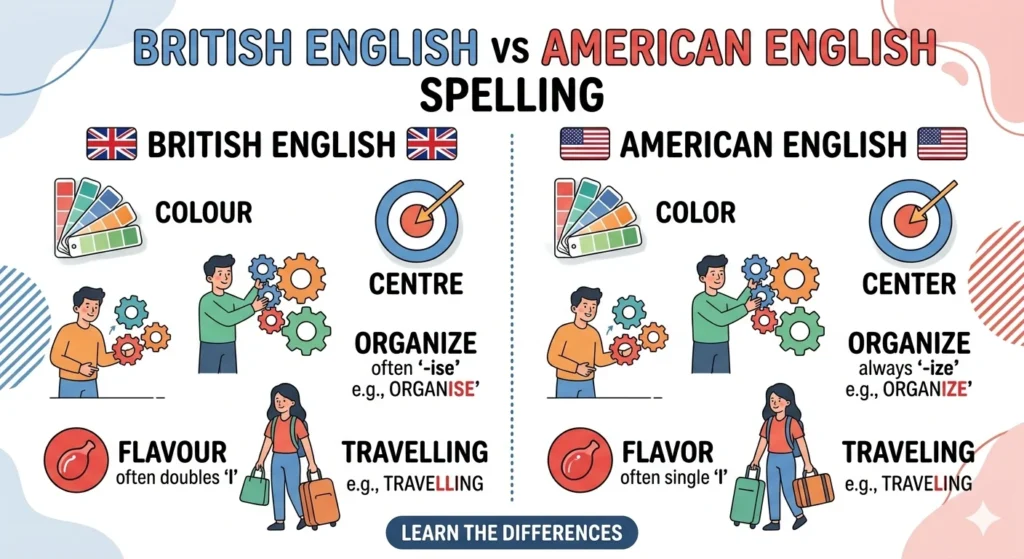
There is no major spelling difference between British and American English for yay and yeah. But usage style can differ slightly.
| Word | Meaning | US Usage | UK Usage |
|---|---|---|---|
| Yay | Happiness | Very common | Common |
| Yeah | Informal yes | Very common | Very common |
| Yea | Formal yes | Rare | Rare |
👉 Both regions use yay or yeah in English the same way in casual speech.
Which Spelling Should You Use?
Use Yay if:
- You feel excited
- You celebrate something
- You react emotionally
Use Yeah if:
- You agree
- You answer casually
- You speak informally
Audience Tip:
- US & UK → both words fine in casual talk
- Formal writing → avoid both, use yes
Common Mistakes with Yay or Yeah
❌ Mistake 1: Using yay for agreement
- Wrong: Yay, I understand.
- Correct: Yeah, I understand.
❌ Mistake 2: Using yeah for excitement
- Wrong: Yeah! I won!
- Better: Yay! I won!
❌ Mistake 3: Confusing yea, yay, yeah
- Yea = formal yes
- Yay = happiness
- Yeah = casual yes
❌ Mistake 4: Writing “yey”
- Correct form = yay
- Many people search yay or yey, but yay is correct
Yay or Yeah in Everyday Examples
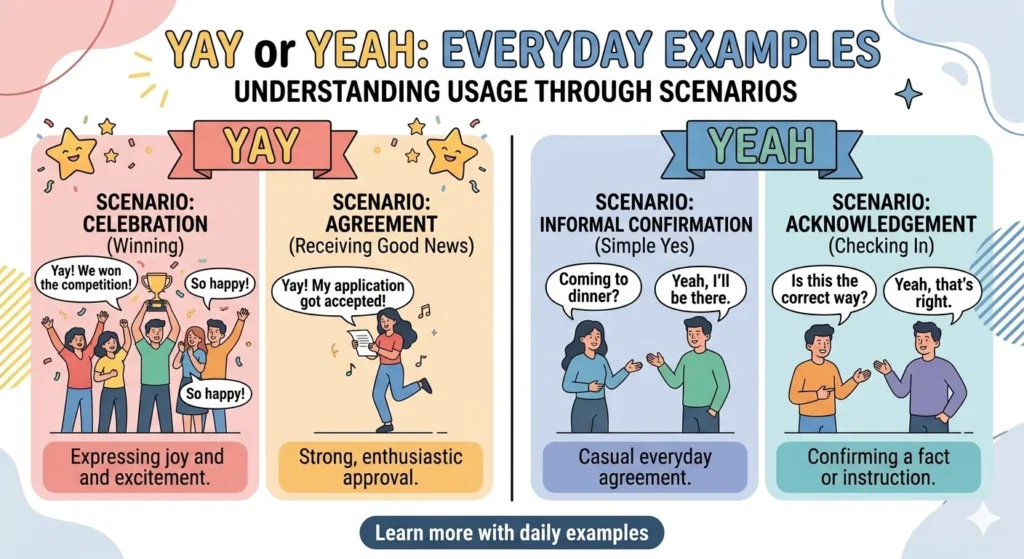
In Chat
- Yay! That’s great news!
- Yeah, I saw that.
In Emails
- Casual: Yeah, I agree with your idea.
- Professional: Yes, I agree.
On Social Media
- Yay! Weekend is here!
- Yeah, same feeling!
In News Writing
- Avoid both → use formal tone
Yay or Yeah – Google Trends & Usage Data
- Yeah is used more globally because it means “yes”
- Yay is popular in emotional or fun content
- Countries like the US, UK, Canada, and Australia use both often
👉 In search queries like:
- Yay or yeah in chat → very common
- What does yay mean? → high search intent
- Yea or yeah pronunciation → common for learners
Keyword Comparison Table
| Keyword | Meaning | Use Case | Example |
|---|---|---|---|
| Yay | Joy | Celebration | Yay! Party time |
| Yeah | Yes (informal) | Agreement | Yeah, okay |
| Yea | Formal yes | Voting/old English | Yea or nay |
Pronunciation Guide
- Yay pronunciation → /yeɪ/ (like “day”)
- Yeah pronunciation → /jɛə/ or /jeə/
👉 This helps avoid confusion in speaking.
FAQs
1. Which is correct, yay or yeah?
Both are correct, but used in different situations.
2. What does yay mean?
It shows happiness or excitement.
3. Is yay a good response?
Yes, when you feel happy or celebrate something.
4. Yay or yeah in chat – which is better?
Use yay for excitement, yeah for agreement.
5. What is the difference between yea, yay, and yeah?
Yea = formal yes, yay = joy, yeah = casual yes.
6. Yay or yey – which is correct?
Correct spelling is yay.
7. How do you pronounce yay and yeah?
Yay = “yay”, Yeah = “yeh/yeah”.
Conclusion
Understanding the difference between yay or yeah is simple once you know their purpose. Yay expresses happiness, while yeah shows agreement. They may look similar, but their meanings are completely different.
If you are chatting with friends, both words work perfectly. But in formal writing, it is better to use “yes” instead of “yeah,” and avoid “yay” completely. Knowing this helps improve clarity and professionalism.
Also, be careful not to confuse these with “yea,” which has a formal tone. Small mistakes like these can affect how your writing is understood. That is why many people search which is correct, yay or yeah—and now you know the answer clearly.
Keep practicing with real examples, and soon using these words will feel natural. Clear writing always builds trust, and even small words can make a big difference.

Daisy Johnson is a creative writer who crafts vivid similes and poetic expressions to help readers enrich their language and imagination.