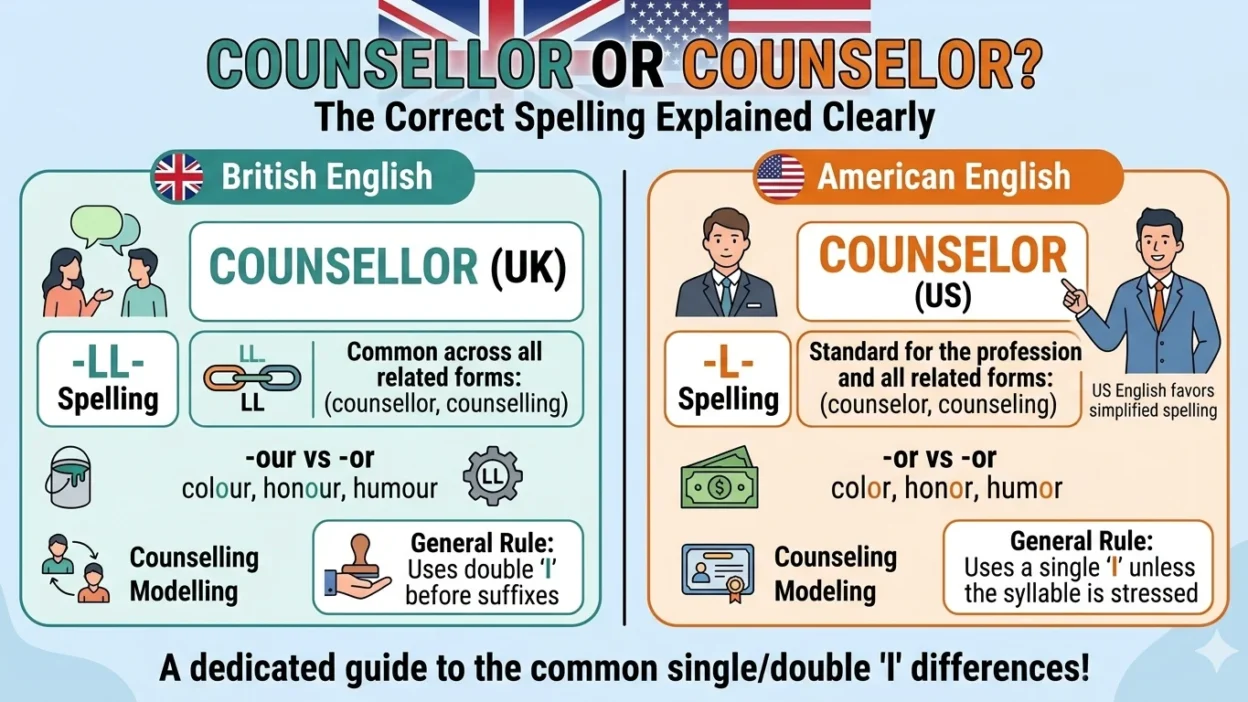
Both counsellor and counselor are correct spellings, but the difference depends on the type of English you use. Counselor is the preferred spelling in American English, while counsellor is commonly used in British English and countries like the UK, Canada, and Australia.
For example: “She works as a school counselor” (American English) and “She works as a school counsellor” (British English). Both words refer to a person who gives advice, guidance, or therapy.
Understanding the difference between counsellor and counselor helps you write accurately for your audience and maintain consistency. In this guide, you’ll learn the correct usage, examples, spelling rules, and easy tips to choose the right form every time. ✨
Counsellor or Counselor Means
Both “counsellor” and “counselor” are correct.
- Counsellor → Used in British English
- Counselor → Used in American English
Examples:
- UK: She works as a school counsellor.
- US: He is a licensed mental health counselor.
👉 Meaning in both cases:
A counsellor/counselor is a person who gives advice, support, or guidance, often in mental health, education, or career settings.
The Origin of Counsellor or Counselor
The word comes from the Latin word “consilium”, meaning advice or plan. Over time, it entered Old French as conseil and then English.
Spelling differences appeared later due to language standardization:
- British English kept double “l” (counsellor)
- American English simplified it to single “l” (counselor)
This pattern is common:
- travelling → traveling
- modelling → modeling
So, the difference is not about meaning—it’s about regional spelling rules.
British English vs American English Spelling
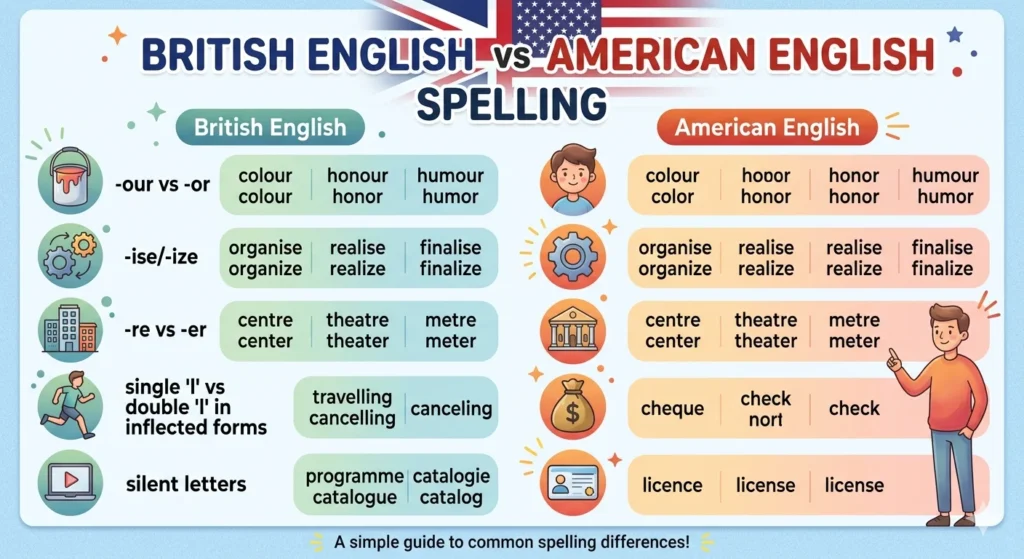
Key Difference
British English often doubles consonants, while American English simplifies them.
Comparison Table
| Feature | British English | American English |
|---|---|---|
| Spelling | Counsellor | Counselor |
| Usage Region | UK, Pakistan, India, Australia | USA |
| Style | Traditional | Simplified |
| Example | School counsellor | School counselor |
More Examples
- Guidance counsellor (UK) vs Guidance counselor (US)
- Political Counsellor vs Political Counselor
Which Spelling Should You Use?
Use “Counselor” if:
- Your audience is in the United States
- You are writing for US companies or universities
Use “Counsellor” if:
- You are in UK, Pakistan, India, Australia
- You follow British English rules
For Global Writing (SEO Tip 2026):
Use one version consistently. For global blogs, you can mention both once:
“Counsellor (or counselor in American English)…”
This helps Google understand intent and improves ranking.
Common Mistakes with Counsellor or Counselor
1. Mixing spellings
❌ counsellor in one line, counselor in another
✔ Stick to one style
2. Confusing with “Councillor”
- Councillor → Government member
- Counsellor/Counselor → Advisor
3. Wrong usage in jobs
❌ Councilor (wrong for therapy role)
✔ Counselor (correct in US context)
4. Spelling confusion in related words
- counseling vs counselling
- councilor vs counselor (lawyer confusion)
Counsellor or Counselor in Everyday Examples
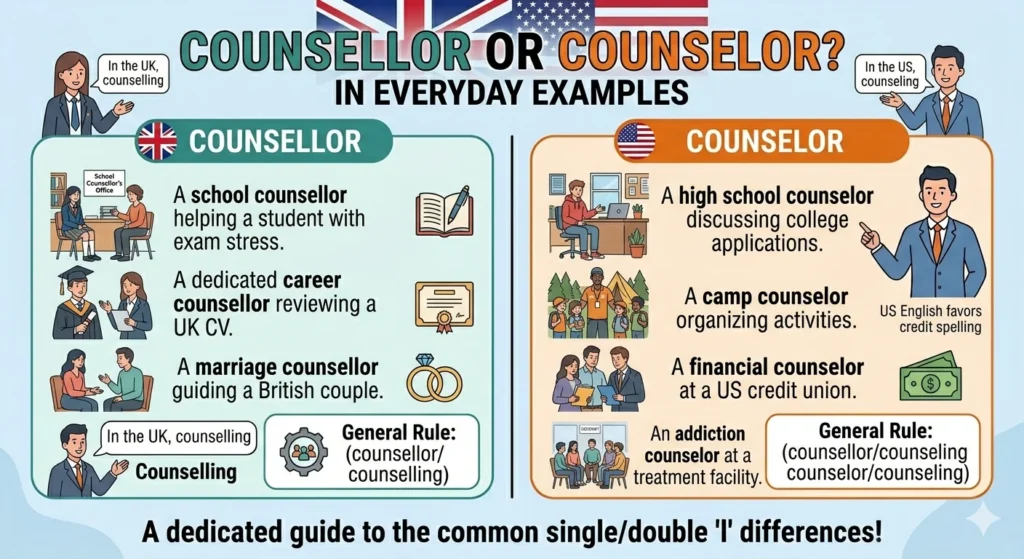
- I would like to book a session with a career counsellor.
- Please contact the school counselor for guidance.
News
- The political counsellor met with diplomats.
Social Media
- Mental health matters. Talk to a counselor today.
Formal Writing
- The student consulted a guidance counsellor for career advice.
Counsellor or Counselor – Google Trends & Usage Data
- “Counselor” dominates in the United States
- “Counsellor” is common in the UK and Commonwealth countries
Usage Insight (SEO 2026):
- “School counselor” → high US search volume
- “School counsellor” → high UK/Pakistan traffic
👉 Tip: Use both keywords naturally for better ranking.
Keyword Comparison Table
| Term | Meaning | Region |
|---|---|---|
| Counsellor | Advisor, therapist | UK/Commonwealth |
| Counselor | Advisor, therapist | USA |
| Councillor | Government official | All regions |
| Councilor vs Counselor lawyer | Legal vs advisory roles | Context-based |
FAQs
1. Who is a counselor as a person?
A counselor is a trained person who helps others with emotional, career, or personal problems.
2. What’s the difference between counseling and counselling?
No meaning difference.
- Counseling → American English
- Counselling → British English
3. Who is called councillor?
A councillor is an elected member of a local government council—not a therapist.
4. What is the Gerard Egan model of counselling?
It is a 3-stage model:
- Explore the problem
- Understand deeply
- Take action
5. School counselor or counsellor – which is correct?
Both are correct. Use based on region:
- US → counselor
- UK/Pakistan → counsellor
6. How do you pronounce counsellor vs councillor?
They sound similar, but context changes meaning:
- Counsellor → advisor
- Councillor → government official
7. Is “counselor in British English” correct?
No. British English uses counsellor, not counselor.
Conclusion
The difference between counsellor and counselor is simple but important. Both words mean the same thing—a person who offers advice or guidance—but their spelling depends on region. British English uses “counsellor,” while American English prefers “counselor.”
Understanding this difference helps you write clearly, avoid mistakes, and look professional. It is especially useful in job applications, academic writing, and SEO content creation. Choosing the right version also builds trust with your audience.
For global communication, consistency matters most. Pick one style and use it throughout your content. If you’re targeting international readers, mention both spellings once for clarity and search optimization.
In short:
- Same meaning
- Different spelling
- Choose based on audience
Now you can confidently use the correct form every time.

Daisy Johnson is a creative writer who crafts vivid similes and poetic expressions to help readers enrich their language and imagination.