One small spelling mistake can damage your credibility. Writing “bare with me” in a job email or exam paper instantly looks careless. That’s why thousands of people search: Is it bear with me or bare with me? or I can’t bear it or bare it?
The confusion happens because bear and bare are homophones. They sound the same, but their meanings are completely different. In professional communication, academic writing, and online publishing, using the correct word improves clarity, trust, and authority.
This guide gives you a quick answer, grammar explanation, real examples, and expert advice — based on modern English usage standards.
Let’s fix the confusion permanently.
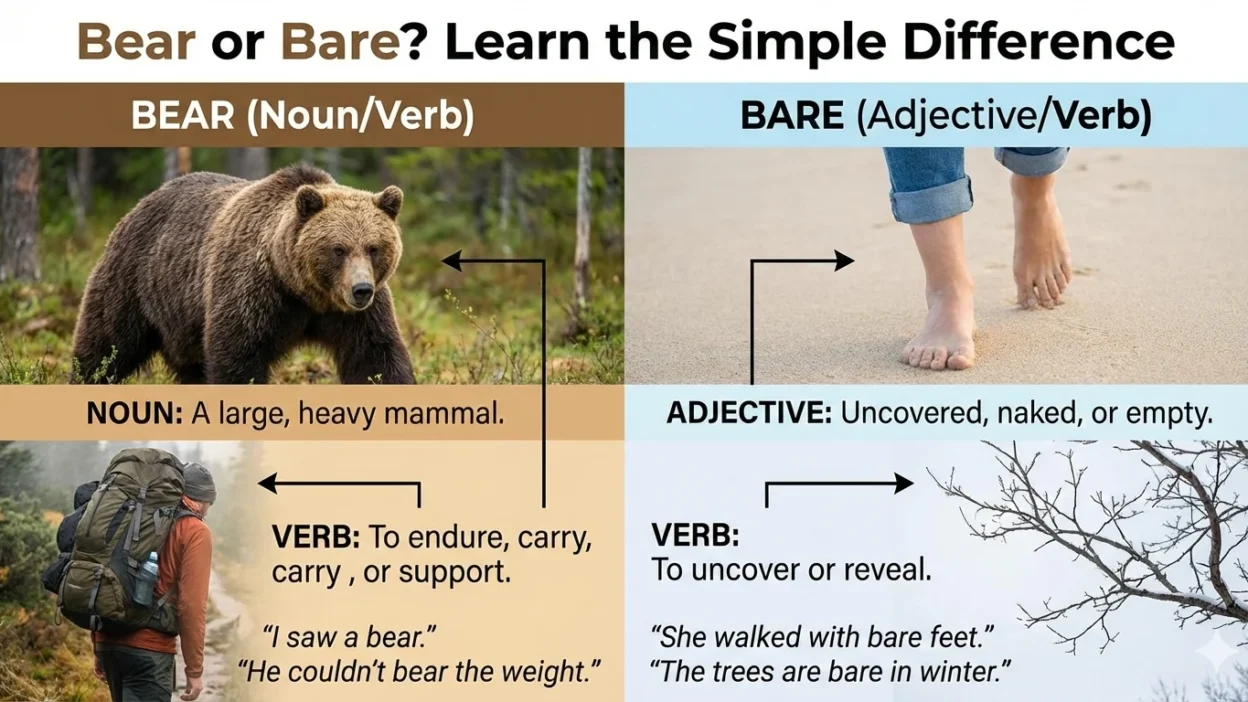
Bear or Bare Means
Bear (verb) – to carry, endure, tolerate, accept, or support weight.
Bare (adjective/verb) – uncovered, exposed, or to reveal.
👉 Use bear for:
- Pain
- Responsibility
- Cost
- Weight
- Patience
👉 Use bare for:
- Uncovered body parts
- Empty surfaces
- Revealing truth
Correct Examples
- ✅ Please bear with me.
- ✅ I can’t bear the pain.
- ✅ The company will bear the cost.
- ✅ This bridge can bear weight.
- ✅ She walked on bare feet.
- ✅ He decided to bare the truth.
This rule solves almost every mistake.
The Origin of Bear or Bare
Understanding word history improves grammar accuracy.
Bear
From Old English beran, meaning “to carry.”
Over time, it also came to mean “to endure.”
That’s why we say:
- A burden to bear
- Too much to bear
- Bear responsibility
- Bring to bear
- My cross to bear
- Hard to bear
- Grin and bear it
Grammar Note
Bear (verb forms):
- Present: bear
- Past: bore
- Past participle: borne
- Birth context: born
Example:
- She has borne many hardships.
- She was born in 2001.
Bear (Noun vs Verb)
Bear (noun) = a wild animal like a grizzly.
Bear (verb) = to endure or carry.
Meaning depends on sentence context.
Bare
From Old English bær, meaning “naked or uncovered.”
Used for:
- Bare hands
- Bare walls
- Bare minimum
- Bare your soul
- Bare the facts
The spelling difference exists because these words developed from different root origins.
British English vs American English Spelling
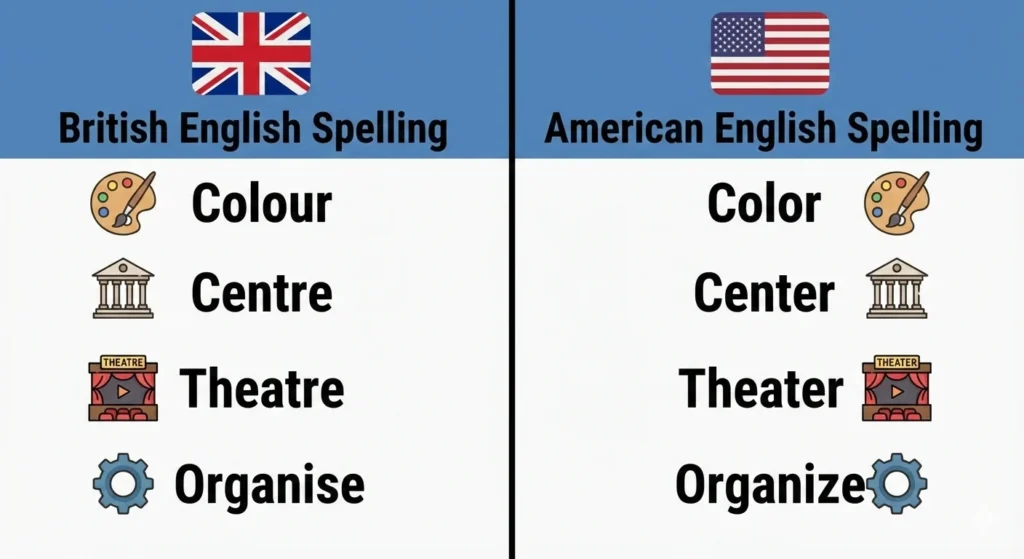
There is no difference in US and UK spelling for bear or bare.
| Meaning | Correct Word | US English | UK English |
|---|---|---|---|
| Endure pain | Bear | Bear | Bear |
| Support weight | Bear | Bear | Bear |
| Reveal truth | Bare | Bare | Bare |
| Uncovered feet | Bare | Bare | Bare |
Unlike some book titles such as Harry Potter and the Sorcerer’s Stone which differ by region, bear and bare remain the same worldwide.
Which Spelling Should You Use?
Use bear when the meaning involves:
- Bear the pain
- Bear the cost
- Bear responsibility
- Bear weight
- Bear a child
- Bring to bear
- Please bear with me
- Couldn’t bear it
- Weight to bear
Use bare when the meaning involves:
- Bare hands
- Bare skin
- Bare the truth
- Bare minimum
Professional writing tip:
Correct spelling improves credibility in business emails, academic essays, journalism, and SEO content. Accuracy strengthens trust and authority.
Common Mistakes with Bear or Bare
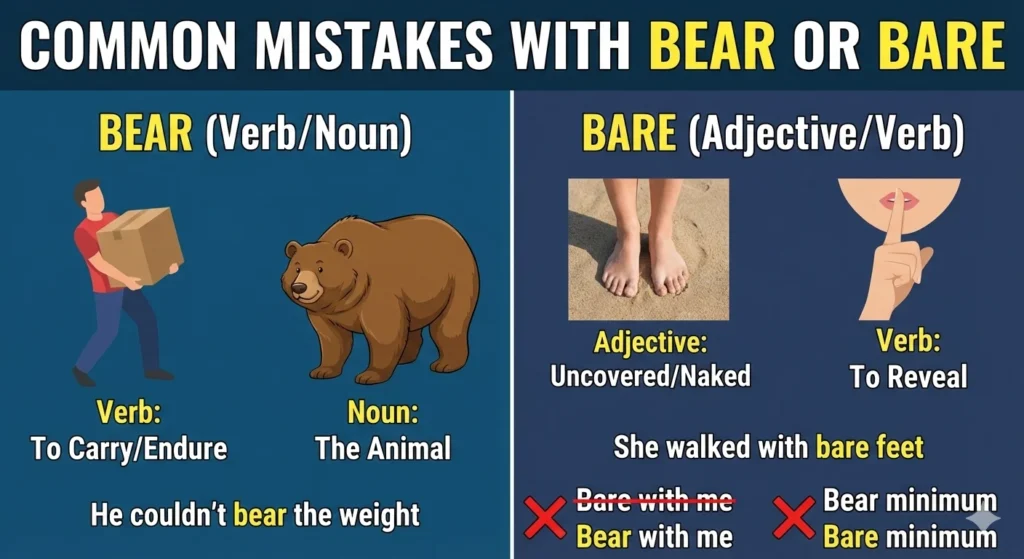
Here are frequent grammar errors:
❌ Bare with me
✅ Bear with me
❌ Too much to bare
✅ Too much to bear
❌ A burden to bare
✅ A burden to bear
❌ Cross to bare
✅ Cross to bear
❌ I couldn’t bare it
✅ I couldn’t bear it
❌ Bare the cost
✅ Bear the cost
If the meaning is endure, tolerate, carry, support, or accept → use bear.
If the meaning is expose or uncover → use bare.
Bear or Bare in Everyday Examples
“Please bear with me while I check.”
News
“The company will bear the financial loss.”
Social Media
“I can’t bear this heat!”
Academic Writing
“The structure must bear weight safely.”
Formal Writing
“The witness chose to bare the truth.”
Clear usage improves writing clarity and professional communication.
Bear or Bare – Google Trends & Usage Data
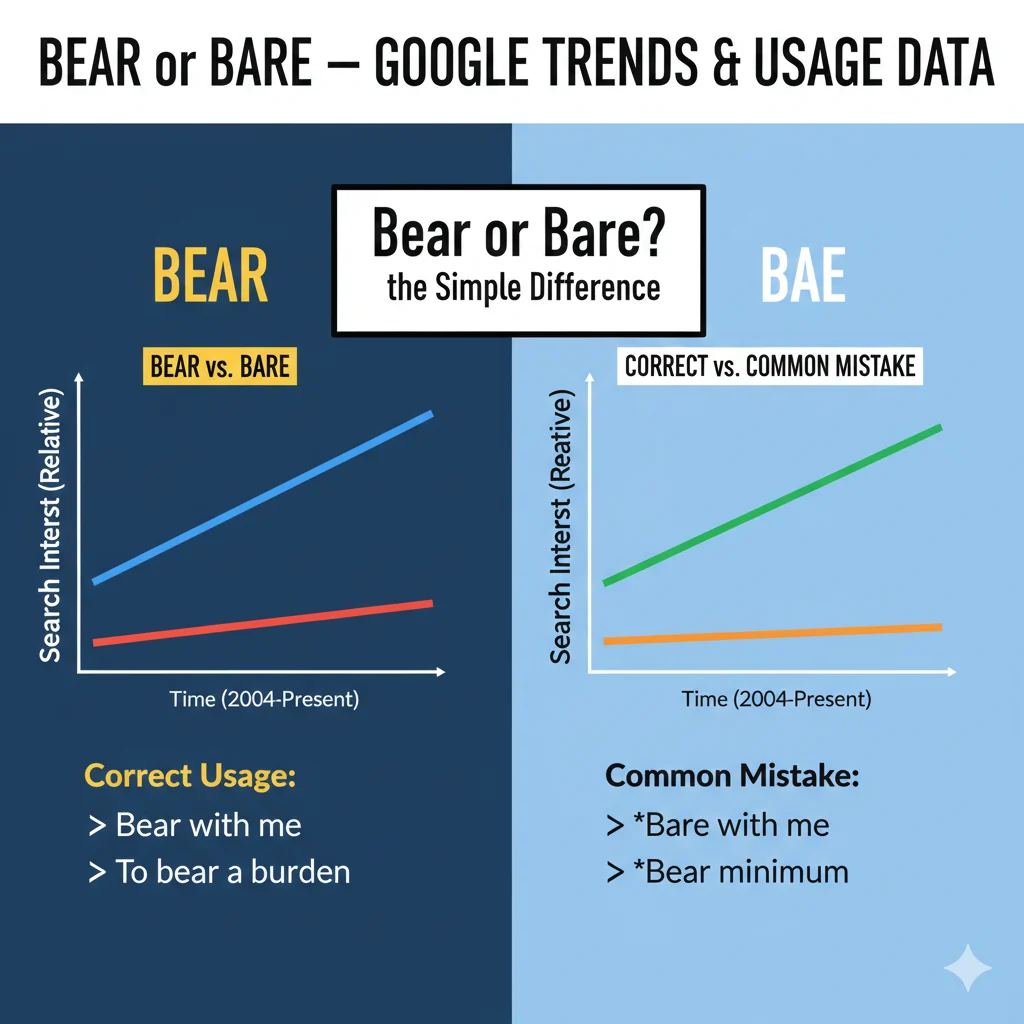
Search data shows:
- “Is it bear with me or bare with me?” is searched globally.
- “I can’t bear it or bare it” is common among students.
- “Bear or bare grammar” peaks during exam seasons.
- Idioms like “burden to bear” and “cross to bear” are frequently searched.
The word bear appears more often because it is common in idioms and emotional expressions.
The word bare appears mainly in physical descriptions.
Bear vs Bare Comparison Table
| Phrase | Correct Form | Meaning |
|---|---|---|
| Bear with me | Bear | Be patient |
| Bear the pain | Bear | Endure |
| Bear responsibility | Bear | Accept duty |
| Bear the cost | Bear | Pay |
| Bear weight | Bear | Support |
| Bare feet | Bare | Uncovered |
| Bare the truth | Bare | Reveal |
| Bare minimum | Bare | Basic level |
Bear or Bare Synonyms
Bear synonyms: endure, tolerate, support, carry, handle
Bare synonyms: reveal, expose, uncover, naked, open
Easy Memory Trick
Bear has “EAR” like “Endure And Responsibility.”
Bare has “ARE” like “Are you uncovered?”
Simple trick. No more confusion.
FAQs
Is it bear with me or bare with me?
Correct: Bear with me.
Is it bare or bear the pain?
Correct: Bear the pain.
I can’t bear it or bare it?
Correct: I can’t bear it.
Bear or bare in mind?
Correct: Bear in mind.
Bear or bare the cost?
Correct: Bear the cost.
Hard to bear or bare?
Correct: Hard to bear.
Bear or bare a child?
Correct: Bear a child.
Conclusion
The difference between bear or bare becomes clear when you focus on meaning. Use bear when talking about enduring pain, carrying responsibility, supporting weight, or being patient. Use bare when talking about something uncovered or revealed.
Because these words are homophones, mistakes are common. But strong writing depends on precision. In modern English usage, correct spelling builds trust, clarity, and authority. Search engines also reward accurate, helpful content.
When unsure, ask yourself:
Is this about tolerating something? → Bear.
Is this about uncovering something? → Bare.

Helen Oyeyemi is an acclaimed novelist known for her imaginative, lyrical storytelling and modern fairy-tale style that blends mystery with magic.