Are you confused about practise or practice? You are not alone. This is one of the most common spelling questions in English grammar. Students, teachers, professionals, and bloggers often search:
- When should I use practise and practice?
- Where to use practise?
- Does a doctor practice or practise?
- Do teachers practice or practise?
- Is it football practice or practise?
- Is it best practise or best practice?
The confusion happens because British and American English follow different spelling rules. In this complete guide, you will learn the meaning, grammar rule, origin, real examples, common mistakes, worksheet, quiz, and expert writing advice.
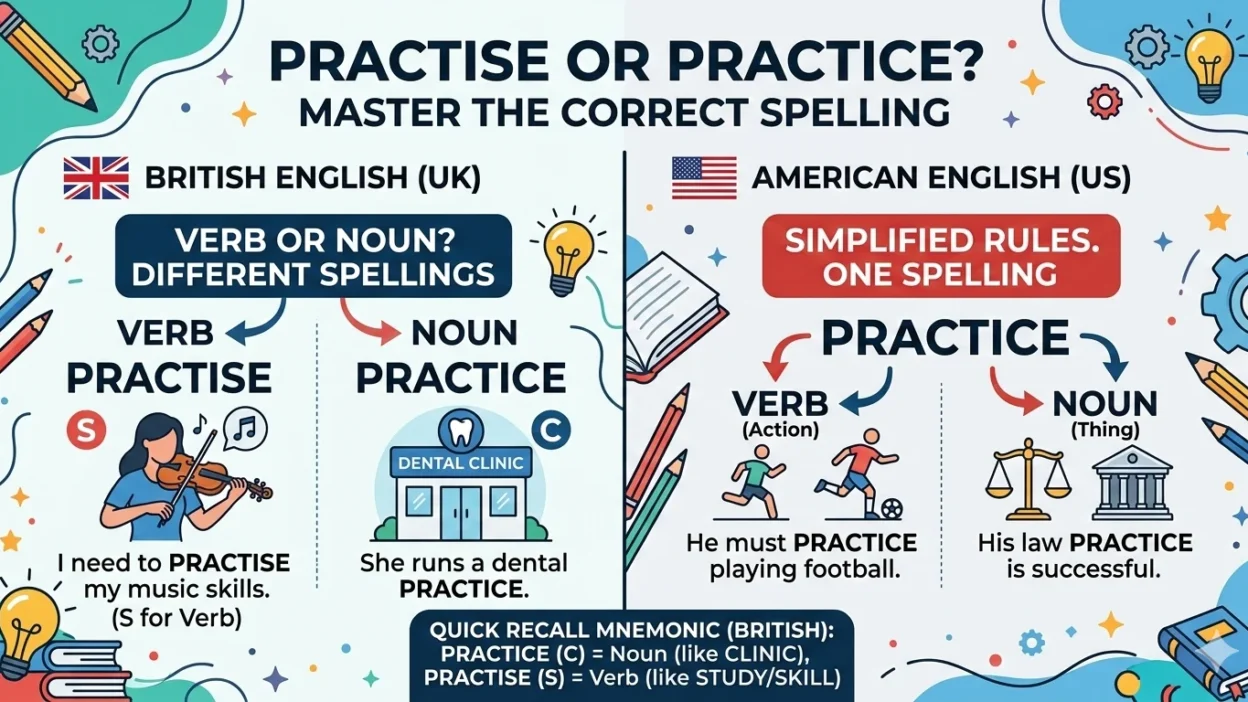
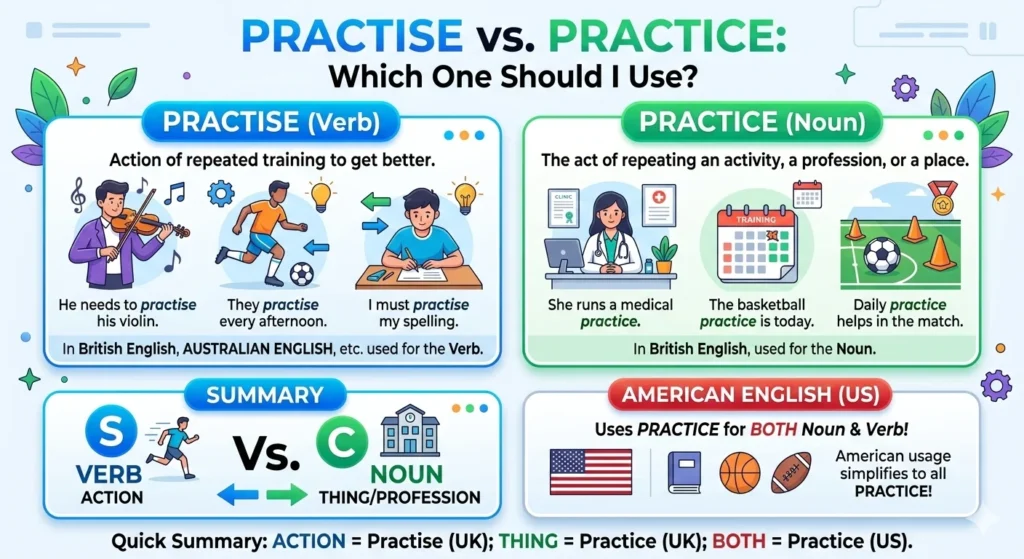
Practise or Practice Means
🇬🇧 British English
- Practice = noun (a thing)
- Practise = verb (an action)
🇺🇸 American English
- Practice = noun and verb (both)
Examples
UK:
- I have football practice.
- I practise football daily.
US:
- I have football practice.
- I practice football daily.
If your audience is American, use practice only.
If your audience is British, follow the noun/verb rule.
The Origin of Practise or Practice
The word comes from Latin practicus, meaning active or practical. It entered English through Old French.
British English kept two spellings to show grammar function (noun vs verb).
American English simplified the spelling in the 19th century and kept only practice.
That is why the spelling difference exists today.
British English vs American English Spelling
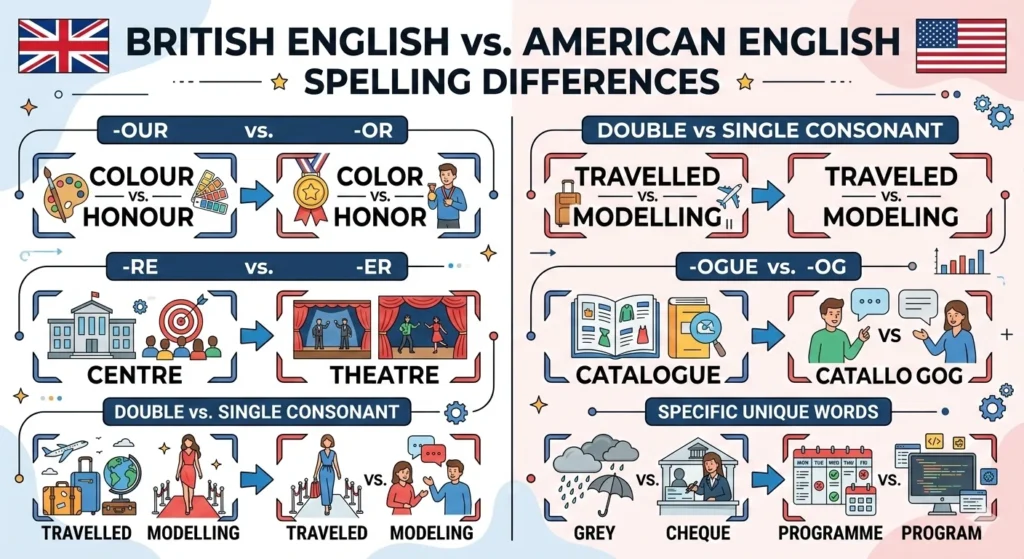
| Usage | UK Spelling | US Spelling |
|---|---|---|
| Noun | Practice | Practice |
| Verb | Practise | Practice |
| He ___ daily | practises | practices |
| Medical ___ | practice | practice |
| Law ___ | practice | practice |
Easy Memory Trick
UK → C = Thing, S = Action
US → C = Everything
Practise or Practice Meaning
Practice (noun)
Repeated training to improve a skill.
Examples:
- Piano practice
- Football practice
- Best practice guidelines
- Medical practice
Practise (verb – UK)
To do something repeatedly to improve.
Examples:
- She practises piano.
- Doctors practise medicine.
- Teachers practise new methods.
Practice (verb – US)
Same meaning as above.
When Should I Use Practise and Practice?
Use this simple test:
- Is your audience American?
→ Use practice for everything. - Is your audience British?
→ Ask:
- Is it a thing? → practice
- Is it an action? → practise
- Writing for global readers?
→ Choose one style and stay consistent.
Consistency improves clarity and professionalism.
Where to Use Practise?
Use practise only in British English and only as a verb.
Correct:
- I practise yoga.
- She practises law.
- Students practise every day.
Incorrect:
- Yoga practise ❌
- Best practise ❌
Does a Doctor Practice or Practise?
UK:
- A doctor practises medicine.
- He works at a medical practice.
US:
- A doctor practices medicine.
- He works at a medical practice.
Do Teachers Practice or Practise?
UK:
- Teachers practise teaching skills.
US:
- Teachers practice teaching skills.
Football Practice or Practise?
Correct everywhere:
- Football practice (noun)
Verb:
- UK: Players practise football.
- US: Players practice football.
Best Practise or Practice?
Correct phrase:
✔ Best practice
It is a noun phrase used in business, education, and management writing.
Practice Makes Perfect or Practise Makes Perfect?
Correct:
✔ Practice makes perfect
It is a fixed expression. Always spelled with practice.
Common Mistakes with Practise or Practice
❌ I need more practise
✔ I need more practice
❌ She practice daily (UK)
✔ She practises daily
❌ Best practise strategy
✔ Best practice strategy
❌ Football practise
✔ Football practice
Practise or Practice in Everyday Writing
Email Example
UK:
Please practise your speech before tomorrow.
US:
Please practice your speech before tomorrow.
News Example
The lawyer practises law in London.
The lawyer practices law in New York.
Social Media
Practice makes perfect 💪
Practise or Practice Worksheet
Fill in the blanks:
- She ___ piano every day. (UK)
- Football ___ starts at 4 PM.
- Doctors ___ medicine. (UK)
- This is best ___ method.
- Teachers ___ before exams. (US)
Answers:
- practises
- practice
- practise
- practice
- practice
Practise or Practice Quiz
Choose correct spelling:
- He runs a dental ______.
- She ______ yoga daily. (UK)
- Medical ______ requires skill.
- They ______ hard before match. (US)
Answers:
- practice
- practises
- practice
- practice
Practise or Practice – Google Usage Trends
Usage patterns show:
- USA → practice used for noun and verb
- UK → both spellings used correctly
- Australia → British rule followed
- South Asia → mixed usage
“Practice makes perfect” is searched more often than “practise makes perfect.”
For SEO, always match your audience’s spelling.
Complete Comparison Table
| Phrase | UK | US |
|---|---|---|
| Practice makes perfect | Practice | Practice |
| Best practice | Practice | Practice |
| To practise law | Practise | Practice |
| Medical practice | Practice | Practice |
| She practises daily | Practises | Practices |
FAQs
1. When should I use practise and practice?
Use practise as a verb in UK English. Use practice for noun everywhere and verb in US.
2. Where to use practise?
Only in British English as an action word.
3. Does a doctor practice or practise?
UK: practises medicine. US: practices medicine.
4. Do teachers practice or practise?
UK: practise. US: practice.
5. Is best practise correct?
No. The correct phrase is best practice.
6. Is practice makes perfect correct?
Yes. It is always practice makes perfect.
7. Why is American spelling different?
American English simplified spelling rules in history.
Conclusion
The difference between practise or practice depends on British and American spelling systems.
British English:
- Practice = noun
- Practise = verb
American English:
- Practice = noun and verb
Choose the spelling based on your audience. Stay consistent in exams, blogs, and professional writing. Correct spelling improves clarity, credibility, and trust.
Now you can use practise and practice correctly without confusion.

Helen Oyeyemi is an acclaimed novelist known for her imaginative, lyrical storytelling and modern fairy-tale style that blends mystery with magic.